08 November 2016

BEST OPERA RECORDING OF 2016: Richard Wagner — DIE WALKÜRE (P. Lang, M. Goerne, H. Melton, S. Skelton, M. DeYoung, F. Struckmann; NAXOS 8.660394-97)

BEST OPERA RECORDING OF 2016: Richard Wagner - DIE WALKÜRE (NAXOS 8.660394-9)RICHARD WAGNER (1813 – 1883): Die Walküre, WWV 86BPetra Lang (Brünnhilde), Matthias Goerne (Wotan), Heidi Melton (Sieglinde), Stuart Skelton (Siegmund), Michelle DeYoung (Fricka), Falk Struckmann (Hunding), Sarah Castle (Waltraute), Karen Foster (Gerhilde), Katherine Broderick (Helmwige), Anna Burford (Schwertleite), Elaine McKrill (Ortlinde), Aurhelia Varak (Siegrune), Okka von der Damerau (Grimgerde), Laura Nykänen (Roßweiße); Hong Kong Philharmonic Orchestra; Jaap van Zweden, conductor [Recorded ‘live’ during concert performances in the Hong Kong Cultural Centre Concert Hall, Hong Kong, China, 21 and 23 January 2016; NAXOS 8.660394-97; 4 CDs (also available in Blu-ray Audio format), 236:32; Available from NAXOS Direct, Amazon (USA), jpc (Germany), Presto Classical (UK), and major music retailers]

It is not without justification that the name Richard Wagner strikes fear into the hearts of singers, conductors, impresarios, stage directors, and audiences. Mostly rightly and occasionally wrongly, Wagner’s operas are perceived as long, loud, perilously difficult to perform, and steeped in a mythology into which the listener must submerge himself—without the aid of a Bulfinch or Edith Hamilton—or sit stupefied as processions of deities, dwarves, giants, and men invade the stage. The trouble with reputations is that they too often reflect an entity’s negative rather than the positive aspects, and to dismiss Wagner’s operas, especially Der Ring des Nibelungen, because of their reputed defects is to be deprived of some of opera’s greatest thrills. To hear the Siegfried of Bernd Aldenhoff awaken the Brünnhilde of Astrid Varnay in the 1951 Bayreuther Festspiele Siegfried or the Siegmund of Jon Vickers burst into the humble abode of the Sieglinde of Dame Gwyneth Jones in the Metropolitan Opera broadcast of Die Walküre of 16 December 1972, is to forget Wagner’s reputation for impenetrable storylines and—according to Rossini—dull quarters of hours and surrender to the ecstasy with which he infused the four monumental scores that comprise his Der Ring des Nibelungen. The ‘Erster Tag’ in Naxos’s complete Ring-in-progress, arguably the most ambitious operatic project that any label can undertake, this recording of Die Walküre expands the discography with that rarest of commodities: a performance of this tremendously demanding opera that legitimately deserved to be recorded for posterity.

Like the account of Das Rheingold that preceded it, this second installment in Naxos’s new Ring was recorded during concert performances in the Hong Kong Cultural Centre Concert Hall, documenting the first complete presentation of Wagner’s epic Der Ring des Nibelungen by an orchestra based in Hong Kong or mainland China. Here consistently on par with the work of their counterparts in the pits of the Bayreuther Festspielhaus, Wiener Staatsoper, and New York’s Metropolitan Opera, the playing of the Hong Kong Philharmonic Orchestra is contrastingly earthy, effervescent, and eloquent as the score demands. The primordial energy of the opening pages of Act One surges from the strings, and the brass and woodwind playing is often magnificent in Acts Two and Three. The orchestra’s performance is never less than thoroughly professional, and with that achievement they prove superior to many ensembles with decades-long associations with Wagner repertory. The postlude to Wotan’s farewell to Brünnhilde in Act Three, shaped by the composer almost like a Baroque ritornello, and the Zauberfeuermusik are sumptuously and soulfully played. From the first ominous notes of Act One to the cathartic final phrases of Act Three, the Hong Kong Philharmonic musicians rise to every spectacular challenge of the score, confirming that their stunningly beautiful city is a peer of Bayreuth as a home for idiomatic Wagner performances.

Music Director of both the Hong Kong Philharmonic and the Dallas Symphony Orchestra, as well as Music Director designate of the New York Philharmonic, Dutch conductor Jaap van Zweden has established himself as one of his generation’s most respected conductors and administrators, continuing the tradition of his countrymen Eduard van Beinum and Bernard Haitink. With an array of impressive Wagnerian credentials to his credit, not the least of which is his exhilarating leadership of Hong Kong Philharmonic’s Das Rheingold, Zweden brings a wealth of experience and obvious dedication to his conducting of this Walküre. Zweden’s pacing of this performance occasionally recalls two of the great Wagner interpreters of prior generations: the insightfulness that he displays in highlighting the ways in which Wagner used the orchestra to further character developments brings to mind the conducting of Wilhelm Furtwängler, especially in Act Two, and, in the penultimate and final scenes of Act Three, the care that he takes to allow both singers and orchestra ample flexibility with which to explore the complex emotions that unfold in their parts resembles the meticulous attentiveness of Sir Reginald Goodall. Zweden fosters and maintains a superb balance between intensity and rapt expressivity, never sacrificing momentum when granting passages the expansiveness that they require. Zweden’s tempi unerringly meet the demands of the score, and there are far greater senses of tension and resolution in this performance than in many faster-paced, more pushed Walküres.

For every Walküre blessed with a steady-voiced ensemble of Valkyries—and it is indeed a blessing—there are countless performances of the opera in which the warrior maidens’ wailing is markedly more comical than Wagner intended it to be. Perhaps young singers respond ‘Ja!’ when offered an opportunity to sing one of the Valkyries without fully considering the difficulty of the music. The band of sisters in this performance is without a poorly-tuned instrument, however. Sopranos Karen Foster, Katherine Broderick, and Elaine McKrill as Gerhilde, Helmwige, and Ortlinde and mezzo-sopranos Sarah Castle, Anna Burford, Aurhelia Varak, Okka von der Damerau, and Laura Nykänen as Waltraute, Schwertleite, Siegrune, Grimgerde, and Roßweiße are musically and dramatically effective, individually and en masse, shielding Brünnhilde and then bemoaning her fate with fearless singing. Their sounds are not unfailingly beautiful, but hearing a wobble-free account of their music gives great pleasure.

As recently as 2011, German bass-baritone Falk Struckmann was a lecherously libidinous, powerfully-sung Scarpia in Puccini’s Tosca at The Metropolitan Opera. Vocally, the distance from Scarpia, a rôle that punishes a baritone’s upper register, to Hunding in Die Walküre is great, but Struckmann spans the divide with astonishing comfort. As the implacable voice of conventionality in this performance, he sings robustly, the solidity of the voice throughout the range granting the character’s sinister utterances added impact. When Struckmann voices ‘Die so leidig Los dir beschied,’ there is no mistaking Hunding’s meaning or his distrust of the visitor to his home. Similarly, the bass-baritone’s delivery of ‘Ich weiß ein wildes Geschlecht’ pulses with villainous intent. Struckmann’s Hunding is predominantly a brutish, single-minded bully, but there are indications in his untiringly musical performance that the harsh man’s love for Sieglinde is sincere if crudely possessive. Hunding has little to do in Act Two aside from slaying Siegmund and being slain himself, but Struckmann commits the fateful act of vengeance with growling malevolence, all too willing to be Fricka’s pawn in her battle of morals with her proud husband. Like Hagen in Götterdämmerung, Hunding too often falls victim to ugly barking and shouting. He is a cruel, largely one-dimensional man, but Wagner wrote notes for him, obviously expecting the music to be sung, not snarled. Struckmann takes care to sing the music, and the product of that care is a credible, atypically enjoyable Hunding.

Considering aficionados’ profuse (and largely justified) lamentations for the state of Wagner singing in the first sixteen years of the new millennium, that this recording preserves one of the finest performances of Act One of Die Walküre ever committed to disc is a fantastically welcome surprise. Listeners could hope to encounter no more appealingly heroic a pair of young lovers among the ranks of today’s Wagner singers than soprano Heidi Melton and tenor Stuart Skelton. As Siegmund rushes exhaustedly onto the aural scene, his enemies at his heels, Skelton’s baritonal, buttered-rum voice fills the recorded space thrillingly, his diction generally laudable and his intonation uncommonly accurate. Skelton sings ‘Wes Herd dies auch sei’ with resilient but not insensitive masculinity. There is an audible change in his Siegmund’s demeanor when he encounters Melton’s Sieglinde, as well there should be: who could resist the allure of such a voice and the lady who nurtures it? The young soprano, already a practiced Wagnerian whose Sieglinde at the 2016 Festspiele immediately—and rightly—became part of Bayreuth lore, voices ‘Müd am Herd fand ich den Mann’ demurely, the hard reality of Sieglinde’s marriage conveyed by the granite core of Melton’s voluptuous voice. Her tone radiates erotic tension as she sings ‘Schläfst du, Gast?’ That tension is further heightens the mood initiated by Skelton’s declamation of ‘Ein Schwert verhieß mir der Vater.’ He is a Siegmund for whom—and for whose listeners—the great exclamations of ‘Notung!’ hold no terrors, and he sings the impassioned ‘Winterstürme wichen dem Wonnemond’ with burgeoning optimism and genuinely beautiful tone. Melton’s account of ‘Du bist der Lenz’ is the rare performance of this music in which the sound of the voice credibly matches the meaning of the words: as she sings of him, it is possible to fully believe that, in the frigid context of her torturous life, Siegmund truly initiates a vernal blossoming, epitomized by the sonorous top A with which Skelton ends Act One.

Wagner’s orchestra leaves no doubt that the tribulations endured by Siegmund and Sieglinde in Acts Two and Three will be anything but pleasant. Seeking shelter in their flight from Hunding’s dogged pursuit in Act Two, Skelton’s Siegmund articulates ‘Raste nun hier, gönne dir Ruh!’ with unmistakable affection, and his abiding concern for Sieglinde is touching. Skelton evinces more emotional engagement in his performance of ‘So jung und schön erschimmerst du mir’ than many Siegmunds manage to do in all of the character’s music. The tenor makes both ‘Zauberfest bezähmt ein Schlaf’ and ‘Der dort mich ruft’ profoundly personal musings rather than stentorian outbursts, and few of the most accomplished Siegmunds past and present expressed themselves so eloquently in the Todesverkündigung: here, Skelton astutely imparts the devotion to his partner that is the catalyst for Brünnhilde’s awakening to human feelings, a vital component of the Ring’s drama which must far too often be taken on faith. In Sieglinde’s brief but extraordinary music in Act Three, Melton provides the kind of singing for which Wagner connoisseurs long, mostly in vain. The soaring lines of ‘Rette mich, Kühne! Rette mein Kind!’ and ‘O hehrstes Wunder!’ are conquered, not merely survived, a feat of which a number of fine Sieglindes cannot boast, and the control that Melton has over her colossal voice is awesomely apparent. Pining for another Flagstad and Melchior is as pointless as comparing every subsequent Sieglinde and Siegmund to them, but this Walküre features a Sieglinde and Siegmund who earn the implicit praise of favorable comparisons with their illustrious predecessors.

On a level of excellence comparable with that inhabited by this performance’s rhyming Wälsung twins, Melton and Skelton, is mezzo-soprano Michelle DeYoung, whose power and upper-register impact hint that both Sieglinde and Brünnhilde are well within her grasp. Riveting as her Fricka in the Naxos Rheingold was, her interpretation of the character in Die Walküre is still more successful. Her singing of ‘So ist es denn aus mit den ewigen Göttern’ wields force mightier than blows of Wotan’s spear, and she detonates ‘Deiner ew’gen Gattin heilige Ehre’ like histrionic dynamite. The fact that a figure who appears only in Das Rheingold and in one scene in Die Walküre casts such a long shadow over Der Ring as a whole is a testament to the brilliance of Wagner’s concept of the character, but not all Frickas exert every ounce of authority given to them by the composer. DeYoung’s Fricka is a goddess to the tips of her fingernails and the peaks of her shining top notes, and hers are arguments that cannot be ignored.

Met in the opening minutes of Act Two, when her ‘Hojotohos’ are war whoops worthy of the worst cinematic depictions of Native Americans on the attack, the Brünnhilde of German soprano—and former mezzo-soprano—Petra Lang improves steadily after this inauspicious start. She lacks the trill requested by Wagner, but so has virtually every Brünnhilde in recent memory with the exception of Rita Hunter, and her tone sometimes becomes strident when the ears most want it to bloom. Expanding a portfolio of Wagner characterizations that already includes the Walküre and Götterdämmerung Brünnhildes in Marek Janowski’s Pentatone Ring, recorded during concert performances, and a splendid Isolde at the 2016 Bayreuther Festspiele, Lang’s Brünnhilde in this Naxos Walküre is a formidable creation. Vocally, hers is a mature, sporadically cynical rather than an obviously youthful-sounding Brünnhilde, but she is an intelligent, inventive singer who uses the sheer effort required to sing the rôle to project the character’s naïveté. Conversing with her father, this Brünnhilde mirrors Wotan’s frustration and world-weariness from the first notes of ‘Schlimm, fürcht’ ich, schloß der Streit,’ notes that she dispatches with solid, focused tone. The surprise that she expresses in ‘So nimmst du von Siegmund den Sieg?’ progresses organically to the disbelief and exasperation of ‘So sah ich Siegvater nie.’ In the Todesverkündigung, the scene in which Brünnhilde reveals to Siegfried that it is Wotan’s will that he must fall in the coming fight with Hunding, there is a hauntingly disembodied quality in Lang’s voicing of ‘Siegmund! Sieh auf mich’ that recalls the Brünnhildes of fellow mezzo-soprano converts Dame Gwyneth Jones and Elizabeth Connell. Her dramatic profile sharpens as the scene’s momentum builds, limning the metamorphosis from unquestioning daughter to a free-thinking, intuitive woman willing to defy her father’s instructions in pursuit of what she perceives—and what she knows that Wotan perceives in his innermost thoughts—as the greater good.

Brünnhilde’s transformation in Act Three of Die Walküre is arguably the most vital character development in the Ring. It is her assimilation of mortality and human feelings that propels the cycle to its conclusion, and Lang compellingly depicts that crucial journey in her portrayal. Her Brünnhilde bursts breathlessly into her sisters’ company with a steel-edged vaulting of ‘Schützt mich und helft in höchster Not!’ When her apprising the Valkyries of her daring rescue of the pregnant Sieglinde is interrupted by her quarry’s rousing, the tenor of her singing changes as noticeably as did that of Siegmund’s when he first discovered Sieglinde in Act One. Lang’s voice shimmers as she tells Sieglinde that the child growing within her will be the world-altering hero Siegfried. Brünnhilde knows that Sieglinde’s safety depends upon defusing Wotan’s anger, and the trepidation that infuses Lang’s singing of ‘Hier bin ich, Vater’ reveals that the girl comprehends that punishment even for her father’s most-loved child will be severe. As she presents her defense in ‘War es so schmählich, was ich verbrach’ and receives Wotan’s response and sentence, it is apparent that this Brünnhilde is shocked by the seeming heartlessness of Wotan’s treatment of her, effectively foreshadowing the moments in Götterdämmerung in which the former Valkyrie becomes cognizant of the intricacies and implications of her anguished father’s plan. Lang shrinks from none of her rôle’s demands, rising to the top Bs and Cs with confidence and stamina. A Brünnhilde in possession of all of the notes must be appreciated, but Lang inspires adulation with her keenly expressive uses of those notes.

The great triumph of Hong Kong Philharmonic’s Rheingold was German baritone Matthias Goerne’s Wotan, and it is a triumph that is redoubled in Die Walküre. The criteria by which success in Wagner repertory is gauged are vastly different from those that govern the assessment of any other repertory, but by any standard Goerne’s singing in this performance is masterful. Engaged in heated discourse by first his beloved daughter and then his wife, Wotan is bowed in Act Two by the weight of supreme power. Goerne discloses with his kaleidoscopic vocalism that, though troubled, Wotan is gladdened by Brünnhilde’s presence, his ‘Nun zäume dein Roß’ resounding with subtle relief. Fricka’s entry changes the dramatic temperature from paternal warmth to icy determination, his wife now a political adversary instead of a caring mate. The fury of ‘Der alte Sturm, die alte Müh’!’ does not completely mask the heartbreak, and the irony of ‘Was verlangst du?’ is both unnerving and pitiable. Whether partnering DeYoung or Lang, Goerne sings handsomely and heroically. He is a Wotan who rules as sagaciously by charisma as by manipulation, but he equally despairs and berates himself for having lost the upper hand when Fricka backs him into an ethical corner from which there is no escape. Ignited by shame, his sorrow and disillusionment boil as he admits to Brünnhilde that Fricka’s agenda must prevail. The baritone bites at ‘So nimm meinen Segen, Niblungen Sohn!’ like a caged lion. Nevertheless, suavity and nobility are evident here and in the final fight between Siegmund and Hunding.

It is in Act Three that a Wotan achieves or misses greatness, and it is in Act Three of this Walküre that Goerne carves for his Wotan a place of honor among those of Friedrich Schorr, Hans Hotter, and George London. There is brassy menace in Goerne’s singing of ‘Wo ist Brünnhild’, wo die Verbrecherin?’ that yields to the sort of ire that derives solely from the bitterest disappointment. As Goerne shapes the narrative in ‘So tatest du, was so gern zu tun ich begehrt’ and ‘Nicht streb, o Maid, den Mut mir zu stören,’ Wotan’s disappointment at his own monumental failures is manifested as vividly as his reaction to Brünnhilde’s disobedience. Goerne easily traverses the wide range of the music, as steady on high as in the lowest depths of the part, and he is more responsive to Wagner’s genius for using text to propel melodic lines than any Wotan on disc since Julius Huehn.

Wotan’s farewell to Brünnhilde can be one of opera’s most heart-wrenching scenes, the tragedy of a father separated from his child not by uncontrollable circumstances but by the necessity of preserving the social order of which he was the primary architect battering the foundations of the most basic human instincts. In Goerne’s performance, resignation and resistance claw at the god’s psyche as he sings ‘Leb wohl, du kühnes, herrliches Kind!’ Until his last note falls silent, it seems possible that Goerne’s Wotan could reverse his decision and restore Brünnhilde to her sisters, intensifying the sadness of his ultimate abandonment of her. The broken voice of every grieving father sings in Goerne’s exquisitely-phrased ‘Der Augen leuchtendes Paar,’ and he summons Loge in ‘Loge, hör! Lausche hieher!’ with vehemence aimed as much at himself as at Brünnhilde’s would-be molesters. The protecting fire already burns in this Wotan’s voice as he pronounces ‘Wer meines Speeres Spitze fürchtet.’ The debacles with which Wotan contends in Die Walküre furrow the brow and darken the visage of the youthful, virile god introduced by Goerne in Das Rheingold, but the voice remains an instrument worthy of the fabled halls of Walhall.

Die Walküre is the most popular of the four operas of Der Ring des Nibelungen because, amidst the titanic context of the cycle’s drama, it recounts a self-contained story with a beginning, an ending, and a logical path from one to the other, comprehension of the broader, symbolic importance of which is not necessary in order to appreciate the opera’s plentiful musical and dramatic virtues. Intriguingly, however, this Walküre is especially enthralling because it is clearly a chapter in a continuing saga: its surging linear storytelling benefits from knowing the origins of the characters’ plights, established in the preceding Das Rheingold, and having foreknowledge of how their destinies play out. Principally, though, this is a Walküre of enduring value because Wagner’s score is performed so well. Perfection is perhaps more difficult to attain and analyze in the performance of Wagner’s operas than in those of any other composer; and, in reality, that elusive perfection matters less. This Walküre aims for persuasion, not perfection, and it comes closer than many performances of the opera to the latter by proving so adept at the former.

03 November 2016

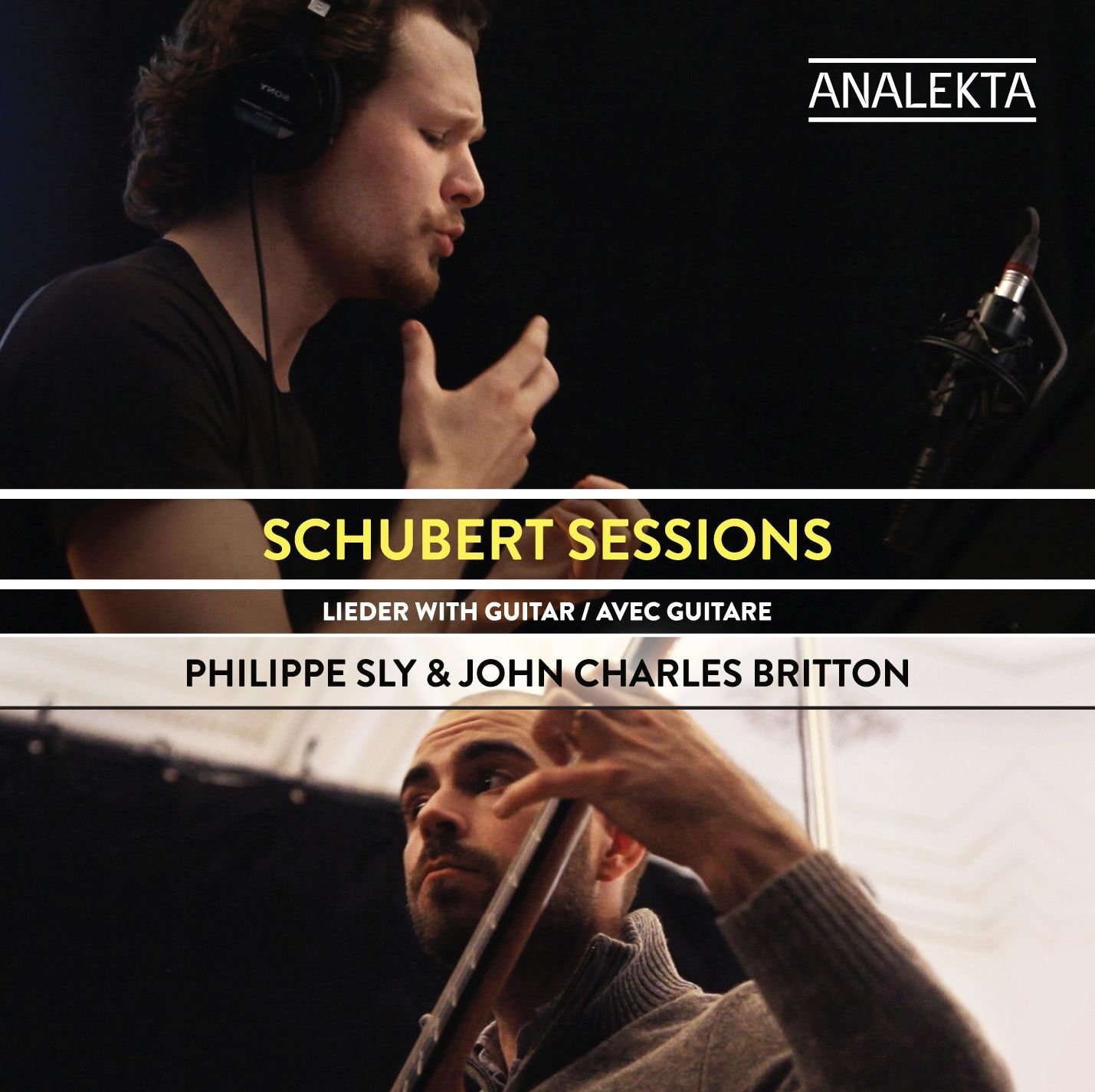
BEST LIEDER RECORDING OF 2016: Franz Schubert — SCHUBERT SESSIONS, Lieder with Guitar (Philippe Sly, bass-baritone; John Charles Britton, guitar; Analekta AN 2 9999)

BEST LIEDER RECORDING OF 2016: Franz Schubert - SCHUBERT SESSIONS, Lieder with Guitar (Analekta AN 2 9999)FRANZ SCHUBERT (1797 – 1828): Schubert Sessions, Lieder with GuitarPhilippe Sly, bass-baritone; John Charles Britton, guitar [Recorded in l’Église St-Augustin-de-Mirabel, Québec, Canada, in January 2016; Analekta AN 2 9999; 1 CD, 59:20; Available from Analekta, Amazon (Canada), Amazon (USA), iTunes, and major music retailers]

‘Don’t try to plan me or understand me / I can’t stand to be understood.’ These lines succinctly express the defining sentiment of The Turtles’ 1965 hit ‘Let Me Be,’ but they also epitomize the attitude of many artists past and present. The desire for acceptance is among the most basic aspects of humanity, but to be an artist is to be continually in conflict with some portions of society. For the artist touched by genius, the pressure to explain and justify the creative process must be overwhelming, so being widely ‘understood’ by the masses might logically be unpalatable. Perhaps this was not Franz Schubert’s personal philosophy, but the communal ethos of many of the composer’s Lieder embodies the conflict between a sensitive soul and the uncomprehending world in which it strives for meaningful connections. The image of Schubert the reclusive genius—shy, socially awkward, a German-speaking Emily Dickinson whose wars were waged in melodies rather than in books—is prominent in today’s gallery of biographical portraits of important composers, but applying modern notions of psychology, sociology, and sexuality to details of Schubert’s life produces a character study of dubious legitimacy. If one seeks meaningful acquaintance with Schubert, it is in his Lieder that one should search for him. Surpassing even the efforts of the great Mozart and Beethoven, Schubert elevated the German Lied to the pinnacle of artistic expression, his genius maturing through his composition of the more than six hundred songs via which he secured both his own legacy and the long-term future of the genre. It is fanciful to suggest that Schubert understood his own gifts most fully when engaged in the business of setting words to music, but hearing Schubert Sessions, this superbly-recorded Analekta disc of Schubert Lieder accompanied by guitar, irrefutably brings the listener very near to the epicenter of the composer’s creative genesis. It may be true that the greatest composers cannot hope to be universally understood, but neither can they hope for a plethora of performances of their music of the quality of Schubert Sessions. Perhaps an artist spurning the notion of being understood is born of the all-too-real fear of being misunderstood, but there is no misunderstanding Schubert Sessions: this is as affectionate a survey of Schubert’s Lieder as has ever appeared on disc; and, as hardly deserves to be an afterthought, one of the best-sung.

Adapting Schubert’s Lieder for performance with guitar rather than piano is not a recent innovation, but it is one that some purists are apt to reject without consideration, maintaining that arranging Schubert’s thoughtfully-conceived accompaniments distorts the composer’s brilliance. Are arrangements of the organic immediacy exhibited by John Charles Britton’s work on this disc truly so contrary to the spirit of Schubert’s invention? It can be argued that the accompaniments of some of the Lieder, especially those that evoke lovers’ and troubadours’ serenades, were consciously intended to mimic the timbral qualities of the guitar, and Britton’s transcriptions of the sixteen songs on this disc preserve the defining qualities of Schubert’s writing for piano whilst introducing unique nuances of their own. Impressive as Britton’s arrangements are, his playing of them is still more enjoyable. It is not merely that the guitarist’s nimble-fingered performance conquers every challenge of Schubert’s music and his adaptations of it: his playing is equally nimble-hearted, the emotions of each Lied heightened by his intuitive phrasing. The range of dynamics that Britton coaxes from his guitar is astounding. The guitar is his voice, and through its strings he sings with the strength and suavity of as noted an interpreter of Schubert as Hermann Schey.

The impeccably-trained voice of Canadian bass-baritone Philippe Sly has never sounded more purely beautiful on disc than in the performances on Schubert Sessions. Here, his is the voice of the young Wotan, as yet untroubled by the worries of empire and enemies, singing of the intimate pangs of a restless, relentlessly amorous spirit. ‘Auf dem Wasser zu singen’ (Op. 72, D. 774) could be a serenade to Fricka to be sung on the Rhine, and Sly internalizes its sentiments to sublime effect, his voice flowing on the current of Britton’s playing. The melodic line of ‘Alinde’ (Op. 81, No. 1; D. 904) is caressed by the singer with a tender lover’s grace, and the eloquent simplicity of ‘Du bist die Ruh’ (Op. 59, No. 3; D. 776) here takes on an understated suggestion of sensuality, Sly’s breath control enabling preservation throughout the song of a hushed intensity that vibrantly but subtly brings the text to life. Few singers are as attentive as Sly to the sounds of the words in ‘An Sylvia’ (Op. 106, No. 4; D. 891). In his performance, aided by Britton’s gossamer touch, the Lied’s sense of awe is complemented by an Elizabethan gentility that conjures the dulcet atmosphere of a Dowland lute song.

‘Erlkönig’ (Op. 1, D. 328) is one of Schubert’s most popular Lieder among singers and listeners, and Sly and Britton reveal the full spectrum of its charms by approaching the song as a genuine narrative. Their handling of ‘An die Musik’ (Op. 88, No. 4; D. 547) is no less imaginative, but, aptly, it is the exceptional musicality of the performance that lingers in the memory. The manner in which the moods of ‘Ständchen’ (D. 957, No. 4) and ‘Wohin?’ (Op. 25, No. 2; D. 795) are differentiated within the parameters of the controlled environment of Sly’s and Britton’s performance is indicative of their shared interpretive intelligence and insightfulness. In these songs and in ‘Der Müller und der Bach’ (Op. 25, No. 19; D. 795), voice and guitar interact hypnotically, harmonies that are sometimes obscured in performances with piano highlighted by the transparency of Britton’s playing and Sly’s flawless intonation. Both ‘Der Leiermann’ (Op. 89, No. 24; D. 911) and ‘Der Doppelgänger’ (D. 957, No. 2) are sung with straightforward focus, and the delicacy of Sly’s singing of the often over-interpreted ‘Der Lindenbaum’ (Op. 89, No. 5; D. 911) is arresting. There is something of Gérard Souzay’s expressive depth in Sly’s singing without any of the affectation, but the young singer’s artistry has to its credit an omnipresent originality that distinguishes its owner as a Lieder singer of the highest order.

The distinct microcosms created in the four Lieder with which Schubert Sessions concludes form a sort of compass that guides the listener on a journey through the expressive topography that Schubert crafted in his body of songs. In ‘Der Jüngling an der Quelle’ (D. 300), the irrepressible energy of youth palpitates in both music and performance, and Sly’s singing is propelled by the wonder of new experiences. The contrast with ‘Du liebst mich nicht’ (Op. 59, No. 1; D. 756b) is therefore more profound. Sly’s mercurial, amethyst-hued vocalism is wondrously consistent, however. The utter earnestness of his delivery of ‘Der Fischers Liebesglück’ (D. 933) enables the listener to primarily concentrate on Schubert’s exquisite use of the words instead of performers’ egos. In Sly’s and Britton’s hands, ‘Der Tod und das Mädchen’ (Op. 7, No. 3; D. 531) is no Grand-Guignol melodrama in miniature. The song, one of Schubert’s most haunting, is in this performance an unexaggerated dialogue, one in which the singer’s lower register shimmers.

All performances of Lieder should be dialogues, conversations in music among like-minded artists whose principal goal is to serve as the conduits via which composers’ and poets’ conjoined modes of expression are communicated to listeners. In this case as in so many others, what is easily pontificated is far less easily accomplished. Despite what some of their representatives might insinuate, artists are imperfect human beings, after all, but the thrill of art is in the quest to make something marvelous of the imperfections. With his Lieder, Franz Schubert transformed life’s imperfections into many wonderful things. The imperfections of Schubert Sessions are the missed opportunities of Lieder that were not included on the disc—imperfections for which there is ample time in the fruitful career before Philippe Sly to make amends. Schubert and the German Lied, the songs on this disc and arrangements for guitar, Philippe Sly and John Charles Britton, the listener and Schubert Sessions: whether or not we achieve or even strive for understanding, The Turtles would be right to proclaim us ‘so happy together.’

12 October 2016

CD REVIEW: Louis-Ferdinand Hérold — LE PRÉ AUX CLERCS (M.-È. Munger, M. Lenormand, J. Crousaud, M. Spyres, É. Huchet, C. Helmer, C. González Toro, L. César, M. Rebelo, T. Batista, N. Fonseca; Ediciones Singulares ES 1025)

CD REVIEW: Louis-Ferdinand Hérold - LE PRÉ AUX CLERCS (Ediciones Singulares ES 1025)LOUIS-FERDINAND HÉROLD (1791 – 1833): Le pré aux clercsMarie-Ève Munger (Isabelle de Montal), Marie Lenormand (Marguerite de Valois), Jeanne Crousaud (Nicette), Michael Spyres (Baron de Mergy), Éric Huchet (Cantarelli), Christian Helmer (Girot), Emiliano González Toro (Comte de Comminges), Leandro César (Le brigadier), Manuel Rebelo (Un exempt du guet), Tiago Batista (Un archer), Nuno Fonseca (Un archer); Coro e Orquestra Gulbenkian; Paul McCreesh, conductor [Recorded in the Grande Auditório – Fundação Calouste Gulbenkian, Lisbon, Portugal, 7 – 8 April 2015; Ediciones Singulares ES 1025; 2 CDs, 121:54; Available from NAXOS Direct, jpc (Germany), and major music retailers]

‘Two young girls, the Farival twins, were playing a duet from “Zampa” upon the piano.’ For more than a century, this line from Kate Chopin’s 1899 proto-feminist novel The Awakening and occasional performances of the spirited Overture from the same work were as close as anyone outside of France could hope to get to the music of Louis-Ferdinand Hérold. Born in 1791 in Neuilly-sur-Seine, now adjacent to but then just west of Paris, Hérold was a precocious child whose musical talents manifested themselves early on, and his enrollment at the world-famous Paris Conservatoire in 1806, when he was only fifteen years old, brought him into contact with some of the most revered musicians in France, including Charles Simon Catel, Rodolphe Kreutzer, and Étienne Méhul. Six years later, in 1812, Hérold garnered the prestigious Prix de Rome, and 1828 found him receiving the Légion d’honneur from the Bourbon court of Charles X. On 3 May 1831, these honors were supplemented by what is now often cited as the greatest prize of Hérold’s career: the première at Paris’s Opéra-Comique of his Zampa, the Overture from which has, along with the ballet La fille mal gardée, rescued Hérolds’ name from oblivion beyond France and Germany. Five weeks before the composer’s untimely death from the ravages of tuberculosis, his final completed opéra comique opened to acclaim even greater than that lavished on Zampa. First performed on 15 December 1832, Le pré aux clercs proved so popular that it was chosen to formally christen the Opéra-Comique’s new venue, the second theatre in Paris to answer to the name Salle Favart, in 1840, and within forty years of its première had amassed more than a thousand performances in Paris—double the number of performances that Zampa received in the French capital during the same period. Were they en vacances along the Côte d’Azur rather than Louisiana’s Gulf Coast, the Farival twins might well have serenaded Kate Chopin’s Edna Pontellier with music from Le pré aux clercs.

A setting of a libretto adapted by François-Antoine-Eugène de Planard from Prosper Mérimée’s 1829 novel La Chronique du temps de Charles IX, the action of Le pré aux clercs is situated against the backdrop of the 1572 Massacre de la Saint-Barthélemy, a mass assassination, perhaps instigated by Catherine de’ Medici, of prominent Huguenots gathered in Paris to celebrate the wedding of the Valois King Charles IX’s sister Marguerite to the Calvinist-leaning future Henri IV, France’s first Bourbon monarch. The violence quickly expanded beyond Paris, becoming one of the bloodiest events in France’s religious struggles. Sharing this milieu with Meyerbeer’s vast Les Huguenots, Le pré aux clercs may seem on the surface to be a daftly light-hearted score, but de Planard and Hérold focused their attention on personal relationships rather than national politics. With his wealth of widely-lauded experience in Baroque repertory, especially Händel’s operas and oratorios, to his credit, British conductor Paul McCreesh approaches Hérold’s score with proven gifts for identifying and imparting drama on a scale that is unfailingly appropriate for the music. Under his direction, the Gulbenkian Foundation chorus and orchestra provide performances that fully substantiate the legitimacy of Le pré aux clerc’s popularity in the Nineteenth Century. As evidenced by the fine singing of members bass-baritone Leandro César as the Brigardier, bass Manuel Rebelo as the Exempt du guet, and bass Tiago Batista and tenor Nuno Fonseca as archers, the choristers are a strong presence in this performance, their sounds granting music and text the immediacy that the opera’s dramatic situations require. Whether in the Overture, the Entr’acte that introduces Act Two, or any of the opera’s scenes, the orchestra’s playing is also an integral component of the musical continuity that McCreesh succeeds in creating throughout the score’s three acts. The conductor’s mastery of a work like Händel’s Saul yields an appreciable comfort with the contrasts among Hérold’s intimate and epic scenes. Even in the opera’s dialogue, which is spoken by the cast with diction that ranges from acceptable to fluent, momentum never flags. Thanks for this is owed largely to McCreesh, whose innate musicality shapes a traversal of Le pré aux clercs that adventurously exposes the many felicities of Hérold’s well-written score to modern listeners’ discriminating ears.

Raising the curtain on Act One alongside the chorus with an aptly stirring account of ‘Ah! Quel beau jour de fête,’ the Girot of baritone Christian Helmer and Nicette of soprano Jeanne Crousaud, both benefiting from their portrayers’ native French, converse with dramatic specificity and solid, focused tones. The pair give a fine account of their duet, ‘Les rendez-vous de noble compagnie,’ Crousaud rising with minimal effort to Nicette’s top B♭s and Helmer partnering her with singing of flinty vigor.

Thrillingly bringing the ardent Baron de Mergy to life, American tenor Michael Spyres has only one aria in which to exhibit the easy swagger with which his voice and technique can ignite a performance, but he here proves no less incendiary in ensembles, his voice ringing with the fresh sparkle of a crystal goblet whether he is alone on stage or surrounded by the full cast. He traces the line in the recitative ‘Ce soir j’arrive donc’ imaginatively, and his vocalism in the lovely moderato aria ‘O ma tendre amie’ is elegant and beautifully-phrased. Spyres evokes the legacy of Nineteenth-Century French tenor singing by projecting the aria’s first top C with an authentic, gorgeously-managed voix mixte. The subsequent top B♭s and Cs that crown bursts of Rossinian fiorature, subtly and stylishly decorated by Spyres, are sung de la poitrine but equally attractively. Le pré aux clercs followed Rossini’s Guillaume Tell by less than three years, and Mergy’s music recalls Arnold’s ‘Asile héréditaire,’ music of which Spyres is one of today’s few wholly-qualified exponents. Hérold’s music mostly lacks the edge of brilliance obvious in Rossini’s, but Spyres’s singing supplies the dazzling technical marvels that his rôle demands.

In the ensemble that follows Mergy’s aria, ‘Allons! dressons la table!’, the sly Cantarelli of French lyric tenor Éric Huchet emerges with a stream of smooth, lean tone. One of the many relatives in Nineteenth-Century opera of Dandini in Rossini’s La Cenerentola, Cantarelli is always at the ready, a committedly willing participant in actions to further any cause in which he believes, and Huchet strengthens his depiction with consistently animated singing. In the act’s vivid finale, ‘À la Navarre,’ French mezzo-soprano Marie Lenormand and Québécoise coloratura soprano Marie-Ève Munger as Maguerite de Valois and her companion Isabelle de WHAT encounter the stony-hearted Comte de Comminges of Swiss/Chilean tenor Emiliano González Toro. The unforced dignity that Lenormand brings to her embodiment of the distraught queen is not unexpected, this trait being such a crucial element of the singer’s artistry, but it is an unusual pleasure to hear the gossamer-voiced González Toro in a villainous rôle. Owing to the natural allure of his timbre, every line that the tenor utters emits an electric charge of insinuation, and his words convincingly unnerve Marguerite and Isabelle. Munger and Lenormand are ideally matched in their rôles, the former’s flights above the stave complemented by the reliable sturdiness of the latter’s lower register. Each member of the cast exerts her or his presence in the ensemble, ending the act with concerted singing of tremendous impact.

Spurred by the orchestra’s sophisticated playing of the Entr’acte, the first scene of Act Two establishes the atmosphere for a contemplative scene for Isabelle that is not unlike Meyerbeer’s scene for her mistress Marguerite de Valois in Act Two of Les Huguenots. Munger sings Isabelle’s aria ‘Jours de mon enfance’ entrancingly. The young soprano’s bravura capabilities are wonderful, but her voice shimmers most alluringly in lyrical passages, her singing of French nasalized vowels having none of the pinched quality that jeopardizes even some native speakers’ performances. In the trio with Marguerite and Cantarelli that follows, ‘Vous me disiez sans cesse,’ Munger sings with confidence, her character’s frightened innocence compellingly countered by Lenormand’s regal bearing and Huchet’s fortitude. The subsequent Masquerade is a scene of inventive dramatic thrust, realized here with abandon that McCreesh controls meticulously without seeming to do so. In the act’s bristling final scene, a few of Lenormand’s highest notes are effortful, but the blazing intensity of ‘Tout est dit’ and ‘Je suis prisonnière’ is heightened by the suggestion of strain. Here, too, McCreesh and the cast evince exciting spontaneity whilst exacting laudable precision and preparation, increasing the finale’s tension with music making of bracing efficacy.

The Gulbenkian choristers reaffirm their collective excellence with a mesmerizing account of ‘Que j’aime ces ombrages’ to start Act Three. Building upon this foundation, Crousaud voices Nicette’s ‘À la fleur du bel âge’ with assurance and histrionic involvement that astutely advances the opera’s plot towards its resolution. Spyres, Munger, and Lenormand collaborate in a fantastic performance of the best number in the score, the trio ‘C’en est fait!’ Spyres infuses Baron de Mergy’s lines with golden-toned Romanticism, his navigation of difficult jaunts through the passaggio winningly assured, and he seems to truly listen to the ladies, the colorations of his vocalism growing brighter as he fully absorbs that Mergy and Isabelle are to be united in safety. It is impossible to imagine Mergy’s music being sung better by any tenor past or present. There are foreshadows of the Marschallin in Der Rosenkavalier in the benevolent Marguerite’s interventions on behalf of the young lovers, and the integrity of Lenormand’s vocal demeanor would be a credit to any portrayal of Strauss’s noble character. Lenormand’s singing in this performance harkens back to the bygone era in which French singers like Germaine Cernay, Solange Michel, and Suzanne Juyol conveyed great passion with vocalism of exquisite poise. Munger, on the other hand, is representative of a new species of singer, one in whose endeavors lessons of the past are integrated with the stylistic versatility and cinema-worthy acting expected of today’s singers. Hearing her Isabelle in this performance, it is no surprise that she is a noteworthy interpreter of Gounod’s Juliette, of whom the delicate Isabelle is a kinswoman. The opera’s finale, launched by a sonorous ‘Je frémis!’ and concluded by a jagged, then jubilant ‘Nargue de la folie,’ perfectly summarizes all that came before, both in Hérold’s score and in this performance of it: leaving nothing to chance, every voice and instrument is dedicated to making every word and note count, and the final tally amounts to a Le pré aux clercs that surprises and satisfies.

One of the continuing amazements of opera in the Twenty-First Century is the obscurity in which many rewarding scores slumber whilst other works, some far less deserving of attention, are revived with enthusiasm and even relative frequency. Perusing the performance diaries of European theatres and festivals, one might reasonably presume that virtually every opera composed between 1650 and 1750 is a masterpiece, so regularly are Baroque operas brought back to the stage. There are forgotten gems from every epoch of opera’s remarkable history, many of which were celebrated as extraordinary achievements when they were first performed, and there are also scores that can sound more accomplished than they can justifiably claim to be when performed especially well. Louis-Ferdinand Hérold’s Le pré aux clercs might rightfully answer to both of these descriptions. It is a score of undeniable quality, but the performance that it receives on the discs, handsomely presented by Ediciones Singulares and generously sponsored by Palazzetto Bru Zane, gives the opera a stamp of importance that makes it seem the equal of the finest of its contemporaries. If it is not quite that, the illusion is nevertheless fabulously fulfilling.

IN REVIEW: Tenor MICHAEL SPYRES (right) as Baron de Mergy in Louis-Ferdinand's LE PRÉ AUX CLERCS at the Opéra-Comique in 2015 [Photo by Pierre Grosbois, © by Opéra-Comique]Le bretteur à l'opéra: Tenor Michael Spyres (right) as Baron de Mergy in Louis-Ferdinand Hérold’s Le pré aux clers at Paris’s Opéra-Comique in 2015
[Photo by Pierre Grosbois, © by Opéra-Comique]

11 October 2016

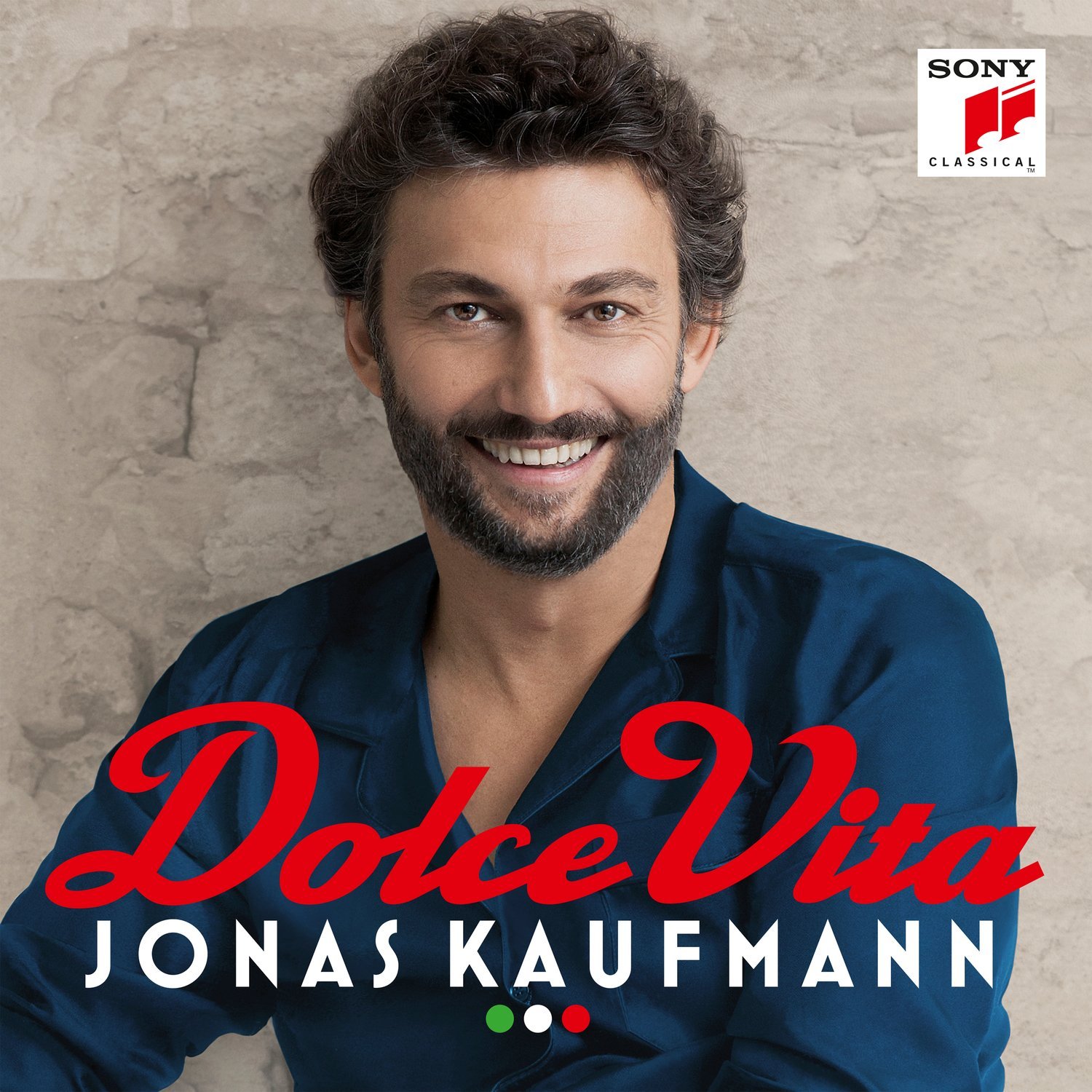
CD REVIEW: DOLCE VITA (Jonas Kaufmann, tenor; Sony Classical 88875183632)

CD REVIEW: DOLCE VITA (Sony Classical 88875183632)Dolce VitaJonas Kaufmann, tenor; Orchestra del Teatro Massimo di Palermo; Asher Fisch, conductor [Sony Classical 88875183632; 1 CD, 66:50; Available from Amazon (USA), fnac (France), iTunes, jpc (Germany), Presto Classical (UK), and major music retailers]

For those whose knowledge of Italian culture is defined by pasta and prohibitively-expensive shoes; those who have never seen the early-morning light creeping into Piazza di San Marco or watched the sun set over the cliffs of Sorrento; those who have never inhaled air heavy with aromas of freshly-pressed olives, just-sliced lemons, and truffles still damp with earth; for those for whom Italy is an irregular boot on a map, la dolce vita is perhaps nothing more than a poetic conceit or a 1960 Federico Fellini film seen on television during a sleepless night. Perhaps it is something genetic, something that those without Italian blood in their veins can observe and experience but never possess, a cultural essence as elusive as the answers to Turandot’s riddles. Like many of those aspects of life that are most difficult to translate into words, perhaps la dolce vita is an ever-changing spezzatino of the simplest ingredients: family dinners, hand-in-hand walks at twilight, Tuscan vistas, and the Amalfi sea air. The notion that Italians stroll through the streets of their towns great and small with operatic arias swelling their hearts and lungs is no more accurate than the cinematically-induced supposition that organized crime is a national pastime, but song is an integral part of Italy’s immortal mystique: ‘cambiano i suonatori,’ Italians say, ‘ma la musica è sempre quella.’ Dolce Vita, German tenor Jonas Kaufmann’s Sony Classical omaggio to the Italian spirit that has enthralled him since family holidays took him as a boy from his native Bavaria to the land of bel canto, is an affectionate survey of eighteen songs that epitomize the inimitable musical soul of bella Italia. La dolce vita is an ephemeral concept with different meanings for different people at different times, but hearing this disc can transport even the listener whose closest contact with Italy is the neighborhood pizzeria to the patria melodiosa of Pasta, Patti, Gigli, and Gobbi.

In the years since José Carreras, Plácido Domingo, and Luciano Pavarotti redefined the commercial potential of tenor singing with their 1990 concert at the Terme di Caracalla, the recording of which launched the global Three Tenors phenomenon, Lucio Dalla’s ‘Caruso’ and Ruggero Leoncavallo’s ‘Mattinata’ have been two of the unofficial anthems of aggressively-marketed tenordom. Pavarotti absorbed ‘Caruso’ into his concert repertory very soon after its composition, and the song is now performed by tenors of every imaginable sub-Fach. Kaufmann sings the number affectionately but without overdoing the pathos, allowing the text to speak for itself without ruining his performance with syrupy pseudo-tragedy. Likewise, Kaufmann’s artistic shrewdness steers him clear of the temptation to sing ‘Mattinata’ as though it were a lost aria from Pagliacci. There is no lack of drama in his performance, but it is drama drawn from the song itself rather than imposed on it. Pacing these songs is hardly the equivalent of conducting Parsifal, but Israeli conductor Asher Fisch provides solid support in these and all of the selections on Dolce Vita, seconded by enthusiastic but sometimes rough-edged playing by the Orchestra del Teatro Massimo di Palermo.

No information about precisely where and when this disc was recorded is provided, but Kaufmann’s vocalism often sounds fatigued, especially in the near-relentless assaults on his upper register. A component of the tenor’s artistic magnetism is the thoughtfulness of his endeavors, however, and this is no empty-headed recital of sunny tunes. Kaufmann looks deeply though not necessarily critically into the texts and structures of these songs, and he honors Italy by highlighting the variety and skillfulness of purveyors of her popular song. Nino Rota was one of Italy’s—and the world’s—most significant Twentieth-Century tunesmiths, and his and lyricist Gianni Boncompagni’s ‘Parla più piano,’ known for its use in the film The Godfather, receives from Kaufmann a reading distinguished by subtlety and understatement. At his most emphatic, Kaufmann never stands in the way of the music. To his credit, he simply sings these songs rather than engaging in self-indulgent, pretentious ‘interpreting.’ ‘Passione,’ with music by Ernesto Tagliaferri and Nicola Valente and words by Libero Bovio, is especially effective here because Kaufmann focuses on the relationship between the words and the melodic line rather than on consciously striving to create a particular mood: this the songs does without manipulation, but not all singers are perceptive enough to notice. The same is true of ‘Un amore così grande,’ and Kaufmann devotes equal attention to the song’s music by Guido Maria Ferrilli and words by composer and Antonella Maggio. The dark timbre of his voice is often at odds with the bright patinas of this music, and though his good diction is not apt to be mistaken for that of a native speaker he intelligently puts the contrast between the wide-open emotions of a song like Romano Musumarra’s and Luca Barbarossa’s ‘Il canto’ and his opaque vowels to use as an expressive device.

​Giovanni d’Anzi’s and Tito Manlio’s ‘Voglio vivere così’ is dispatched by Kaufmann with gleaming tones, the lyrics enunciated with clarity. The charm of Salvatore Cardillo’s and Riccardo Cordiferro’s ‘Catari’, Catari’ (Core ’ngrato)’ finds an uninhibited outlet in the tenor’s traversal, the muscular sound of his voice giving the music a rhythmic spine that it lacks in many performances. The verve with which Kaufmann approaches each song is especially beneficial in his accounts of Ernesto de Curtis’s and Domenico Furnò’s ‘Ti voglio tanto bene’ and ‘Non ti scordar di me.’ A great-grandson of composer Saverio Mercadante, several of whose operatic rôles for tenor would be near-ideal fits for Kaufmann, De Curtis is one of the great songwriters of any era and nationality, and his music often seems to tap a vein that flows directly from the heart of Italy. Kaufmann cloaks ‘Ti voglio tanto bene’ in ardent yearning, and his bronzed sound makes the evergreen ‘Non ti scordar di me’ sound like a musical and situational cousin of Jacques Brel’s ‘Ne me quittes pas.’ With lyrics by Ernesto’s brother Giambattista de Curtis, ‘Torna a Surriento’ is another of the younger de Curtis’s finest achievements. Both brothers would undoubtedly be appreciative of this recording of their song, words and music given their due without the slightest suggestion of artifice.

Kaufmann sings the anonymous ‘Fenesta ca lucive’ incisively. As elsewhere on Dolce Vita, however, the results of his commendably straightforward endeavor are compromised to an extent by his toil. Still, no concerns complicate enjoyment of his voicing of Stanislao Gastaldon’s ‘Musica proibita’ and Cesare Andrea Bixio’s and Ennio Neri’s [presumably of no relation to the obsidian-voiced bass Giulio] ‘Parlami d’amore, Mariù.’ It is sometimes stated that Kaufmann, a singer with Verdi’s Manrico, Don Alvaro, Don Carlo, and now Radamès and Wagner’s Lohengrin, Walther von Stolzing, Siegmund, and Parsifal in his repertory, possesses an uncommonly large voice, but the strength that he commands is produced by projection, not amplitude or volume. The idea that big voices, powerful voices, and loud voices are identical and interchangeable is potentially ruinous for young singers, but Kaufmann is unusually astute in managing his resources according to the needs of his unique instrument, pushing histrionically but never vocally in his portrayals of characters like Puccini’s Cavaradossi and Giordano’s Andrea Chénier. In Domenico Modugno’s and Franco Migliacci’s ‘Volare,’ the singer’s voice soars above the picturesque landscape evoked by the orchestra. Kaufmann’s performance of Vincenzo de Crescenzo’s and Luigi Sica’s ‘Rondine al nido’ is one of the greatest joys of Dolce Vita. There is always a fascination in hearing serious artists take on ‘lighter’ repertory, but in the context of Dolce Vita it is Kaufmann’s seriousness, apparent in his sincerity of expression, that is the light that illuminates the beauties of these songs.

Familiarized throughout the world by singers like Sarah Brightman, Andrea Bocelli, and Josh Groban, Francesco Sartori’s and Lucio Quarantotto’s ‘opera pop’ hit ‘Con te partirò’ remains one of the highest-grossing songs in any genre owing in no small part to its chorus, a soaring melody with the visceral appeal of a Puccini aria. Though preferable to an effortful, belted climax, the falsetto ending here is a misjudgment, sounding oddly strained, but, with no disrespect to the ranks of its previous interpreters, hearing a voice of true substance in the song is most welcome. The Eros Ramazzotti-esque pop croon that Kaufmann adopts for the disc’s final track, Stephin Merritt’s and Zucchero’s ‘Il libro dell‘amore,’ is anything but the most attractive of the sounds that the tenor produces in the course of Dolce Vita, but his performance of the song is strangely beguiling. Sounding properly awed and perhaps slightly frightened by what the pages of this book of love contain, one of the world’s most celebrated singers is for a moment an awkward boy tasting love for the first time. Through the power of song, his voice becomes that of every earnest lover.

A nation’s cultural identity cannot be reduced to platitudes and soundbites. It is impossible even with avalanches of words to quantify the qualities that make one community’s way of life different from others’. So much time is wasted contemplating what separates us from one another when what truly matters, what gives misguided and mistrusting humanity hope, is facilitating and fostering connections that unite us. Perhaps Italy’s appeal extends so far beyond her borders and diaspora because her culture, so recognizable even when undefinable, is endearingly welcoming. Join an Italian family at table, and it no longer matters which nation’s arms grace one’s passport: to be invited is to be accepted and embraced, to be initiated into a culture that thrives on celebrations of life’s moments, good and bad. No disc can fully capture or convey the spirit of Italy, but in the sixty-seven minutes of Dolce Vita Jonas Kaufmann blends the sultry, sensual sounds of timeless Italy into a savory ragù that nourishes the senses. Dolce Vita is far from perfect, but so are Italy and those who love her. Viva le imperfezioni!

IN REVIEW: Tenor JONAS KAUFMANN [Photo by Julian Hargreaves, © by Sony Classical]La bella voce della dolce vita: Tenor Jonas Kaufmann, who celebrates the exuberant spirit of Italy on the Sony Classical recording Dolce Vita
[Photo by Julian Hargreaves, © by Sony Classical]

07 October 2016

BEST VOCAL RECITAL DISC OF 2016: Gustav Mahler, Antonín Dvořák, & Jean Sibelius — ALL WHO WANDER (Jamie Barton, mezzo-soprano; Brian Zeger, piano; Delos DE 3494)

BEST VOCAL RECITAL DISC OF 2016: ALL WHO WANDER (Delos DE 3494)GUSTAV MAHLER (1860 – 1911), ANTONÍN DVOŘÁK (1841 – 1904), and JEAN SIBELIUS (1865 – 1957): All Who WanderJamie Barton, mezzo-soprano; Brian Zeger, piano [Recorded at SUNY Purchase, New York, USA, in August 2015; Delos DE 3494; 1 CD, 60:48; Available from Delos, NAXOS Direct, Amazon (USA), and major music retailers]

Adapting Mark Twain’s famous quip about the ruinous effects of a round of golf on a good walk, there unquestionably are people who would argue that an evening at the opera amounts to a symphonic performance spoiled by voices, and it must be admitted that there are also evenings at the opera that compel even the most diehard opera lovers to agree with that uncharitable sentiment. Opera was, is, and will forever be defined by voices; or, in the Twenty-First Century, it might be argued, by the lack of voices. In the incessant search for The Next Great Talent, opera is not unlike any other artistic—or not so artistic—genre, but there is the perception that in opera the stakes are higher, that the eminent prima donna is the peer of Meryl Streep and Dame Maggie Smith, not of Céline Dion and Dolly Parton. This, in essence, is both opera’s damnation and its salvation: potential audiences, particularly those whose hair is not yet silvered, can be alienated by the caviar-and-chandeliers atmosphere that persists in opera, but this can also be the critical component of convincing a potential buyer that a ticket to the opera is worth a hefty portion of a week’s wages. From Peri to Puts, opera has always been and must always be a spectacle, but when it looks better than it sounds the sacred fire tended by a long succession of dedicated artists is in danger of being extinguished. That flame has often seemed to sputter ominously in recent years, but the singing of Georgia-born mezzo-soprano Jamie Barton scatters rejuvenating sparks like the Santa Ana winds. With her début solo recital disc All Who Wander, this insightfully-conceived, expertly-engineered, and lovingly-presented Delos release, Barton crushes any doubts about her rôle as one of today’s vocal superheroes. If the flame flickers, deprived of the life-giving oxygen of great singing, her voice is the flint needed to rekindle the musical conflagration.

The deserving recipient [a distinction that cannot often be applied] of the 2014 Marian Anderson Award and the 2015 Richard Tucker Award, two of opera’s most coveted prizes, Barton has in recent seasons assumed a place among the sparsely-populated ranks of young singers who are fulfilling the promises of their early potential. With an operatic repertoire encompassing rôles as diverse as the male half of the title couple in Hasse’s Marc'Antonio e Cleopatra, Adalgisa in Bellini’s Norma, and Fricka in Wagner’s Das Rheingold and Die Walküre, she is a musical cat inspired rather than killed by curiosity. In her journey on All Who Wander, she is accompanied by a like-minded fellow traveler, pianist Brian Zeger, a collaborative artist whose own musical curiosity has led him to a level of esteem among his peers that is rightly reserved for the best among them. Here, it is virtually impossible to identify Zeger’s playing of any one song as being markedly more refined than his performances of others. The exceptional nature of the interpretive synchronicity that he contributes to the disc is indicated by the fact that one might think that Barton is playing the piano—a robust-toned Steinway concert grand—herself. Zeger’s sensitivity to the most minute details of Barton’s interpretations of these songs contributes indelibly to the impression that, though she is even now only halfway through her fourth decade, she has lived with this material for many years. Greatly blessed is the singer who enjoys such an organic connection with her pianist in the setting of her first recording of art songs. Equally blessed is the listener who has the privilege of hearing the products of that connection.

Opening with Gustav Mahler’s Fünf Lieder nach Rückert, Barton and Zeger figuratively dive into the deep end. Composed in 1901 and 1902, the Rückert-Lieder are among Mahler’s best-known works, espoused by many of the most gifted Lieder singers of the past century, and their continued popularity owes much to the emotional spectrum that the frail but temperamental composer unfurled in the five songs. The order of the Lieder adopted by Barton is particularly effective, imaginatively traversing the common themes in the otherwise unrelated songs. Placing ‘Ich atmet' einen linden Duft’ first in the sequence provides an engagingly personal introduction, inviting the listener into the very private world of the Lieder. Barton’s luscious timbre and generous but well-controlled vibrato are ideally suited to Mahler’s late-Romantic idiom, and the security of her intonation prompts special appreciation of the harmonies, affirming that even if only by a year or two these pieces are irrefutably of the Twentieth Century. The verbal clarity that she brings to ‘Liebst du um Schönheit’ illuminates Mahler’s poetic handling of the text, the words seeming to generate music as they are enunciated. In the thorny writing of ‘Blicke mir nicht in die Lieder!’, it is the sheer tonal amplitude that Barton has at her command that impresses, her precision as awesome as her power. The purity of line that she maintains in ‘Um Mitternacht’ coaxes the full measure of ethereal poignancy from the music. As in its four companions, the mezzo-soprano’s intuitive phrasing transforms ‘Ich bin der Welt abhanden gekommen’ into a microcosm in which an intimate drama plays out from start to finish within the song’s duration. The Rückert-Lieder are not always a good repertory choice for young singers, but Barton masters their psychological challenges as unflappably as she meets their musical demands.

Barton supplements the Rückert-Lieder with performances of three additional Lieder by Mahler, each of which has its own very specific Zeitgeist. The ambiguity of ‘Ich ging mit Lust durch einen grünen Wald’ is resolved in this performance with an unmistakable aura of tragedy, the anonymous poet’s final question, ‘Wo ist dein Herzliebster geblieben?’, answered by the dark coloration of the singer’s voice. The clouds continue to gather in Barton’s stormy account of ‘Erinnerung,’ the song’s lyricism flowing on the stream of her caramel-hued tone. Melodically, ‘Scheiden und Meiden’ is one of Mahler’s most appealing Lieder, and Zeger plays the ebullient piano part with the impassioned concentration of Callas singing the cadenza of Lucia’s mad scene. Barton’s singing of this song is representative of her approach to the Mahler selections: the voice expands as the music dictates, verbal inflections follow the dictates of the text, and dynamics are determined by the score.

The tremendous difficulties of the Czech language for non-native speakers likely accounts in large part for the neglect, apart from its most famous constituent, by important singers of Antonín Dvořák’s Opus 55 Cigánské melodie. Merely for including these brilliantly tuneful songs on All Who Wander, Barton deserves the gratitude of every listener who appreciates Dvořák’s music, but the quality of her performances of the songs, musically and linguistically, surely qualifies her as an honorary citizen of Dvořák’s native Nelahozeves. Both Adolf Heyduk’s texts and Dvořák’s music were strongly influenced by Czech and Slovak folk song, and the immediacy of Barton’s singing of ‘Má píseň zas mi láskou zní’ bristles with Romany spirit: her song indeed ‘rings out so loud with love.’ The sting of loss that resounds in the conjured tinkling of the triangle in ‘Aj! Kterak trojhranec můj přerozkošně zvoní’ is unexpectedly moving in this performance, and the despair of ‘A les je tichý kolem kol’ is transported from the singer’s heart to the listener’s ears on a torrent of impeccably-managed vocalism. ‘Když mne stará matka zpívat, zpívat učívala,’ frequently translated as ‘Songs my mother taught me,’ is the most familiar of these songs and perhaps the best-known song in the Czech repertory, but there is nothing studied or hackneyed in Barton’s performance of it. The mother’s tears that saturate the text fall in the mezzo-soprano’s singing without diluting the focus of the voice. The brighter sentiments of ‘Struna naladěna’ are also tinged with foreboding, but this and the pair of songs that conclude the set, ‘Široké rukávy a široké gatě’ and ‘Dejte klec jestřábu ze zlata ryzého’ grippingly evoke the unfettered freedom and wild landscapes of gypsy life. As she sings these songs, Barton seems to metamorphose into a Bohemian girl, loosing her hair to the night breeze and unburdening her broken heart through song.

Like Dvořák’s Cigánské melodie, the art songs of Jean Sibelius are far too little known beyond the circle of singers who speak the languages of their texts. Written in the last years of the Nineteenth and the first years of the Twentieth Centuries, the Opera 36 and 37 songs are among the most popular of Sibelius’s contributions to the art song genre—popular, that is, within the confines of listeners who are aware of Sibelius’s songs at all. Progressing inevitably to its cathartic modulation from minor to major, ‘Svarta rosor’ (Op. 36, No. 1) is suffused with anguish, but Barton never indulges the temptation to over-emote. The crashing waves invoked in the text of ‘Säv, säv, susa’ (Op. 36, No. 4) flood Barton’s voice but do not sweep her off course, contrasting tellingly with the delicacy of ‘Flickan kom ifrån sin älsklings mote’ (Op. 37, No. 5), the sorrow of the lines ‘Senast kom hon hem med bleka kinder; Ty de bleknat genom älskarns otro’ gently but profoundly expressed by vocal shading. The vivid imagery of ‘Kyssens hopp’ (Op. 13, No. 2) receives from Barton an interpretation of touchingly naïve idealism. The paean to March snow in ‘Marssnön’ (Op. 36, No. 5) is no less effective as sung here by the mezzo-soprano, the vernal warmth of her timbre meaningfully juxtaposed with the frigidity of the song’s words. Once heard, the tranquil, haunted eloquence with which Barton voices ‘En dröm lik sippans liv så kort uti en vårgrön ängd’ in ‘Var det en dröm?’ (Op. 37, No. 4) cannot be forgotten. As she and Zeger perform them, though, this is true of every line on All Who Wander. The wanderers of these songs find in this artistic partnership the kind of welcoming sanctuary for which the restless soul pines.

Great voices are ever in short supply. Those who endlessly lament that the first sixteen years of the Twenty-First Century have produced no Flagstad, Callas, Tebaldi, or Sutherland are seemingly content to ignore the fact that other generations also failed to cultivate singers with these ladies’ singular abilities. Singers such as these and countless others—Farinelli, Bordoni, Cuzzoni, Pasta, Malibran, Viardot, Falcon, Tamburini, Rubini, Nordica, Caruso, Muzio—were unique phenomena, no more duplicable than Molière, Einstein, and Picasso. Flagstad’s timbre, Callas’s chromatic scales, Tebaldi’s pianissimi, and Sutherland’s trill are artifacts of opera’s past as invaluable as the now-tattered flag that flew over Fort McHenry during a fateful night in the War of 1812, the rudimentary craft that lofted Orville Wright above Kitty Hawk, and Judy Garland’s ruby slippers, but they are not collectively or individually the criteria against which future generations of singers should be judged. To sing Isolde with beauty and integrity reminiscent of Flagstad’s is one thing, but to sing the music precisely as Flagstad sang it, though undeniably desirable, is not only to be a cipher rather than a genuine artist but also to rob Flagstad of her enduring significance. There are aspects of Jamie Barton’s artistry that recall a number of singers of the past: the burnished sound of her lower register recalls Ernestine Schumann-Heink and Clara Butt, her determination recalls Kathleen Ferrier, her dramatic instincts recall Irene Kramarich, and her range and stylistic versatility recall Giulietta Simionato. Whether following the paths of Ferrier in music by Mahler or Simionato in rôles like Giovanna Seymour in Donizetti’s Anna Bolena, she is nonetheless emphatically her own artist. All Who Wander is a testament to Barton’s artistic individuality—and, equally importantly, to the depths of her talent. No, the Twenty-First Century has given us no Flagstad or Callas, but what a gift we have been given in Jamie Barton.