04 October 2022

RECORDING REVIEW: Ruggero Leoncavallo — ZINGARI (K. Stoyanova, A. Soghomonyan, S. Gaertner, Ł. Goliński; Opera Rara ORC61)

IN REVIEW: Ruggero Leoncavallo - ZINGARI (Opera Rara ORC61)RUGGERO LEONCAVALLO (1857 – 1919): ZingariKrassimira Stoyanova (Fleana), Arsen Soghomonyan (Radu), Stephen Gaertner (Tamar), Łukasz Goliński (Il vecchio); Opera Rara Chorus, Royal Philharmonic Orchestra; Carlo Rizzi, conductor [Recorded in Fairfield Concert Gall, Croydon, UK, 28 November – 1 December 2021; Opera Rara ORC61; 1 CD, 64:23; Available from Opera Rara, Amazon (USA), jpc (Germany), Presto Music (UK), and major music retailers and streaming services]

On stage and on records, opera’s history encompasses hosts of missed opportunities and fortuitous occurrences. Among particularly serendipitous instances of the latter phenomenon is the avid public reception for a 1911 production of Ruggero Leoncavallo’s Pagliacci prompting London’s Hippodrome Theatre to commission the composer to write a new opera for the venue. Two decades after the work’s première, the English capital remained enthralled by the dramatic intensity of Pagliacci—the quality, many contemporary critics argued, that Leoncavallo had not managed to replicate in his subsequent operas. Keen to create a new piece with theatrical impact that would rival that of Pagliacci, Leoncavallo chose as his source for the London opera’s plot Alexander Pushkin’s 1827 poem «Цыга́ны» (‘Gypsies’), a seminal work that—in the same year in which Pagliacci was first performed, incidentally—inspired the young Sergei Rachmaninoff’s Aleko («Алеко»).

Elements of Pushkin’s stark narrative of colliding cultures and amorous transience adapted for the stage by Enrico Cavacchioli and Guglielmo Emanuel, Leoncavallo’s opera for the Hippodrome became Zingari, a seventy-minute work in two episodes that could be easily mounted alongside the sorts of popular entertainment for which the theatre was renowned in middle-class society during the reign of George V. Zingari having been conceived with the goal of giving Londoners a suitably similar successor to the composer’s best-known opera, reminiscences of Pagliacci are expected, but Leoncavallo brought to the composition of Zingari an array of musical and dramatic influences.

Parallels of Verdi’s charged juxtapositions of private distress and public celebration in Don Carlos and La forza del destino and the exoticism of Aida abound in Zingari, and there are passages in which shadows of Boito’s Mefistofele, Ponchielli’s La gioconda, and Puccini’s Madama Butterfly lurk in Zingari’s Romani camp. Enriched by instruments more often heard in the operas of Richard Strauss and Erich Wolfgang Korngold than in Italian verismo, Leoncavallo’s orchestral writing in Zingari demonstrates mastery of instrumental timbres and combinations that unexpectedly distinguish the composer, too often dismissed as a purveyor of banality, as a peer of Ravel and Respighi.

The vocal demands of Zingari’s four rôles—the free-spirited Roma youth Fleana; her father, il vecchio (the Old Man); the Roma poet, Tamar; and the aristocratic Radu—have much in common with those of Pagliacci’s principal players. Utilizing Martin Fitzpatrick’s reconstruction of the score’s original form, the revitalization necessitated by portions of the opera that may have been revised or removed before the opera’s first performance on 16 September 1912, falling victim to the Second World War’s destruction, Opera Rara’s exhilarating recording of Zingari, recorded in conjunction with an acclaimed concert performance, includes music missing from the score that was published by Sonzogno in 1912. In years past, José Carreras, Roberto Alagna, and Angela Gheorghiu recorded music from Zingari, but widely-known singers whose espousal might have improved the opera’s fortune overlooked it, the music’s difficulties even in truncated form exiling Zingari to the realm of missed opportunities. How differently its trajectory in the century since its creation might have been had Zingari benefited from the attention of singers like Maria Callas, Franco Corelli, and Tito Gobbi.

From the first bars of the opera’s spirited Overture to the harrowing final scene, in which the heroine and her Roma lover perish in a fire set by her husband, conductor Carlo Rizzi paces a performance that neither inflates Zingari’s melodrama nor makes apologies for it. As in his conducting of Verdi repertoire, Rizzi fuses elegance with energy, the prudence of his tempi accentuating the ingenuity of Leoncavallo’s escalations of musical tension. The Royal Philharmonic Orchestra musicians and Opera Rara Chorus singers respond to Rizzi’s leadership with irreproachable musicality, the choristers’ singing compellingly conveying the Roma community’s insularity and vitality. The verismo orchestra augmented by celesta and harmonium, Zingari’s unique aural profile is nurtured by Rizzi’s intuitive handling of rhythmic transitions. Subtleties of Leoncavallo’s part writing are reliably audible, but Rizzi’s conducting, redolent of the tradition of Vittorio Gui and Victor de Sabata, engenders a true performance of Zingari in which soloists, chorus, and orchestra transport the listener from a Briish recording studio to the bank of the Danube.

Bringing an uncommonly youthful voice to a stereotypical operatic patriarch, Polish bass-baritone Łukasz Goliński sings Leoncavallo’s music for Il vecchio, Fleana’s father and the Roma camp’s de facto leader, with assurance and rousing authority. In Episode One, he sings ‘Doman risplenderà nel sole ancor!’ and ‘E sia! Rimani all’ombra della tenda’ commandingly, first confronting Fleana and her unknown lover with alarm and then welcoming Radu into the Roma society with paternal warmth. Less involved in the latter half of the opera, Il vecchio witnesses the horrific death of his daughter but enigmatically decrees that her killer, the spurned Radu, be allowed to escape, his action having been prompted by madness. Goliński imparts the father’s terror and helplessness as the flames engulf Fleana and Tamar, but an eery calmness permeates his absolution of Radu, suggesting that he assumes culpability for Fleana’s demise owing to his acceptance of an outsider into the Roma order. Goliński’s firm, focused vocalism lends each of Il vecchio’s utterances dramatic impact, characterizing him as a severe but thoughtful figure.

Wonderfully vivid of voice and personality as Cascart in Opera Rara’s 2015 recording of Zazà [reviewed here], baritone Stephen Gaertner ignites this Zingari with his charismatic portrayal of the Roma poet Tamar. The pragmatic bard confiding to Il vecchio in Episode One that Fleana has been observed lurking about the camp by night in the company of a stranger, Gaertner voices ‘C’è uno straniero che s’aggira a notte’ mysteriously, passion for Fleana already saturating his tones. The composer’s Lamento angoscioso sostenuto instruction is meticulously heeded in ‘Ah! taci! non lo diri,’ in which the baritone’s repeated top E♭s evoke the desperation of Tamar’s desire. Intruding on Fleana and Radu, Gaertner hurls Tamar’s Fs and G♭ at the lovers with extraordinary force and vocal confidence. The delicate ‘Ah! Canto notturno nel firmamento,’ heard from afar as Fleana and Radu celebrate their union, is bewitchingly sung, the song’s disquieting effect on Fleana wholly credible.

Guiding his Roma brethren to safety at the beginning of Episode Two, Tamar is no longer the idealist scorned by Fleana earlier in the opera. Proving himself to be a man of decisive action, he has kindled Fleana’s love, and Gaertner sings Tamar’s lines in their scene with bracing bravado. The fateful reprise of ‘Canto notturo nel firmamento’ is sung as mesmerizingly as its first incarnation, and ‘Bella! Bella! Sei qui tutta fremente!’ bristles with infatuation. Throughout the duet with Fleana, Gaertner’s vocalism smolders with sensuality, his singing of ‘Sono il rogo che s’accende’ suffused with longing. To Leoncavallo’s credit, the conflagration ignited by Radu consumes Fleana and Tamar without overwrought operatic histrionics, but the doomed pair’s terror is palpable in this performance. The dramatic immediacy of Gaertner’s unflappably secure, bronzed singing is consistently galvanizing, but the opera’s verismo intensity never goads him into shouting and snarling.

Musically, Radu is Zingari’s most conventional character, the romantic fervor of his vocal lines differentiating him from the Roma community. Singing the rôle with strength and sensitivity, tenor Arsen Soghomonyan gives the volatile man a noble bearing that heightens the shock of his ultimate act of vengeance. In the first part of the opera, Soghomonyan voices ‘Principe! Radu io son’ proudly, the top As ringing brightly, and the exultant top B in the duet with Fleana, its eroticism blossoming in his artfully-phrased ‘Eccolo finalmente il sogno,’ communicates the depth of Radu’s zeal. The totality of his surrender to Roma life permeates ‘Tutta la vita mia ti donerò,’ but sinister aspects of Radu’s devotion manifest in the latter part of the opera.

The despair of Soghomonyan’s voicing of ‘M’attendevi? Fleana, io t’ho pensato nella mia strada’ is tinged with mania, and his singing in the final row with Fleana discloses deteriorating emotional stability. Soghomonyan delivers ‘Perduto! Tutto! Ho perduto la pace vagabonda’ powerfully, Radu’s anguish bursting from the vocal line. The tessitura of Radu’s music is punishing, but Soghomonyan’s voice copes heroically, lacking Italianate squillo but steady and supported from the bottom of the compass to top C. The tenor’s depiction of Radu’s spiral into madness and murderous rage is all the more believable for being fashioned without lachrymose excess, his trust in the music’s capacity for storytelling yielding a performance of riveting sincerity.

Soprano Krassimira Stoyanova is one of the Twenty-First Century’s most versatile singers, and Leoncavallo’s writing for Fleana in Zingari makes use of virtually the full spectrum of her technical abilities. Stoyanova ideally partners her Radu, her voice also possessing little true morbidezza but deployed with absolute fidelity to the score. Coming from the periphery of the Roma encampment with Radu in Episode One, this Fleana voices ‘Discioglietelo prima dalle corde’ hypnotically, limning her fascination with the bold stranger, and Stoyanova projects ‘Tutte le rame scattano e si piegano!’ radiantly, the top As and B in the duet with Radu evincing a sense of elation. Darker accents color the timbre when her Fleana contemptuously dismisses Tamar, her account of ‘Addormentarmi, accarezzarmi nella pietà’ throbbing with disgust. The Roma song with which Fleana entertains her people is the least-persuasive portion of Stoyanova’s performance, the vocal filigree articulated cleanly but laboriously. She returns to form in the duet with Radu, the text and the vocal line enunciated with expressivity.

When her voice is first heard after the Intermezzo, Stoyanova’s Fleana has unmistakably undergone a crucial transformation, the softness of the amorous exchanges with Radu in the first episode replaced by a glinting vein of vocal steel that conveys exasperation and irrepressible impetuosity. In the scene with Tamar, the disdain of Episode One gives way to fascination, his rugged mysticism enthralling her. Disenfranchisement animates Stoyanova’s singing in the scene with Radu, the top Bs in her defiant ‘Tagliami! Abbraciami!’ striking at the hapless man like daggers. Fleana embracing her yearning for Tamar, ‘Incantesimo dell’ora che ci fa rabbrividir!’ in their final duet is voiced with abandon. Stylistically, her part in Zingari could hardly be more different from her previous undertaking for Opera Rara, the title rôle in Donizetti’s Maria di Rohan, but there are undeniable temperamental kinships between Stoyanova’s Maria and Fleana. Surrounded in both instances by worthy colleagues, she embodies Opera Rara’s core mission, performing unjustly-neglected music with advocacy bolstered by musical and scholarly integrity. With this performance, Leoncavallo’s Zingari reclaims the appeal that it wielded 110 years ago.

12 September 2022

PERFORMANCE REVIEW: Giacomo Puccini — LA BOHÈME (R.M. Lamp, K. Yamamoto, S. Kim, K. Piper Brown, K. Godinez, D. Sedov, Y. Kissin, P. Suiandziga, E.J. Ramos Fuentes; Opera in Williamsburg, 7 September 2022)

IN REVIEW: the cast of Opera in Williamsburg's September 2022 production of Giacomo Puccini's LA BOHÈME [Photograph by Andrew Keefe, © by Gentle Grace Photography & Opera in Williamsburg]GIACOMO PUCCINI (1858 – 1924): La bohèmeRobyn Marie Lamp (Mimì), Kohei Yamamoto(Rodolfo), Suchan Kim (Marcello), Kearstin Piper Brown (Musetta), Kevin Godinez (Schaunard), Denis Sedov (Colline), Yuri Kissin (Benoît, Alcindoro), Pavel Suliandziga (Parpignol), Eliam J. Ramos Fuentes (Un sergente dei doganieri); Opera in Williamsburg Vocal Ensemble and Orchestra; Jorge Parodi, conductor [Eve Summer, stage director; Naama Zahavi-Ely, producer; Troy Martin-O’shia, lighting designer; Eric Lamp, costume designer; Opera in Williamsburg, Kimball Theatre, Williamsburg, Virginia, USA; Wednesday, 7 September 2022]

When the stories eventually collected and issued in a single volume as Scènes de la vie de bohème were first published in the literary periodical Le Corsaire in the latter half of the 1840s, their creator, Henri Murger, was not yet thirty years old but already more than halfway through a life that would span only thirty-nine years. Like the struggling artists and figures on the margins of society of whom he wrote, Murger was a citoyen of the oft-romanticized Parisian Quartier latin, where his observations of the hardships endured by his community inspired his poetry and prose. Despite the critical success of his work and his receipt of the Légion d’Honneur in 1859, financial security eluded Murger, whose early death in 1861 prefigured that of the heroine of the best-known operatic adaptation of his Scènes de la vie de bohème, Giacomo Puccini’s La bohème. Like Puccini’s consumptive Mimì, Murger fell victim to the cruel realities of life in Paris, her famous lights extinguished by poverty and disillusionment.

Premièred at Teatro Regio di Torino on 1 February 1896, Puccini’s setting of Giuseppe Giacosa’s and Luigi Illica’s treatment of Murger’s stories reached the stage fifteen months before Ruggero Leoncavallo’s La bohème—more faithful in some aspects to Scènes de la vie de bohème—was first performed in Venice. Puccini’s score quickly circumnavigated the operatic world, reaching the Metropolitan Opera in a 1900 performance in Los Angeles in which, in a bizarre coupling, the house’s first Mimì, Dame Nellie Melba, also sang the mad scene from Lucia di Lammermoor. From those beginnings, La bohème has become one of the most frequently-performed operas in the international repertory.

In the latter half of the Twentieth Century, public awareness of La bohème was increasingly shaped by large-scale productions like John Copley’s and Richard Jones’s stagings for London’s Royal Opera House and the world-famous 1981 Franco Zeffirelli MET production, still in the company’s repertory after four decades. Alongside such behemoth shows, Opera in Williamsburg’s production of La bohème in the 410-seat Kimball Theatre was framed by very different theatrical precepts, facilitating an uncommon degree of intimacy in a drama in which subtle sentiments are often obscured. Their artistic and intellectual pursuits notwithstanding, Puccini’s bohemians are simple people whose story captivates audiences because the emotions are abundantly familiar. In this Bohème, the interactions among the characters and the singers portraying them observed so closely, the opera’s tragedy was transfixingly personal.

As in all of Opera in Williamsburg’s recent productions (Pagliacci in June 2021, L’elisir d’amore in September 2021, and Così fan tutte in May 2022), the company’s founder and Artistic and General Director Naama Zahavi-Ely supervised a staging in which wonderfully imaginative use was made of the limited resources at the company’s disposal. Crucially, she staffs Opera in Williamsburg productions with personnel who share her great passion for opera—a quality that molded her work in La bohème. Director Eve Summer devised a staging that supplied the humor and tears expected in La bohème, ingenuously and movingly adapted to the venue’s spatial limitations.

Aided by Philip Lupo’s beautiful scenic projections and Troy Martin-O’shia’s intelligent lighting designs, Summer and Zahavi-Ely drew the audience into the opera’s most personal dimensions. Also appearing as the much-abused serveur at Café Momus in Act Two, costume designer Eric Lamp dressed the bohemians in modern attire that brought Joe Orton’s London to mind. Especially gratifying was the manner in which the production’s visual elements paralleled the performance’s musical progression. Every member of the cast seemed wholly at ease in this staging, moving and singing with comfort, and the opera’s journey from light-hearted playfulness to wrenching tragedy was therefore unusually natural.

Opera in Williamsburg’s productions routinely achieve with modesty what larger companies’ performances manufacture with opulence. This was particularly true of the orchestral component of this La bohème. Employing Jonathan Lyness’s reduction of Puccini’s orchestrations, Music Director Jorge Parodi conducted a performance in which myriad details that are often lost were fully audible. The fifteen musicians in the pit played splendidly throughout the evening, the ability to hear flautist Shannon Vandzura, clarinetist Shawn Buck, and bassoonist Matt Lano so clearly enabling appreciation of the current of bel canto that flows through Puccini’s score. Parodi shaped ensembles energetically, almost too much so in some scenes, but he also relaxed tempi in lyrical passages, encouraging the cast to sing phrases rather than individual notes. His baton technique laudably free of histrionics, Parodi conducted with discernible  comprehension of La bohème’s narrative structure, successfully conveying the depth and affection of Puccini’s musical portraiture to his colleagues and the audience.

IN REVIEW: bass-baritone ELIAM J. RAMOS FUENTES as Il sergente dei doganieri in Opera in Williamsburg's September 2022 production of Giacomo Puccini's LA BOHÈME [Photograph by Andrew Keefe, © by Gentle Grace Photography & Opera in Williamsburg]Alle porte di Parigi: bass-baritone Eliam J. Ramos Fuentes as Il sergente dei doganieri in Opera in Williamsburg’s September 2022 production of Giacomo Puccini’s La bohème
[Photograph by Andrew Keefe, © by Gentle Grace Photography and
Opera in Williamsburg]

One of the most welcome of this Bohème’s many virtues was the remarkable consistency of the casting, the voices heard in smaller rôles of quality equal to those of the principals. The stage’s dimensions not accommodating a chorus of the numbers customarily heard in performances of La bohème, the denizens of Paris were portrayed by a small ensemble of singers including sopranos Kinneret Ely, Stephanie Lupo, Heather Sreves, and Catherine Thorpe, whose vocalism in Act Two’s crowd scene was excitingly robust. As a vendor of treats in Act Two and the Sergente dei doganieri in Act Three, bass-baritone Eliam J. Ramos Fuentes sang strongly and charismatically, exuding first the jovial spirit of the Parisian Christmas Eve and then the weary guard’s ennui as his duties distracted him from reading his newspaper. Ever a source of enjoyment in Opera in Williamsburg productions, tenor Pavel Suliandziga voiced Parpignol’s music with security and charm that it too often lacks, the character here heightening rather than disrupting the scene’s sense of jubilation.

IN REVIEW: (from left to right) bass DENIS SEDOV as Colline, tenor KOHEI YAMAMOTO as Rodolfo, bass-baritone YURI KISSIN as Benoît, baritone KEVIN GODINEZ as Schaunard, and baritone SUCHAN KIM as Marcello in Opera in Williamsburg's September 2022 production of Giacomo Puccini's LA BOHÈME [Photograph by Andrew Keefe, © by Gentle Grace Photography & Opera in Williamsburg]L’affitto è arretrato: (from left to right) bass Denis Sedov as Colline, tenor Kohei Yamamoto as Rodolfo, bass-baritone Yuri Kissin as Benoît, baritone Kevin Godinez as Schaunard, and baritone Suchan Kim as Marcello in Opera in Williamsburg’s September 2022 production of Giacomo Puccini’s La bohème
[Photograph by Andrew Keefe, © by Gentle Grace Photography and
Opera in Williamsburg]

Whether depicted by one singer or divided between two singers, the rôles of the bohemians’ landlord Benoít and Alcindoro, the consigliere di stato besotted with Musetta, are too often woefully sung—or hardly sung at all. Williamsburg’s Benoît and Alcindoro, bass-baritone Yuri Kissin, was feeble of neither voice nor physique. In Act One, there was real danger in his perturbed utterance of the padrone’s ‘A lei ne vengo perchè il trimestre scorso mi promise,’ and the libidinous virility mocked by his tenants was weirdly credible. As Alcindoro, Kissin channelled Dominique Pinon in Diva mode, sparring indignantly with Musetta and glaring menacingly at a member of the audience who dared to laugh at his plight. Creating potent figures rather than the usual caricatures, Kissin voiced both rôles splendidly.

04_Kevin-Godinez-Schaunard_Denis-Sedov-CollineIl musicista ed il filosofo: baritone Kevin Godinez as Schaunard (left) and bass Denis Sedov as Colline (right) in Opera in Williamsburg’s September 2022 production of Giacomo Puccini’s La bohème
[Photograph by Andrew Keefe, © by Gentle Grace Photography and
Opera in Williamsburg]

Few performances of La bohème are distinguished by a quartet of bohemian friends as uniformly excellent, vocally and dramatically, as Opera in Williamsburg’s casting yielded. Baritone Kevin Godinez characterized the musician Schaunard as a man of good humor and deep feelings, his singing of ‘La banca di Francia per voi si sbilancia’ in Act One exemplifying the jocundity of his portrayal. Perturbation rushed to the surface as it became apparent that the tale of the Englishman and the noisy parrot was being ignored, but this Schaunard was too kind to be truly angry. Godinez sang each of the character’s lines in Act Two with dramatic purpose, ensuring that Schaunard was always an individual and not merely a voice in the ensemble, but it was in Act Four that the baritone’s performance reached its pinnacle. Frolicking with the other bohemians before Mimì’s fateful entrance, this Schaunard was unprepared for tragedy. Godinez’s vocal acting in the opera’s final minutes was genuinely affecting: clearly not expecting Mimì to die, Schaunard was overwhelmed by palpable grief. Unfailingly engaging whenever he was on stage, he lent one of opera’s most familiar final scenes heartrending sincerity.

Bass Denis Sedov expanded his association with Opera in Williamsburg with a ruminative depiction of Colline. Contrasting the philosopher’s imposing intelligence with childlike innocence and suggestions of obsessive-compulsive inclinations. Colline’s music in Act One was voiced with irrepressible authority and animation, this man of learning gleefully taking part in his friends’ merrymaking. Sedov’s ‘Una fiammata!’ was aptly incendiary, and his low G on ‘Andiam!’ reverberated exhilaratingly. He, too, made much of his music in Act Two, Colline joining Schaunard in bemusedly observing their friends’ amorous adventures. The impish elation of Sedov’s singing in Act Four turned to remorse when the dying Mimì returned to the garret, his Colline seeming embarrassed by having sported whilst Mimì suffered alone. Regret and hopelessness resounded in his dulcet, subdued traversal of ‘Vecchia zimara.’ For a man of such physical and vocal might, his unassuming bashfulness as Colline withdrew into contemplation and self-recrimination was striking.

IN REVIEW: soprano KEARSTIN PIPER BROWN as Musetta in Opera in Williamsburg's September 2022 production of Giacomo Puccini's LA BOHÈME [Photograph by Andrew Keefe, © by Gentle Grace Photography & Opera in Williamsburg]Una preghiera umile: soprano Kearstin Piper Brown as Musetta in Opera in Williamsburg’s September 2022 production of Giacomo Puccini’s La bohème
[Photograph by Andrew Keefe, © by Gentle Grace Photography and
Opera in Williamsburg]

Even without the furs and jewels with which interpreters of the rôle are often adorned, soprano Kearstin Piper Brown’s Musetta illuminated the stage with elegance and vocal magneticism. Rightly commandeering the spotlight from her first appearance, she toyed with Alcindoro bewitchingly, as much for the benefit of her on-stage audience as for her own amusement. The top Bs evincing Musetta’s desire for total liberation from patriarchal mores, the soprano sang ‘Quando me’n vo’ soletta’ with indomitable éclat. The row with the jealous Marcello in Act Three drew sounds of brash insouciance from this Musetta, but these gave way in Act Four to tones of sublime delicacy.

First declaiming ‘C’è Mimì che mi segue a che sta male’ dolefully, the compassionate lie to Mimì about the muff being a gift from Rodolfo was delivered with gentle tenderness. Piper Brown’s voicing of Musetta’s prayer, ‘Madonna benedetta,’ punctuated by an unusually urgent and unmistakably symbolic request for a screen to shield the flickering candle at Mimì’s bedside, was gorgeously plaintive. Casting her pride aside, Piper Brown’s Musetta silently receded into the background to mourn Mimì, shattered despite having realized that her friend was dying. The relative brevity of the part notwithstanding, Musetta is one of Italian opera’s most iconic rôles, one sometimes diminished by clichés, but, singing sparklingly and acting unaffectedly, Piper Brown made Musetta far more nuanced than a typical operatic seconda donna.

IN REVIEW: baritone SUCHAN KIM as Marcello in Opera in Williamsburg's September 2022 production of Giacomo Puccini's LA BOHÈME [Photograph by Andrew Keefe, © by Gentle Grace Photography & Opera in Williamsburg]Sul lido del Mar Rosso: baritone Suchan Kim as Marcello in Opera in Williamsburg’s September 2022 production of Giacomo Puccini’s La bohème
[Photograph by Andrew Keefe, © by Gentle Grace Photography and
Opera in Williamsburg]

Heard to advantage in all of Opera in Williamsburg’s recent productions, baritone Suchan Kim again earned the audience’s adulation with a thoughtful, marvelously-sung portrayal of Marcello. Hilariously clad in a Snuggie® at the start of Act One, he sang ‘Questo Mar Rosso mi ammollisce’ with a voice that conveyed the frigidity of the unheated garret but simmered with youthful vigor. All of Marcello’s exchanges with his fellow bohemians were voiced with crisp tone and clear diction, Kim demonstrating the innate goodness of the artist’s constitution. In Act Two, ‘Io pur mi sento in vena di gridar’ was pointedly enunciated, and ‘Gioventù mia, to non sei morta’ in the celebrated ensemble brimmed with renewed gusto, Marcello accepting his inability to suppress his attraction to Musetta.

Marcello’s discovery of Mimì outside of the tavern at the beginning of Act Three was the turning point in Kim’s performance. The hearty cheerfulness of the first two acts was replaced by burgeoning concern, the baritone’s singing of ‘È ver, siam qui da un mese’ darkened by doubt, and a sharper edge of exasperation was apparent in the quarreling with Musetta. The pensiveness of Kim’s voicing of ‘Io non so come sia che il mio pennello lavori’ in the Act Four duet with Rodolfo disclosed the young man’s desolation, and an all-too-human guilt shrouded his realization that his reunion with Musetta came at the cost of Mimì’s decline. Apart from a single effortful top F♯ in the duet with Rodolfo, Kim sang Marcello’s music with ease and panache, freeing him to give the earnest painter a soul as captivating as his voice.

IN REVIEW: tenor KOHEI YAMAMOTO as Rodolfo (left) and baritone SUCHAN KIM as Marcello (right) in Opera in Williamsburg's September 2022 production of Giacomo Puccini's LA BOHÈME [Photograph by Andrew Keefe, © by Gentle Grace Photography & Opera in Williamsburg]Amici nel dolore: tenor Kohei Yamamoto as Rodolfo (left) and baritone Suchan Kim as Marcello in Opera in Williamsburg’s September 2022 production of Giacomo Puccini’s La bohème
[Photograph by Andrew Keefe, © by Gentle Grace Photography and
Opera in Williamsburg]

Making his USA début in this performance, Japanese tenor Kohei Yamamoto sang Rodolfo with unwavering commitment to the drama, his voice assuming countless colors as the opera progressed. ‘Nei cieli bigi guardo fumar dai mille comignoli Parigi’ in Act One was sung with bravado, the top As assured, and, following the cavorting with the bohemians and Benoît, an air of seriousness arose in ‘Io resto per terminar l’articolo.’ Yamamoto’s exclamation of ‘Una donna!’ upon hearing Mimì’s voice was filled with wonder, and he imbued the lovers’ first meeting with shy flirtatiousness. Singing ‘Che gelida manina’ in Puccini’s preferred key, D♭ major, he valiantly attempted the interpolated top C expected by audiences but focused not on this one tone but on producing phrasing worthy of a poet. His voicing of ‘O soave fanciulla,’ resolved in accordance with the composer’s wishes with a major triad on E instead of another unwritten top C, radiated new love. This sentiment also suffused the tenor’s singing in Act Two, but the rapture was tarnished by Rodolfo’s domineering admonishments. Nevertheless, Yamamoto sang ‘Questa è Mimì’ and ‘Sappi per tuo governo’ attractively, the voice gleaming with romantic zeal.

Rodolfo faces daunting challenges in Act Three, and Yamamoto conquered them unflinchingly. His ‘Marcello, finalmente!’ glistened with the ebullience heard in Act One, but ‘Già un’ altra volta credetti morte il mio cor’ initiated a metamorphosis to despair. The feigned bitterness of ‘Mimì è una civetta’ evolved into the desperation and shame that emerged in ‘Mimì è tanto malata!’ and the subsequent scene with Mumì, in which the words were articulated with heightened immediacy. Tenor and baritone allying their voices beguilingly, Rodolfo’s duet with Marcello in Act Four was a zenith of the performance. Yamamoto voiced ‘O Mimì, tu più non torni’ despondently but hopefully, fashioning an illusion of happiness that was destroyed by Mimì’s death. Yamamoto’s singing in the final scene was unapologetically harrowing, but he avoided morose distortions. Occasional forcing in the singer’s upper register reminded the listener of how demanding a rôle Rodolfo is, but Yamamoto’s performance also affirmed how memorable a good Rodolfo can be.

IN REVIEW: soprano ROBYN MARIE LAMP as Mimì in Opera in Williamsburg's September 2022 production of Giacomo Puccini's LA BOHÈME [Photograph by Andrew Keefe, © by Gentle Grace Photography & Opera in Williamsburg]Sì, mi chiamano Mimì: soprano Robyn Marie Lamp as Mimì in Opera in Williamsburg’s September production of Giacomo Puccini’s La bohème
[Photograph by Andrew Keefe, © by Gentle Grace Photography and
Opera in Williamsburg]

The heart of Opera in Williamsburg’s Bohème was the sensitive but strong-willed Mimì of soprano Robyn Marie Lamp. The opera’s sound world changes when Mimì’s voice is first heard from outside of the bohemians’ quarters in Act One, but Lamp also altered the psychological trajectory of the drama, her Mimì garnering affection and empathy without overtly seeking them. Encountering Rodolfo for the first time, the demure awkwardness of ‘Scusi...Di grazia, mi s’è spento il lume’ and her timid but capricious search for the missing—actually hidden—key defined her as a sweet but spirited young woman. Lamp sang the aria ‘Sì, mi chiamano Mimì’ radiantly, the beauty of her performance compromised only by pushed top As. Ecstatically joining Rodolfo in duet, she voiced ‘Ah! tu sol comandi, amor!’ artfully, departing for the Momus with a slightly rebellious top C.

As Mimì’s confidence and comfort in the company of the bohemians increased in Act Two, Lamp’s vocalism manifested new facets of her characterization. It was the reticent Mumì of Act One who sang ‘Una cuffietta a pizzi tutta rosa,’ but a new woman materialized in her admiration of Musetta and the ethos she espoused. That woman, still meek but asserting her independence, returned in Act Three, her breathless ‘Sa dirmi, scusi’ divulging the precariousness of her physical state. ‘O! buon Marcello, aiuto!’ surged from Lamp’s lungs and Mimì’s heart, the pair of top B♭s expressing her agony. Mimì overhearing Rodolfo’s assessment of his love’s deteriorating health, she sang ‘Donde lieta uscì al tuo grido d’amore’ with poignant simplicity, her phrasing of ‘Addio, senza rancor’ recalling the exalted tradition of Lucrezia Bori and Licia Albanese.

From the moment of her arrival in the humble garret in Act Four, the brevity of Mimì’s survival was obvious, but Lamp recaptured the optimism and vocal lightness of Act One even as Mimì took her last breath. The love that swelled in her serene voicing of ‘Buon giorno, Marcello, Schaunard, Colline’ and the defiant anticipation in her tranquil ‘Sono andati?’ were immensely moving. Doing big things in small ways is the hallmark of Opera in Williamsburg’s endeavors, and Lamp’s Mimì personified this Bohème’s aesthetics. The effectiveness of a staging of any opera depends not upon grand spaces but upon grand voices, and Opera in Williamsburg’s La bohème had them.

05 September 2022

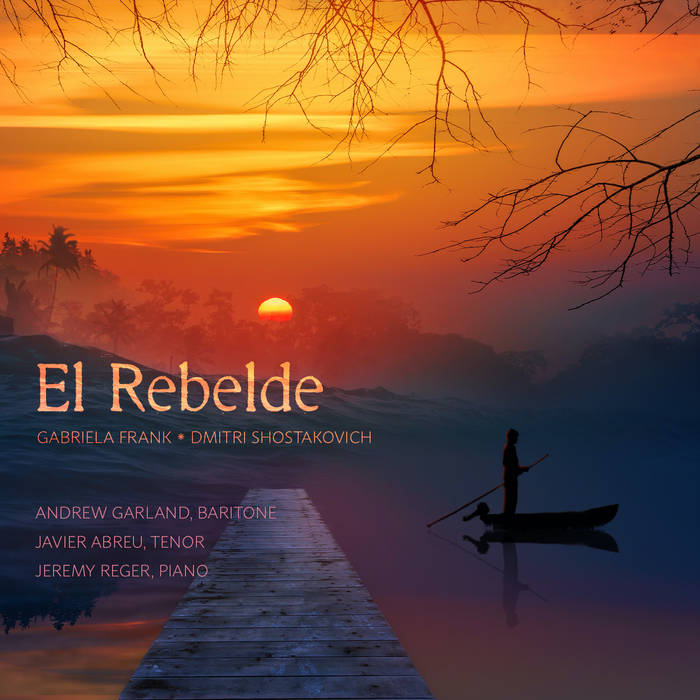
RECORDING REVIEW: Gabriela Lena Frank & Dmitri Shostakovich — EL REBELDE (Andrew Garland, baritone; Javier Abreu, tenor; Jeremy Reger, piano; Art Song Colorado DASP 005)

IN REVIEW: Gabriela Lena Frank & Dmitri Shostakovich - EL REBELDE (Art Song Colorado DASP 005)GABRIELA LENA FRANK (born 1972) and DMITRI SHOSTAKOVICH (1906 – 1975): El rebeldeAndrew Garland, baritone; Javier Abreu, tenor; Jeremy Reger, piano [Recorded in Grusin Recital Hall, University of Colorado, Boulder, Colorado, USA, 23 – 26 May 2022; Art Song Colorado DASP 005; 1 CD, 68:31; Available from Kunaki, Amazon (USA), Bandcamp, Spotify, and major music retailers and streaming services]

Technologies like streaming audio and online archives make exploring and absorbing musical traditions of diverse cultures easier now than ever before, yet many listeners’ musical acquaintances with Spanish-speaking communities are still engendered by works like Rossini’s Il barbiere di Siviglia, Bizet’s Carmen, Lalo’s Symphonie espagnole, and Ravel’s Bolero—music, that is, written by composers with no or tenuous ties to the Hispanic diaspora. Art Song aficionados know cornerstones of the Spanish song repertoire such as Manuel de Falla’s Siete canciones populares españolas and Granados’s Canciones españolas, but what are the ratios of new recordings of songs in Spanish of any level of familiarity to further accounts of Schubert’s Winterreise and Schumann’s Dichterliebe?

A rare trek into the expansive realm of songs by an authentic Spanish-speaking composer and one of other origins who surrendered to the allures of Latin forms, baritone Andrew Garland’s Art Song Colorado recording El Rebelde is precisely what its title proclaims it to be: a rebel. Rejecting the confines of the conventional Spanish-language repertoire that an enterprising vocal artist should sing, Garland and his colleagues rebelliously both extend the boundaries of that body of work by introducing listeners to a collection of songs by a contemporary Latinx composer and rejuvenate too-seldom-performed arrangements of Spanish themes by one of the Twentieth Century’s most celebrated composers. The baritone’s partner in this ambitious voyage, pianist Jeremy Reger, articulates the quixotic transitions of mood and rhythm not with the halting step of a traveler in little-visited territory but with a native’s unflappable confidence, lighting the fuses of the dynamic performances with which Garland obliterates dated notions of what constitutes ‘serious’ Spanish song.

A native Californian whose global ethnic heritage includes Peruvian ancestry, composer Gabriela Lena Frank demonstrates in the pieces included on El Rebelde that she is an innovator whose songwriting encompasses creative uses of interplay between voice and piano and comprehensive knowledge of an array of vocal styles. The eight of her Cantos de Cifar y el Mar Dulce presented on this recording reflect progress in her initiative to provide music for all thirty of Pablo Antonio Cuadra’s Cantos. In these eight songs, Frank creates a remarkable spectrum of aural textures, ranging from serene lyricism to biting dissonance. Propelled by the sharply-defined rhythmic profile of Reger’s pianism, Garland sings the opening Canto, ‘El nacimiento de Cifar,’ engagingly, immediately creating an aura of exotic tension that lures the listener into the intricacies of music and text. A sense of savagery permeates the performance, singer and pianist shrinking from none of the irony and ferocity in the music. Nevertheless, there is tenderness amidst the vehemence of Garland’s voicing of ‘Me diste (¡oh Dios!) una hija,’ his jagged phrasing imparting the psychological intensity of the text.

The song from which the recording takes its title, ‘El rebelde,’ is sung with unapologetic bravado, the baritone relishing every non-Classical vocal effect and assault on the upper register. Frank’s writing often asks the singer to integrate a populist sound recalling Ibrahim Ferrer with a Verdi baritone’s top notes, and Garland rises to the task unflinchingly. His accounts of ‘Tomasito, el cuque’ and ‘El niño’ create a palpable narrative, heightened by Reger’s virtuosic deployment of the piano’s arsenal of piquant sounds, and they achieve a striking contrast with a profoundly expressive traversal of ‘Eufemia.’ Likewise, the conflicting but uncannily complementary subtlety and abrasiveness of ‘En la vela del Angelito’ and ‘Pescador’ are affectingly limned, each word projected with cognizance of its significance in the songs’ cumulative contexts.

Frank’s Peruvian roots blossom resplendently in Cuatro Canciones Andinas, a group of songs utilizing José María Arguedas’s Spanish translations of texts by the Quechua people, from whose ranks the Inca civilization arose. The music pulses with sonic evocations of the rugged landscapes of the Cordillera Oriental, evincing the imposing peaks’ ambiguities as both hardship and safe harbor for Peru’s indigenous peoples. As performed by Garland and Reger, ‘Despedida’ is all the more touching for their unerring avoidance of saccharine affectation. They also approach ‘Yo crio una mosca’ with sobriety rather than sentimentality, allowing the song’s text to make its own impressions. The ebullience of ‘Carnaval de Tambobamba’ crackles in both the voice and the piano, the music’s innate energy made palpable to the listener. Unmistakable, too, are the enchanting beauties of ‘Yunca,’ uplifted by the abiding luster of Garland’s tones.

A setting of verses by Nilo Cruz that address the 1936 murder of Spanish poet Federico García Lorca, ‘Las cinco lunas de Lorca’ is an extended duet for tenor and baritone. Reminiscent in structure to Verdi’s scenes for the eponymous prince and Rodrigue in Don Carlos, Frank’s writing for the voices grippingly manifests the brutality and pathos of Lorca’s demise. Garland and Reger are joined in this performance by tenor Javier Abreu, whose polished-silver voice blends well with the garnet hues of Garland’s singing. Together, they recount Lorca’s harrowing assassination with discernibly personal depth, singing as though they lament the cruel silencing not of a distant historical figure but of a lifelong friend.

Written at the request of Armenian mezzo-soprano Zara Dolukhanova, who shared a selection of traditional Spanish tunes with the composer with the hope of inspiring a complex recital piece for her own repertoire, and first published in 1956, Dmitri Shostakovich’s Opus 100 Spanish Songs adhere to the rhythms and cadences of the folk tunes from which they were derived. Dolukhanova was disappointed by the songs, but Garland’s performance of them validates the wisdom of Shostakovich’s decision to arrange the songs without adornments. Enunciating the Russian text with clarity, Garland voices ‘Прощай, Гренада!’ powerfully, his vocal strength allied with interpretive intuition.

As the songs progress, Shostakovich is proved to have preserved the Spanish flavor of the songs so masterfully that the language in which they are sung is irrelevant. Still, reacting to the voice’s discourse with the piano, Garland’s singing of ‘Звёздочки’ is driven by the words. He and Reger communicate the vastly different feelings of ‘Первая встреча’ and ‘Ронда’ with meticulous specificity. Their attention to the details of each phrase yields performances of ‘Черноокая’ and ‘Сон’ in which the Spanish soul of the songs and the essence of Shostakovich exuded by his late symphonies and chamber music are equally prominent.

Music has a wondrous legacy of rebellion. Works like Auber’s La muette de Portici and Stravinsky’s Rite of Spring have sparked philosophical conflagrations that incinerated tired institutions and systems of thought. In innumerable smaller ways, music alters perspectives and fords seemingly unnavigable rivers of division. The choices of repertoire alone make El Rebelde worthy of its title, but the necessary revolution here is the refusal to accept simplistic conceptions of Hispanic identity. The Latinx spirit dwells wherever it is invited in, and few invitations are as irresistible as Andrew Garland’s singing of this music.

02 September 2022

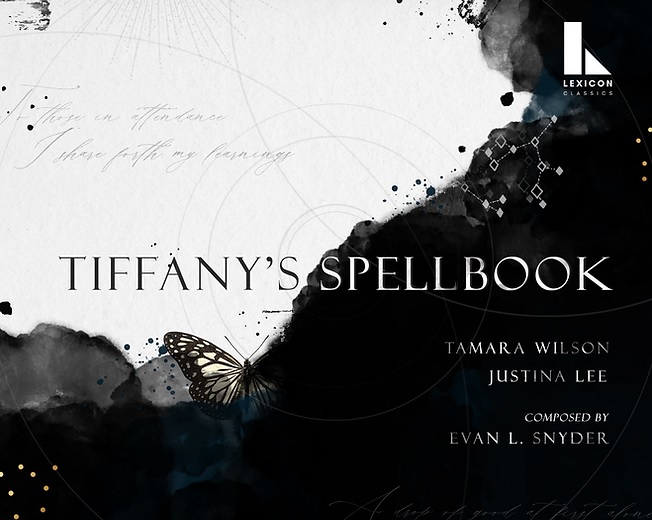
RECORDING REVIEW: Evan L. Snyder & Tamara Wilson — TIFFANY’S SPELLBOOK (Tamara Wilson, soprano; Justina Lee, piano; Lexicon Classics LC2202)

IN REVIEW: Evan L. Snyder &Tamara Wilson - TIFFANY'S SPELLBOOK (Tamara Wilson, soprano; Justina Lee, piano; Lexicon Classics LC2202)EVAN L. SNYDER (born 1991): Tiffandra’s Grimoire of Spells, Potions, and Other Such Magicks: A Practice Guide to Witchcraft for the 21st Century Practitioner; or Tiffany’s SpellbookTamara Wilson, soprano; Justina Lee, piano [Recorded at GCR Audio, Buffalo, New York USA, 23 February 2022; Lexicon Classics LC2202; 1 CD, 27:56; Available from Lexicon Classics and major music streaming services]

Whether a performance offers Fauré mélodies in an intimate recital hall, an Elgar oratorio in an ancient cathedral, Strauss Lieder with orchestra in a magnificent concert venue, or bawdy songs accompanied by a badly-tuned lounge piano, there is magic in every manifestation of the gift of song. The power of song’s singular sorcery has rarely been more apparent and necessary than in the past two years, during which walls of separation and silence were imposed by the necessity of protecting communities from the ravages of an indiscriminate menace. With dispensaries of art in all forms shuttered, endurance mandated retreating into art itself—into creating, reimagining, rediscovering, and reawakening. No longer merely an escape from everyday doldrums, song was again what it must have been when humans first used their voices to express themselves in music: a new, common language in which emotions and experiences too intimate and intense for fallible words are shared without fear of misunderstanding.

Concert halls, theaters, and opera houses can be closed, but song cannot be suppressed. Like a river finding or forging paths to the sea, songsters must discern or define outlets for their art. During a global pandemic, this process of self-expression inevitably turned inward, the inability to interpret existing music in the company of audiences precipitating a drive to connect with the moment and the innumerable others surviving it via instigating original vehicles of musical camaraderie and collaboration. Of this need to close the divides of forced artistic atrophy arose partnerships among composers, poets, and singers that yielded projects embodying the ethos of this calamitous time in history, song emerging as a powerful vaccine against infectious isolation.

Uniting one of today’s preeminent spinto sopranos with a deservedly-acclaimed composer, Tiffandra’s Grimoire of Spells, Potions, and other such Magicks: A Practical Guide to Witchcraft for the 21st Century Practitioner; or Tiffany’s Spellbook—a title worthy of J.K. Rowling—explores themes of devastating gravity with acuity and whimsy, the alchemy of song employed to translate wearying realities of living during a pandemic into melodious metaphysical conceits. So cleverly are composer Evan L. Snyder’s and soprano Tamara Wilson’s words integrated into the musical tableaux that texts and tones seem inseparable, the music achieving conversational concision reminiscent of the work of Leoš Janáček. Snyder sagaciously avoids sensationalizing and sentimentalizing the themes confronted in Tiffany’s Spellbook, his tuneful, expertly-crafted vocal lines providing Wilson a setting in which her voice can laugh and lament with equal immediacy.

One of a minuscule number of sopranos before the public today who both consistently sing the written top D♭ in Leonora’s Act Four aria in Il trovatore and often pay homage to Leyla Gencer and Marisa Galvany by interpolating a rousing top D in the trio in Act Two of Un ballo in maschers, Wilson is a Verdi soprano with few peers. [Click here to read the Voix des Arts review of her unforgettable portrayal of Gulnara in Washington Concert Opera’s 2014 performance of Il corsaro.] The range, textual vividness, and interpretive versatility that shape her performances of Verdi rôles foster a traversal of Tiffany’s Spellbook in which Lady Macbeth’s manipulative charisma, Lucrezia Contarini’s fierce determination, Aida’s inner conflict, and Desdemona’s vulnerability intermingle enchantingly. Pianist Justina Lee plays Snyder’s music as though she were extemporaneously composing it herself, her phrasing generating its own sorcery as each of the piece’s spells is intoned. Music, words, piano, and voice mold a narrative in which seduction, sarcasm, and solemnity intertwine compellingly.

Truly providing a ‘first glimpse of magick,’ Tiffany’s Spellbook’s Foreword is a sort of prelude in the manners of both the opening songs of Schubert’s Die schöne Müllerin and Winterreise and the spoken prologue to Bartók’s A kékszakállú herceg vára. Wilson’s incantation establishes an atmosphere of eerie good humor, the smile in the voice audible even when words are hurled out with cyclonic force. Throughout the cycle, Snyder’s music evolves with the shifting moods of the texts, sounds of disquieting dissonance metamorphosing into beguiling harmonies that glisten as Wilson and Lee reveal them.

Like all of the journeys in this Spellbook, the transition into Spell No. 1, ‘The Elixir of Exactly Eight Hours of Sleep,’ is navigated with wit, the composer intuitively bridging the pauses in the words with music that guides the listener into the unique soundscapes of each episode. Glimmers of Alice Ford’s cunning scintillate in Wilson’s singing, reflecting the streams of light that cascade from the piano. Similarly, music and performance converge mesmerizingly in Spell No. 2, ‘A Do-Little Potion for Conversing with Animals,’ the words handled with clarity that accentuates their cleverness. Lee’s vibrant realizations of the coruscating piano figurations bring the marvels of human interactions with nature to the foreground, intensifying the sincerity of Wilson’s delivery of the text. There is no sermonizing in the performance, but the power of the soprano’s voice sounds a warning that cannot be ignored, intimating that no environmental necromancy can restore natural order when man destroys it.

The third of the spells, ‘Practical Practices for When Plagued by a Plague,’ is especially poignant, but Wilson avoids allowing the momentous pathos of the subject to overwhelm the vocal and interpretive buoyancy of her performance. Here and in the fourth spell, ‘A Spell for Sudden Sobriety,’ the mercurial joviality of Wilson’s declamation of Snyder’s melodies discloses no artifice, the ambiguities of comedy and cataclysm addressed with unaffected directness. The ambivalent frustration at the unceasing necessity of safety protocols, both that conditions warrant them and that resistance demands that they be repeatedly restated, explodes in the soprano’s anguished exclamation of ‘Stay six feet apart and wear a damn mask!’ Far more than dismay over a few drinks too many simmers in Wilson’s singing of ‘There comes a time, in most mortal’s [sic] lives, when they regret what they’ve imbibed,’ a longing for absolution gnawing at the flippant surface of the text. It is difficult to characterize Snyder’s music except by saying that every note belongs in Tiffany’s Spellbook. Influences as diverse as Schumann, Brahms, Finzi, and Britten appear and fade, but the tonal language—advanced but mellifluous—remains that of this composer and this work.

Tiffany’s Spellbook’s Dedication, a reminder that ‘A Drop of Good Magick is unique to each individual who invokes it,’ is an apt resolution for the piece, Wilson and Lee approaching Snyder’s thematic summation not with finality but with a palpable sense of individual and collective renewal. It is sometimes easy to forget that, even when preserved for posterity via the art of sound recording, every performance is a singular experience that can never be wholly replicated. As an aural document, this performance of Tiffany’s Spellbook is of course unchanged on the first and the hundredth hearings, yet the work itself engages the senses differently each time that it is played. Always alluring, Tamara Wilson’s voice bewitches each pair of ears as the heart to which they are attached dictates. This is the real magic of Tiffany’s Spellbook.

31 July 2022

RECORDING REVIEW: J.S. Bach, S. Barber, C. Cooman, D. Ficarri, M. Kim, D. Locklair, C. Phillips, B. Portman, R. Purvis, G. Shearing, W.G. Still, & J. Utterback — AMERICAN ADVENTURES – AN ORGAN ALBUM (David von Behren, organ)

IN REVIEW: AMERICAN ADVENTURES - AN ORGAN ALBUM (David von Behren, organ)JOHANN SEBASTIAN BACH (1685 – 1750), SAMUEL BARBER (1910 – 1981), CARSON COOMAN (born 1982), DANIEL FICARRI (born 1996), MARIANNE KIM (born 1972), DAN LOCKLAIR (born 1949), CRAIG PHILLIPS (born 1961), BRENDA PORTMAN (born 1980), RICHARD PURVIS (1913 – 1994), GEORGE SHEARING (1919 – 2011), WILLIAM GRANT STILL (1895 – 1978), and JOE UTTERBACK (born 1944): American Adventures – An Organ AlbumDavid von Behren, organ [Recorded in First-Plymouth Congregational Church, Lincoln, Nebraska, USA; David von Behren Music; 1 CD, 67:53; Available from Amazon Music, Apple Music, Spotify, and major music streaming services]

Perhaps more than any other instrument in the traditional Western canon, the organ elicits deeply personal responses from virtually all listeners. Whether evocative of celebratory occasions, sad events, private emotions, or grand public ceremonies, the sounds that an organ can produce offer countless interpretive avenues, traversal of which enables a gifted organist to communicate with each listener differently but with equal efficacy. With his 2021 release French Flourishes from First-Plymouth, musical polyglot David von Behren demonstrated that one of the artistic languages in which he wields exceptional fluency is that of the organ. Continuing a nationalistic examination o​f organ​ music with a survey of pieces written or arranged by prominent American organists and composers, American Adventures celebrates the rich heritage of organ composition and performance in North America. Integrating music of contrasting pensiveness and exuberance with sacred and secular themes, American Adventures celebrates the complexities, diversity, and unifying spirit of indomitable ingenuity that illuminate America even in her darkest hours, here fashioned into a musical beacon of resilience, reverence, and rejuvenation by performances that transform the organ into the voice of a nation.

From colonial times, when Karl Theodor Pachelbel brought his father Johann’s legacy to America’s eastern seaboard, the work of visionary organists has propelled the evolution of American music. The constituent excursions that comprise this release’s journey travel sundry paths in American musical idioms, exhibiting the ways in which music for the organ is a microcosm in which the essence of American culture is cultivated and refined. The profound responsibility of this guardianship is apparent in every piece on American Adventures, von Behren’s commitment to finding within the panoply of sounds of the superb Lied Chancel organ of First-Plymouth Congregational Church (Lincoln, Nebraska) to sing America’s songs shaping his account of each work. Epitomized by his espousal of music by living composers of varying ages, the integrity and inclusivity of von Behren’s programming yield an aural panorama that is both erudite of design and engaging of execution.

The aural ambiance in which the instrument is housed—and in which it is regularly heard by the audiences whose appreciation for it supports its maintenance—is a vital aspect of an organ’s impact. The selections recorded during live performances are therefore some of the most vibrant of these American Adventures. As played by von Behren, ‘I Love Thee, My Lord,’ the first of his offerings from George Stearing’s Sacred Sounds for Organ, provides an exhilarating introduction to the instrument, the myriad symphonic capabilities of which are imaginatively deployed by composer and organist. The emotional involvement of von Behren’s performance of Shearing’s ‘There is a Happy Land’ is captivating, the jubilation of the music cascading through every moment of this account of it. Though recorded under studio conditions, the acuity of the third of the Sacred Sounds, ‘Jerusalem, My Happy Home,’ is no less potent, the piece’s melody realized with unaffected grace. Benefiting from the presence of an audience, von Behren’s playing of William Grant Still’s ‘Reverie’ spotlights a too-little-explored niche of the composer’s body of work, his distinctive musical idiom assimilated with European models recalling Sir Charles Villiers Stanford and Herbert Howells and interpreted by von Behren with a keen alertness to its populist inflections.

The organ demands and in every piece chosen for American Adventures receives complete technical command, but von Behren’s artistry extends far beyond mastery of keys, pedals, and stops. Though its sounds conjure manifold emotions, the organ is seldom regarded as an overtly expressive instrument, yet the performances in this collection affirm that a thoughtful organist can awaken an organ’s sonic soul. Thus, Joe Utterback’s treatment of the much-loved ‘This Little Light of Mine’ is here played with enthusiasm that makes the familiar tune seem wholly new, von Behren’s phrasing lending the cadences unexpected originality. He explores the psychological significance of every contrast between rejoicing and repose in ‘Hallelujah; has been restored,’ the opening movement of Dan Locklair’s 1988 liturgical suite for organ, Rubrics. Marianne Kim’s ‘Do, Lord’ also inspires an engrossing performance in which musicianship complements feeling, the work’s structure finding in von Behren an interpreter with innate finesse for its interplay of lyricism and harmonic modernity.

Listeners who are acquainted with the ‘Agnus Dei’ choral setting of the piece will discern similar sentimental depth in von Behren’s playing of William Strickland’s arrangement of Samuel Barber’s Opus 11 Adagio for Strings. The music’s meandering subject, written with remarkable understanding of timbral interactions, is here woven using an array of sonorities, the organ’s broad dynamic spectrum fully utilized and expertly recorded. Like Barber’s Adagio, Johann Sbastian Bach’s ‘Komm, süßer Tod, komm selge Run’ is most known in a different guise, having originally been composed for voice and basso continuo and first published in a volume of sacred songs in 1736. In von Behren’s sublime playing of Virgil Fox’s arrangement for organ, the Lied’s languid melody poignantly imparts the text’s longing for the tranquility of death, the mood reverently melancholic rather than maudlin.

Von Behren’s championing of music by Twentieth- and Twenty-First-Century composers engenders noteworthy performances of splendidly-crafted pieces that do not yet enjoy the global attention that their qualities merit. His delivery of Brenda Portman’s ‘Fanfare’ is fittingly vivid, the organ’s clarion sounds creating a festive atmosphere. Like Fox’s Bach arrangement, Richard Purvis’s Pastorale on the hymn ‘Forest Green,’ most memorably set for singing by Ralph Vaughan Williams, is played by von Behren with such immediacy that text is not necessary to convey the spirit of the song. This is also true of his performance of Craig Phillips’s Prelude to Psalm 40, the music’s evolving soundworld embodying the psalmist’s message in playing of unaffected gravitas. The sacred contexts of these pieces give way to secular virtuosity in Carson Cooman’s Opus 1076 Toccata-Rondo, completed in 2014. The rhythmic buoyancy of von Behren’s playing is crucial in this music, transitions of tempo and meter managed with authority.

The final of von Behrens’s recorded adventures in American music for organ is a dazzling performance of Daniel Ficarri’s three-movement Suite No. 1. Recalling the Baroque models of Buxtehude and Bach, as well as Sir Edward Elgar’s sonatas, Ficarri’s Suite begins with a rhapsodic Prelude, played by von Behren with elegance and subtle wit. The central Adagio, almost a dulcet cavatina, introduces an animated Toccata in which Ficarri honors the organ’s past and asserts his own individual compositional style. Approaching the Adagio like a Chopin nocturne, von Behren accentuated the sensuality of the composer’s writing, finding the work’s romance without over-Romanticizing his performance. The Toccata is a gift to an organist who wishes to flaunt his prowess, and this organist’s prowess is phenomenal, but here, too, the playing is inherently eloquent. The affectionate respect of Marie-Claire Alain’s playing of her brother Jehan’s music inhabits von Behrens’s performance of Ficarri’s Suite, two consequential musicians communing in an artistic exchange to which the listener is privy.

For three centuries, organists have enlivened America’s churches, concert halls, parlors, and universities with music old and new, preserving vestiges of other cultures and fashioning new modes of musical expression. From the East Coast’s vaulted chapels to the Southwest’s missions and the Conestoga wagons that transported simple instruments across the Great Plains, America’s growth has been accompanied by the organ. Many of the nation’s great instruments have their own American adventures of which to boast. In his sagaciously-chosen, magnificently-played American Adventures, David von Behren is a musical storyteller who translates America’s many musical dialects into a single language that mesmerizes and moves.