13 June 2022

PERFORMANCE REVIEW: Igor Stravinsky — THE RAKE’S PROGRESS (B. Bliss, G. Schultz, C. Van Horn, R. Bryce-Davis, J. Creswell, E. Gigliotti, T. Stevenson, C. Job; The Metropolitan Opera, 7 June 2022)

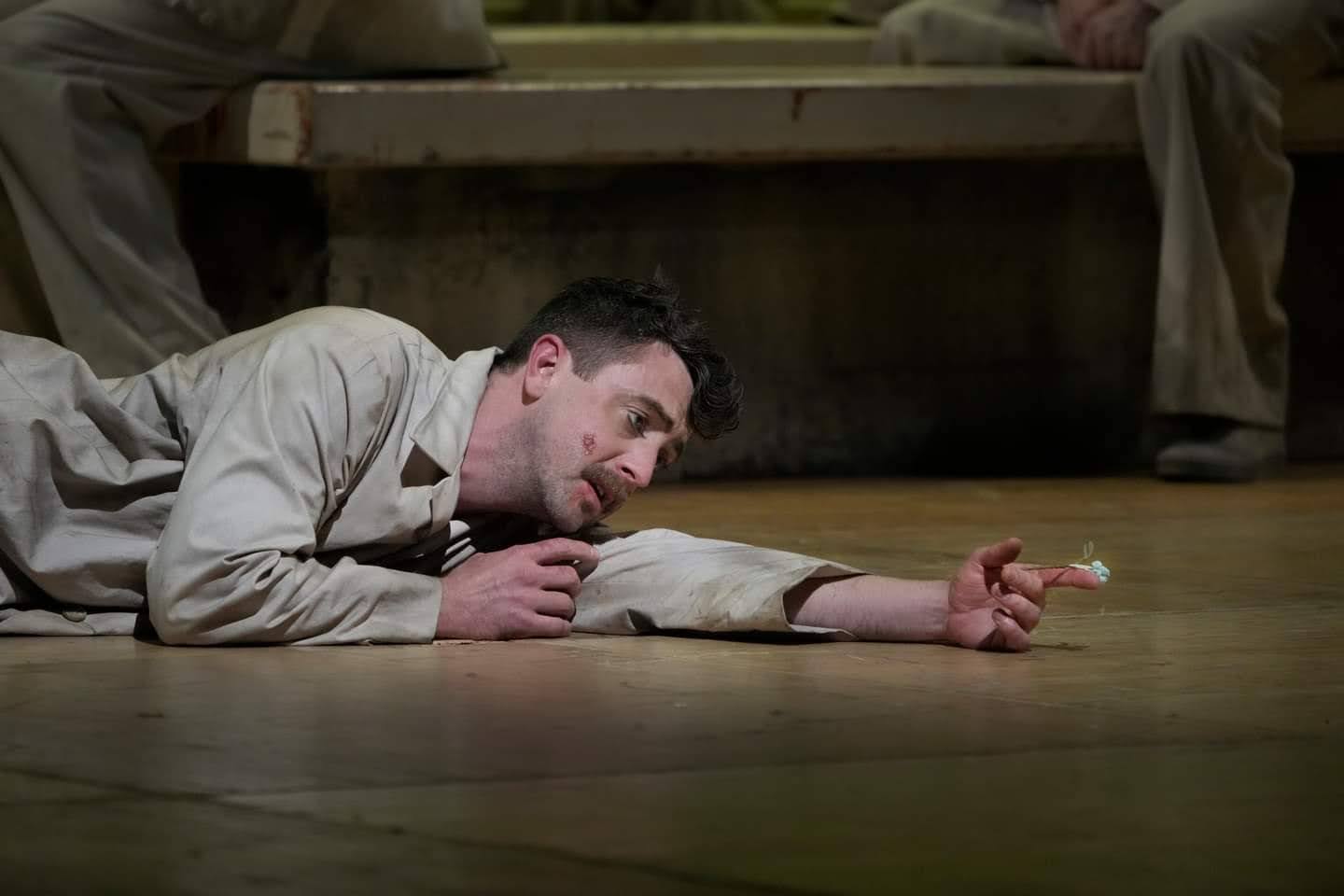
IN REVIEW: tenor BEN BLISS as Tom Rakewell in The Metropolitan Opera's 2022 revival of Igor Stravinsky's THE RAKE'S PROGRESS [Photograph by Ken Howard, © by The Metropolitan Opera]IGOR FYODOROVICH STRAVINSKY (1882 – 1971): The Rake’s Progress – Ben Bliss (Tom Rakewell), Golda Schultz (Anne Trulove), Christian Van Horn (Nick Shadow), Raehann Bryce-Davis (Baba the Turk), James Creswell (Trulove), Eve Gigliotti (Mother Goose), Tony Stevenson (Sellem), Christopher Job (Keeper of the Madhouse); Jory Vinikour, harpsichord; The Metropolitan Opera Chorus and Orchestra; Susanna Mälkki, conductor [Sir Jonathan Miller, production; J. Knighten Smit, revival stage director; Peter J. Davison, set designer; Judy Levin, costume designer; Jennifer Tipton, lighting designer; The Metropolitan Opera, Lincoln Center, New York City, USA; Tuesday, 7 June 2022]

In an age in which under-explored niches of opera’s five-century history are regularly reassessed and rejuvenated, why is a composer whose music is so often played in the world’s concert halls a maddeningly infrequent guest in opera houses? Fifty-one years after his death, Igor Stravinsky’s still-piquant symphonic and ballet scores continue to be programmed by many orchestras, but his music for the lyric stage, though widely admired and much lauded for its stylistic variety and innovation, is familiar to audiences deluged by Verdi and Puccini by reputation rather than by experience. The operas Le rossignol, Œdipus rex, and The Rake’s Progress are among Stravinsky’s most accessible works, yet, at New York’s Metropolitan Opera, by which company La bohème has been performed more than 1,300 times since 1900, Le rossignol and Œdipus rex have been heard fewer than three dozen times—and not since 2004.

The Rake’s Progress has fared no better since reaching the MET stage in 1953, only two years after the opera’s world première at Venice’s Teatro La Fenice, having amassed only twenty-six performances at the MET prior to the 2021 – 2022 Season’s run of four performances. That the piece has been featured in six MET seasons demonstrates that it is considered worthy of the company, but the paucity of shows in each of those seasons suggests that the opera is not trusted to appeal to ticket purchasers. Typically, such lack of faith in a work’s commercial viability can be attributed to a story that does not resonate with audiences, a poorly-written libretto, or an unimaginative score; or to a debilitating combination of these factors.

Based upon a series of much-studied Eighteenth-Century images by artist William Hogarth, whose bitingly satirical work scandalized and delighted Georgian England, Rake’s cautionary tale of the perils of foppish libertinism is perhaps more pertinent in 2022 than in Hogarth’s time or the period of the opera’s composition and first performances. Moreover, W. H. Auden’s and Chester Kallman’s libretto is of tremendously high literary and theatrical quality. The relative prevalence of its recurrence in the MET repertory discredits the notion that the score is undistinguished. Why, then, must a prospective listener nealy resort to emulating the work’s protagonist, Tom Rakewell, by making a Faustian bargain in order to witness a performance of The Rake’s Progress?
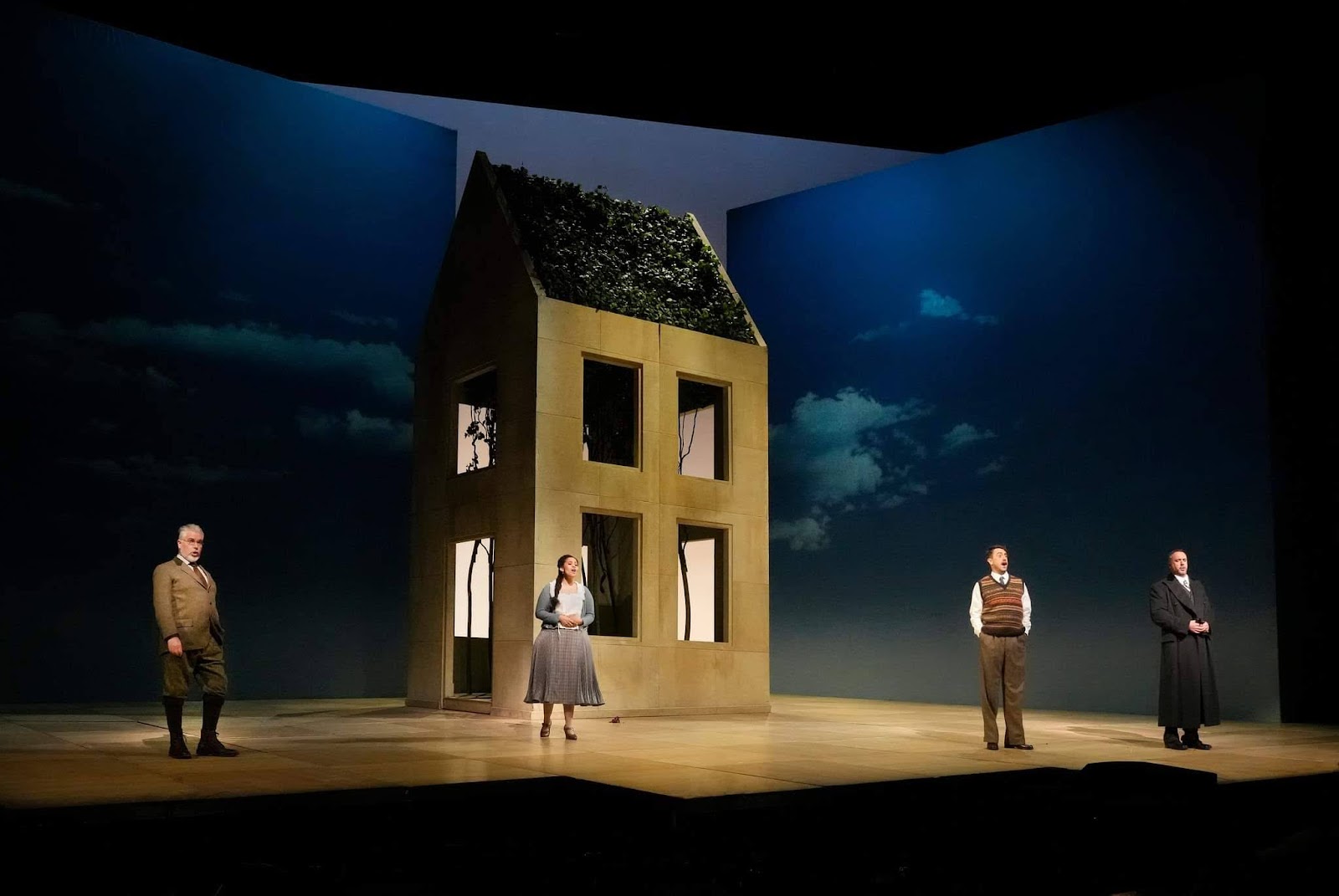
IN REVIEW: the cast of The Metropolitan Opera's 2022 revival of Sir Jonathan Miller's staging of Igor Stravinsky's THE RAKE'S PROGRESS [Photograph by Ken Howard, © by The Metropolitan Opera]The Truloves’ course ne’er did run smooth: the cast of The Metropolitan Opera’s 2022 revival of Sir Jonathan Miller’s staging of Igor Stravinsky’s The Rake’s Progress
[Photograph by Ken Howard, © by The Metropolitan Opera]

Premièred in the MET’s 1997 – 1998 Season, Sir Jonathan Miller’s staging of Rake’s Progress, refreshed in this revival by stage director J. Knighten Smit, substantiates the opera’s artistic value and proposes largely sensible solutions to its problems. Like their libretti for Hans Werner Henze’s Bassarids and Elegy for Young Lovers, Auden’s and Kallman’s text for Rake’s Progress is characterized by levels of linguistic sophistication and psychological depth that can doom an opera to tedium, a fate mostly thwarted by Stravinsky but not altogether avoided in Miller’s staging. Peter J. Davison’s and Judy Levin’s lush, earth-toned set and costume designs, resourcefully illuminated by Jennifer Tipton’s lighting, relocated the opera’s setting from Hanoverian London to a temporal environment reminiscent of F. Scott Fitzgerald’s Jazz Age. The production’s decadence heightened the persuasiveness of the hedonism that lures Tom to his ruin, but the vital contrast with the austerity of the Truloves’ simpler existence was marginalized by the visual lavishness. Nevertheless, overcoming too-lengthy pauses during scene changes, the staging did not inhibit the singers’ abilities to create nuanced characterizations and universal emotions, and Smit’s efforts perceptibly strove to shift the production’s focus from the physical to the metaphysical aspects of the drama.

Finnish conductor Susanna Mälkki made her MET début in 2016, leading the company premiére of her countrywoman Kaija Saariaho’s L’amour de loin. The faculty for mastering complex rhythmic transitions and ensembles in which lapses in coordination between stage and pit can be catastrophic that guided her handling of Saariaho’s score also contributed notably to her pacing of The Rake’s Progress despite moments in which her speaking of Stravinsky’s musical language was strangely accented. The composer’s tempo markings are meticulously detailed in the autograph, but Mälkki was liberal in her observance of them. The music’s stylistic ambiguities, assimilating discordant modernity with melodious neoclassicism, were navigated adroitly, however, the conducting often grippingly majestic, and the Metropolitan Opera Orchestra employed each instrument’s unique sonorities to spotlight the intricacies of Stravinsky’s part writing. Embracing Mälkki’s emphasis on clarity of line, the orchestra’s musicians executed their demanding parts splendidly, their playing bristling with energy and excitement. Recalling the toccata in Monteverdi’s L’Orfeo, the Prelude to Act One provided a suitably effervescent curtain raiser, and the Prelude to the second scene of Act Three established a disquieting mood.

Woodwinds were exceptionally impactful in both lyrical passages and in turbulent moments, but the brasses often seemed to be playing notes rather than music. Principal trumpeter David Krauss’s account of the hauntingly beautiful writing for his instrument in Act Two, redolent of the lovely obbligato in Ernesto’s scene in Act Two of Donizetti’s Don Pasquale, was disappointingly phlegmatic. Harpsichordist Jory Vinikour accompanied the opera’s recitatives not as a vague sound emanating from the pit but as a participant in the characters’ conversations. The slightly harsh timbre of the 1964 William Dowd instrument, maintained by Dongsok Shin, was very effective in the graveyard scene, in which Vinikour’s playing was musically and dramatically dazzling. Throughout the evening, the depths of Mälkki’s connections with Stravinsky’s score and with the MET’s musical forces were apparent. These connections fostered an abiding sense of espousal of the piece’s distinctive harmonic language, poised between Mozart—Don Giovanni often peeks out of the pages of Act Two—and Reimann. This faith in the opera, manifested in every aspect of Mälkki’s conducting, yielded a performance that was as enlightening as it was entertaining.

Integral to the success of a number of recent productions, not least Sir David McVicar’s staging of Verdi’s Don Carlos, Donald Palumbo’s training of the Metropolitan Opera Chorus continues to effect refinement of the choristers’ singing, which in Rake’s Progress was sensational. Portraying the opera’s prostitutes, cads, and Bedlamites was surely a welcome change from the chorus’s typical assignments in the MET repertory. ‘With air commanding and weapons handy’ in Act One was powerfully sung, and the singers’ accounts of ‘Soon dawn will glitter,’ ‘How sad a song,’ and ‘The sun is bright’ were keenly differentiated but of equal musical integrity. Mälkki’s able handling of the ensemble in the second scene of Act Two allowed the choral singing to serve as the vocal foundation that Stravinsky undoubtedly intended it to be. After an eerie incantation of ‘Ruin, disaster, shame,’ the Bedlam dialogue, minuet, and mourning chorus in Act Three were performed with riveting immediacy, the chorus claiming a critical rôle in the opera’s dramatic arc.

IN REVIEW: (from left to right) tenor BEN BLISS as Tom Rakewell, bass-baritone CHRISTIAN VAN HORN as Nick Shadow, and mezzo-soprano EVE GIGLIOTTI as Mother Goose in The Metropolitan Opera's 2022 revival of Igor Stravinsky's THE RAKE'S PROGRESS [Photograph by Ken Howard, © by The Metropolitan Opera]Luck be a lady tonight: (from left to right) tenor Ben Bliss as Tom Rakewell, bass-baritone Christian Van Horn as Nick Shadow, and mezzo-soprano Eve Gigliotti as Mother Goose in The Metropolitan Opera’s 2022 revival of Igor Stravinsky’s The Rake’s Progress
[Photograph by Ken Howard, © by The Metropolitan Opera]

As the keeper of the madhouse and the aptly-named auctioneer Sellem, both of whom are heard only in Act Three, bass-baritone Christopher Job and tenor Tony Stevenson galvanized the scenes in which they appeared, their vocal acting animating these dynamic characters. Job voiced ‘There he is,’ identifying the deranged Tom, with understated compassion, as though this keeper was determined to preserve an outward show of aloofness. Stevenson delivered Sellem’s much-interrupted aria in the bidding scene, ‘Who hears me, knows me a man with value,’ obsequiously, limning the opportunistic man’s smarmy self-satisfaction.

Mezzo-soprano Eve Gigliotti was an uncommonly glamorous Mother Goose, the rôle depicted in this production more as a virile seductress than as a debauched woman of a certain age. The voice seething with sensuality, there was slashing irony in Gigliotti’s arch query of ‘What is pleasure then?’ When she murmured ‘Away! Tonight I exercise my elder right,’ the full extent of the lady’s intentions was unmistakable. Like Bizet’s Carmen and Berg’s Lulu, Stravinsky’s Mother Goose benefits from portrayals that eschew cheap harlotry. Neither maternal nor flighty, Gigliotti’s attractively-sung Mother Goose was a woman unashamed of her adventurous sexual appetite.

Bass James Creswell’s Trulove reminded the audience that operatic fathers are not required to sound tired and wobbly. From his first note in Act One, Creswell’s voice was rousing and inviolably firm. In the trio with Anne and Tom, he sang ‘Oh, may a father’s prudent fears unfounded prove’ with paternal concern and doubt. The latter sentiment grew more prevalent when Tom unceremoniously refused the offer of a job procured for him by Trulove. First in the quartet and then in the terzettino with Anne and Tom, in which his account of ‘Fortune so swift and so easy’ possessed unusual gravitas, the bass declaimed Trulove’s words with textual and emotional clarity. Though his part in Act Three is small, he voiced ‘God is merciful and just’ in the duettino with Anne wifh affecting gentleness. His slow, quiet departure from the asylum as Tom lay insensate on the floor lent the scene devastating finality. Trulove’s lines in the epilogue were sung suavely. It is sometimes difficult to comprehend why Anne would hesitate to abandon her curmudgeonly father in order to follow Tom to London: Creswell’s stern but loving, wonderfully-sung Trulove made the impulse atypically credible.
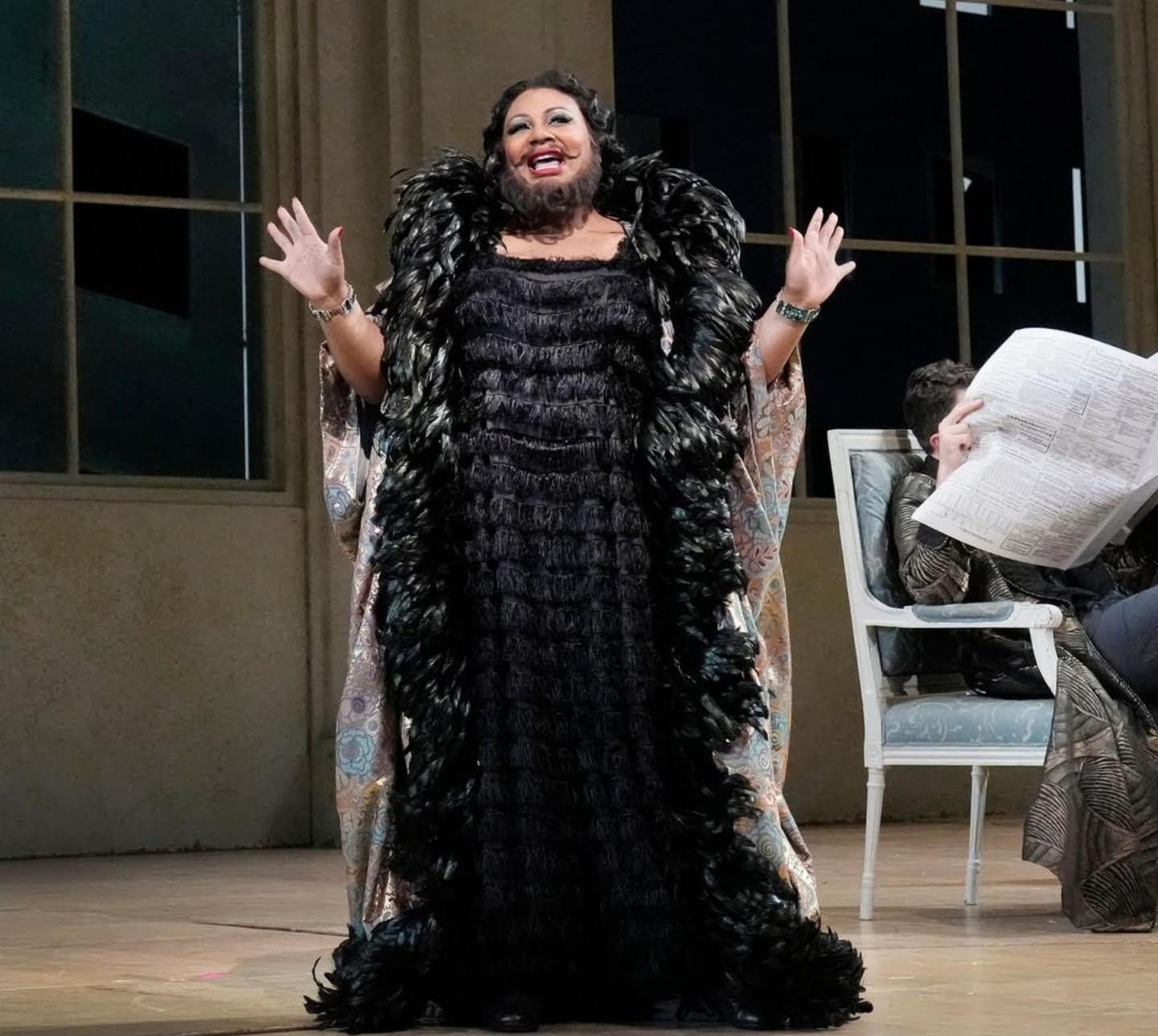
IN REVIEW: mezzo-soprano RAEHANN BRYCE-DAVIS as Baba the Turk in The Metropolitan Opera's 2022 revival of Igor Stravinsky's THE RAKE'S PROGRESS [Photograph by Ken Howard, © by The Metropolitan Opera]Bearded beauty: mezzo-soprano Raehann Bryce-Davis as Baba the Turk in The Metropolitan Opera’s 2022 revival of Igor Stravinsky’s The Rake’s Progress
[Photograph by Ken Howard, © by The Metropolitan Opera]

Making her MET début in this production, mezzo-soprano Raehann Bryce-Davis brought the iconic Baba the Turk to life with sultry tones and flamboyant comedic instincts. The bearded lady who becomes Tom’s wife is little more than a caricature in too many performances, but Bryce-Davis concentrated on the vulnerability that hides beyond the laughter. Her articulation of the recitative ‘My love, am I to remain in here forever?’ in Act Two introduced her Baba as a warm-hearted woman, but that warmth boiled into indignant ire in the trio with Anne and Tom, the mezzo-soprano exasperatedly lobbing ‘Who is it, pray, he prefers to me’ at the young lovers. Still, there was finesse in her articulation of ‘I have not run away, dear heart.’ Bryce-Davis sang ‘As I was saying, both brothers wore moustaches,’ Baba’s song ‘Come, sweet, come,’ and the aria ‘Scorned! Abused! Neglected! Baited!’ potently, her solid top A offsetting tones at the bottom of the range that were not ideally supported.

Though she is a character who is not often taken seriously by directors or audiences, Baba receives brutal treatment from Tom. Being auctioned as one of her husband’s material possessions in Act Three, when she hilariously resumed the rant begun before being silenced by Tom in the previous act, Bryce-Davis’s Baba sang ‘Sold! Annoyed!’ in a manner that was funny and fragile, the abandoned wife’s frustration disclosing seldom-admitted sincerity that permeated her heartfelt intoning of ‘You love him, seek to set him right’ in the duet with Anne. Bryce-Davis voiced ‘Let Baba warn the ladies’ in the epilogue ambivalently, offering both a personal admonition and an amusingly didactic lesson. Neither the English text nor the part’s tessitura was entirely comfortable for Bryce-Davis’s opulent voice, but her Baba was a marvelous portrayal.

IN REVIEW: bass-baritone CHRISTIAN VAN HORN as Nick Shadow in The Metropolitan Opera's 2022 revival of Igor Stravinsky's THE RAKE'S PROGRESS [Photograph by Ken Howard, © by The Metropolitan Opera]Out of the depths: bass-baritone Christian Van Horn as Nick Shadow in The Metropolitan Opera’s 2022 revival of Igor Stravinsky’s The Rake’s Progress
[Photograph by Ken Howard, © by The Metropolitan Opera]

Acclaimed during the MET’s 2018 – 2019 Season for his portrayal of the eponymous antagonist in Boito’s Mefistofele, bass-baritone Christian Van Horn expanded his New York gallery of diabolical portraits with a sadistically charismatic interpretation of Stravinsky’s Nick Shadow. The malevolent character’s villainy was shrouded in Act One in irrepressible charm, Van Horn voicing ‘Fair lady, gracious gentlemen’ and Shadow’s insinuating words in the quartet with unstinting charisma and tonal luster. In the act’s second scene, there was mesmerizing softness in his singing of ‘Sweet dreams, my master.’ As Shadow’s hold on Tom tightened in Act Two, Van Horn’s vocalism grew darker, his accounts of ‘Come, master, observe the host of mankind’ and the aria ‘In youth the panting slave pursues the fair evasive dame’ in the brothel scene brilliant but foreboding. The duets with Tom received some of Van Horn’s most incisive singing of the evening, ‘Come, master, prepare your fate to dare’ enunciated with pointed enticement and ‘A word to all my friends’ given an edge of sarcasm. The bass-baritone’s innate theatricality shone during the Pantomime, this Shadow always seizing the spotlight.

Van Horn sang the ballad ‘If boys had wings and girls had stings’ in Act Three with feigned conviviality, cajoling Tom before Shadow’s evil identity was revealed in the graveyard scene, in which a momentary breech of ensemble was quickly rectified. Demanding Tom’s soul as payment for his services, Van Horn’s Shadow declared ‘A year and a day have passed away’ with petrifying directness. In the final battle with Tom, Van Horn growled ‘Let wish be thought’ with predatory ambivalence, Shadow maintaining a show of mock decency whilst already celebrating his victory over his hapless victim. The quarry slipping from his grasp, Shadow cried ‘I burn! I freeze!’ and condemned Tom to madness with demonic force, but the singer proclaimed that ‘Day in, day out, poor Shadow must do as he is bidden’ in the epilogue with ebullient humor. Shadow’s music ascends to a plethora of top Es, sung by Van Horn with minimal forcing and fatigue. The part’s range wholly in the voice, he had no need to resort to shouting and snarling. Rather, he sang Shadow’s music without exaggeration and rightly trusted Stravinsly’s music to unmask the wily fiend.
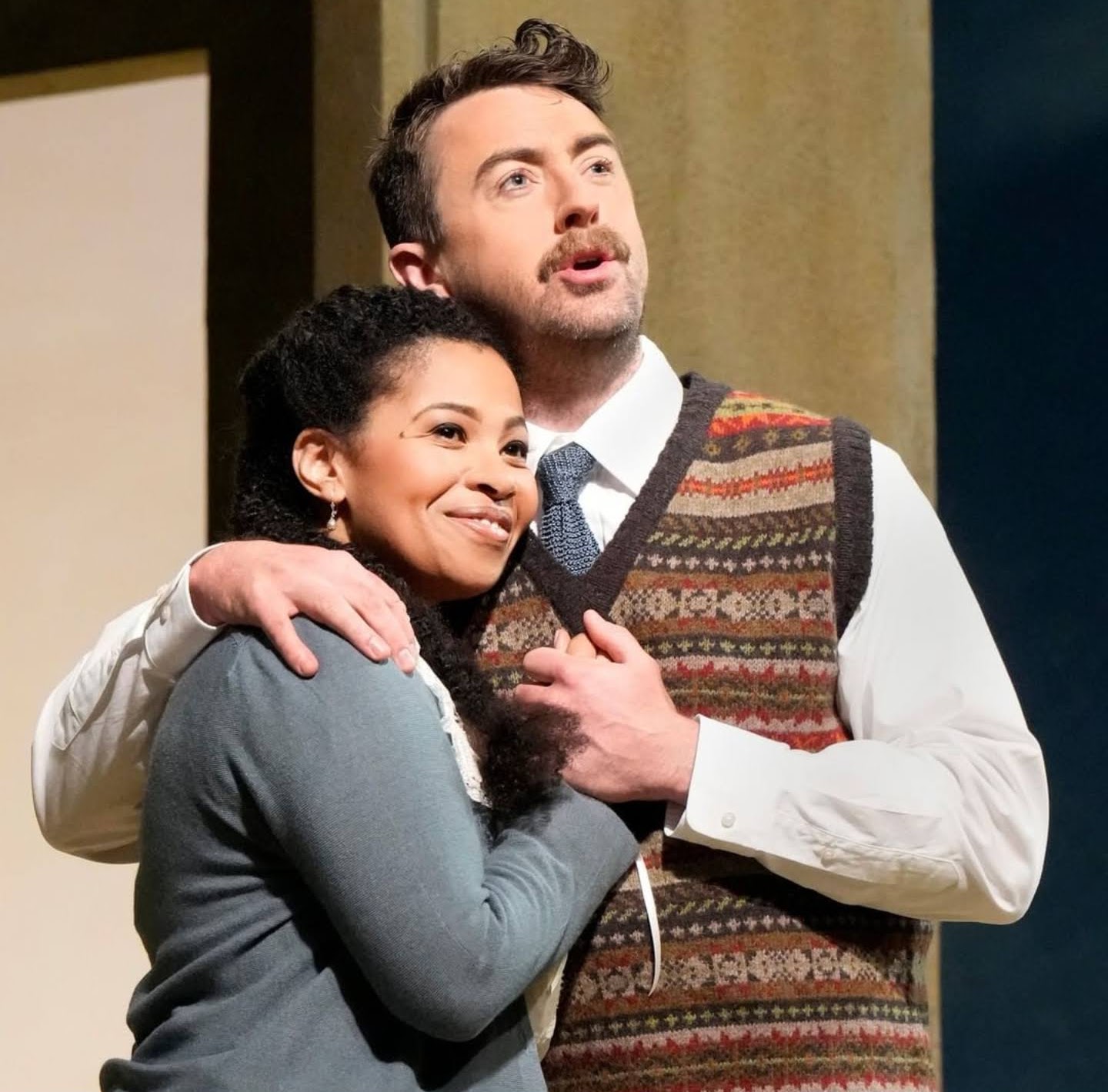
IN REVIEW: soprano GOLDA SCHULTZ as Anne Trulove (left) and tenor BEN BLISS as Tom Rakewell (right) in The Metropolitan Opera's 2022 revival of Igor Stravinsky's THE RAKE'S PROGRESS [Photograph by Ken Howard, © by The Metropolitan Opera]If boys had wings and girls had stings: soprano Golda Schultz as Anne Trulove (left) and tenor Ben Bliss as Tom Rakewell (right) in The Metropolitan Opera’s 2022 revival of Igor Stravinsky’s The Rake’s Progress
[Photograph by Ken Howard, © by The Metropolitan Opera]

The rôle of the pure-hearted Anne Trulove, courted but abandoned by Tom, was originated at La Fenice by Elisabeth Schwarzkopf and first sung at the MET by Hilde Güden, a pair of singers who could hardly have been more different, vocally and temperamentally. Broadcast recordings do not permit listeners to meaningfully assess how Schwarzkopf’s and Güden’s singular voices projected in the acoustics of La Fenice and the old MET on Broadway, but, though it is an instrument of modest dimensions, soprano Golda Schultz’s voice glistened ravishingly in the house at Lincoln Center. The first moments of Anne’s duet with Tom in Act One marked the naïve but ardent young lady as the opera’s unwavering moral compass, the soprano suffusing ‘The woods are green’ and her lines in the quartet with girlish optimism. Singing ‘Farewell, for now my heart is with you’ in the duettino and ‘Heart, you are happy’ in the terzettino unaffectedly, Schultz touchingly conveyed Anne’s rectitude and the profundity of her love for Tom.

Audiences familiar with Rake’s Progress eagerly await the final scene of Act One, and Schultz’s performance justified the anticipation. Her distraught reading of the recitative ‘No word from Tom’ was followed by a dulcetly-phrased account of the aria ‘Quietly, night, oh! find him and caress,’ the soprano’s top B imparting the character’s sincerity. Exhilaratingly sung and ended with a fantastic, long-held top C, the cabaletta ‘I go to him’ unmistakably expressed Anne’s resolve to find Tom at any cost to herself. She portrayed Anne’s journey from hopefulness to despair in Act Two with supreme conviction, voicing the recitative ‘Although the heart for love dares everything’ and the arioso ‘O heart, be stronger’ with emotional simplicity. At last finding Tom amidst the corrupting bounties of London, this Anne’s question of ‘What can this mean?’ was gnawingly poignant, and Schultz communicated the doubt, disappointment, and sadness that undermine the girl’s confidence, singing ‘And, Tom, such splendour’ in the duet with her swain and ‘Could it then have been known’ in the trio with the newly-married Tom and Baba with agitation but without artifice.

Arriving at the auction in Act Three, Schultz inquired ‘Do you know where Tom Rakewell is?’ plaintively and voiced ‘He loves me still’ in the duet with Baba luminously. Her offstage ‘A love that is sworn before Thee’ strikingly penetrated the gloom of Tom’s descent into madness, and, at last finding Tom in the asylum, this Anne’s ‘What should I forgive?’ in the duet and the lullaby ‘Gently, little boat, across the ocean float’ were sweetly comforting. Anne resignedly taking her leave of the dying Tom, Schultz voiced ‘Every wearied body must late or soon return to dust’ in the brief duettino with Trulove expressively. After so much strife, the smile with which the soprano delivered ‘Not every rake is rescued at the last by love and beauty’ in the epilogue irradiated the auditorium with joy. The upper octave of the soprano’s voice was projected with greater impact than its lower reaches, but each tone was placed with care. Every aspect of Anne’s character was credible in Schultz’s performance, in which the impressionable young girl evolved into a mettlesome, self-sufficient woman.

Stravinsky_RAKE_MET_2022_06_Bliss-VanHorn_Ken-HowardBe careful what you wish for: tenor Ben Bliss as Tom Rakewell (left) and bass-baritone Christian Van Horn as Nick Shadow (right) in The Metropolitan Opera’s 2022 revival of Igor Stravinsky’s The Rake’s Progress>br>[Photograph by Ken Howard, © by The Metropolitan Opera]

Historically, the most successful interpreters of Rake’s titular degenerate-in-the-making, Tom Rakewell, have been tenors with extensive experience in Mozart repertoire. Heard in previous MET seasons as Belmonte in Die Entführung aus dem Serail, Ferrando in Così fan tutte, and Tamino in Die Zauberflöte,  Ben Bliss proved himself in this Rake to be a peer of the best Toms in the opera’s seven-decade history. Tom’s affection for Anne was apparent in the tenor’s singing of ‘Now is the season’ in the duet in the opera’s opening scene, but the boredom that precipitates the restless young man’s downfall was also discernible. Bliss performed the recitative ‘Here I stand’ and Tom’s aria ‘Since it is not by merit’ exuberantly, indefatigably negotiating the vocal writing’s assault on the passaggio. Duplicitously informed by Shadow of his inheritance of an unknown uncle’s estate, this Tom delighted in his good fortune, Bliss buoyantly dispatching ‘I wished but once’ in the quartet and ‘Wherever, when apart, I may be’ in the duettino with Anne. Earnestness did not entirely subjugate the wanderlust that lurked in his singing of the arioso ‘Dear Father Trulove’ and ‘Laughter and light and all charms that endear’ in the terzettino with the Truloves.

It was a much-altered Tom who entered Mother Goose’s ribaldrous establishment in the second scene of Act One. Still, boyish awkwardness lent Bliss’s voicings of ‘Love, love! That precious word is like a fiery coal’ and the cavatina ‘Love, too frequently betrayed’ beguiling expressivity. Fascinating, too, was the interpretive acuity with which he sang the arias ‘Vary the song, oh London, change!’ and ‘Always the quarry that I stalk fades’ in Act Two. Convinced by Shadow to take Baba as his wife, Bliss’s Tom exclaimed ‘My tale shall be told both by young and by old’ proudly, but Anne’s discovery of the union unnerved him, evinced by his despondent exclamations of ‘Anne! Here!’ and ‘It is done’ in the exchanges with Anne and Baba. Attaining elusive sleep by silencing Baba, this Tom was bewitched by his manipulated dream of a machine that converts stones into bread, singing the arioso ‘Oh Nick, I’ve had the strangest dream’ and ‘Thanks to this excellent device’ in the duet with Shadow with fervent wonder.

Tom’s path from bankruptcy to insanity and death in Act Three led Bliss through a vocal gauntlet, from which he emerged with assurance. He joined Van Horn in a memorable traversal of the ballad ‘If boys had wings and girls had stings,’ but Tom’s interactions with Shadow in the following scene impelled the tenor to vocalism of escalating distress. Trepidation chilled the singer’s timbre in ‘How dark and dreadful is the place’ and ‘My heart is wild with fear’ in the duets with Shadow, but an aura of triumph returned with Tom’s identifications of the correct cards. Bliss’s Tom succumbed to madness—Shadow’s final revenge—with a hypnotic account of ‘With roses crowned, I sit on ground.’

Tom’s madness girded Bliss’s timbre with a steely sheen in the opera’s final scene, the incandescence of his voicing of the arioso ‘Prepare yourselves, heroic shades’ fading upon Anne’s entrance into the madhouse. His ‘I have waited for thee so long’ and ‘In a foolish dream, in gloomy labyrinth’ in the duet with Anne were wrenchingly wistful. Contrasting an anguished ‘Where art thou, Venus?’ with achingly beautiful sotto voce singing, Bliss’s restrained, serene depiction of Tom’s death was incredibly moving. In a very different way, so, too, was his sounding of ‘Beware, young men who fancy you are Virgil or Julius Caesar’ in the epilogue, his character’s embodiment of the opera’s moral counsel realized with imaginative, unfailingly engaging singing. Bliss’s portrayal of Tom might have saved an ill-rendered Rake’s Progress: in this stellar performance, it validated the genius and undiminished viability of one of the Twentieth Century’s best operas.

04 June 2022

PERFORMANCE REVIEW: Giuseppe Verdi — AIDA (M. Johnson, P. S. Drackley, H. Kim, B. Major, J. Bisch, S. Zaikuan, J. Roche, E. Brown; Opera Carolina, 9 April 2022)

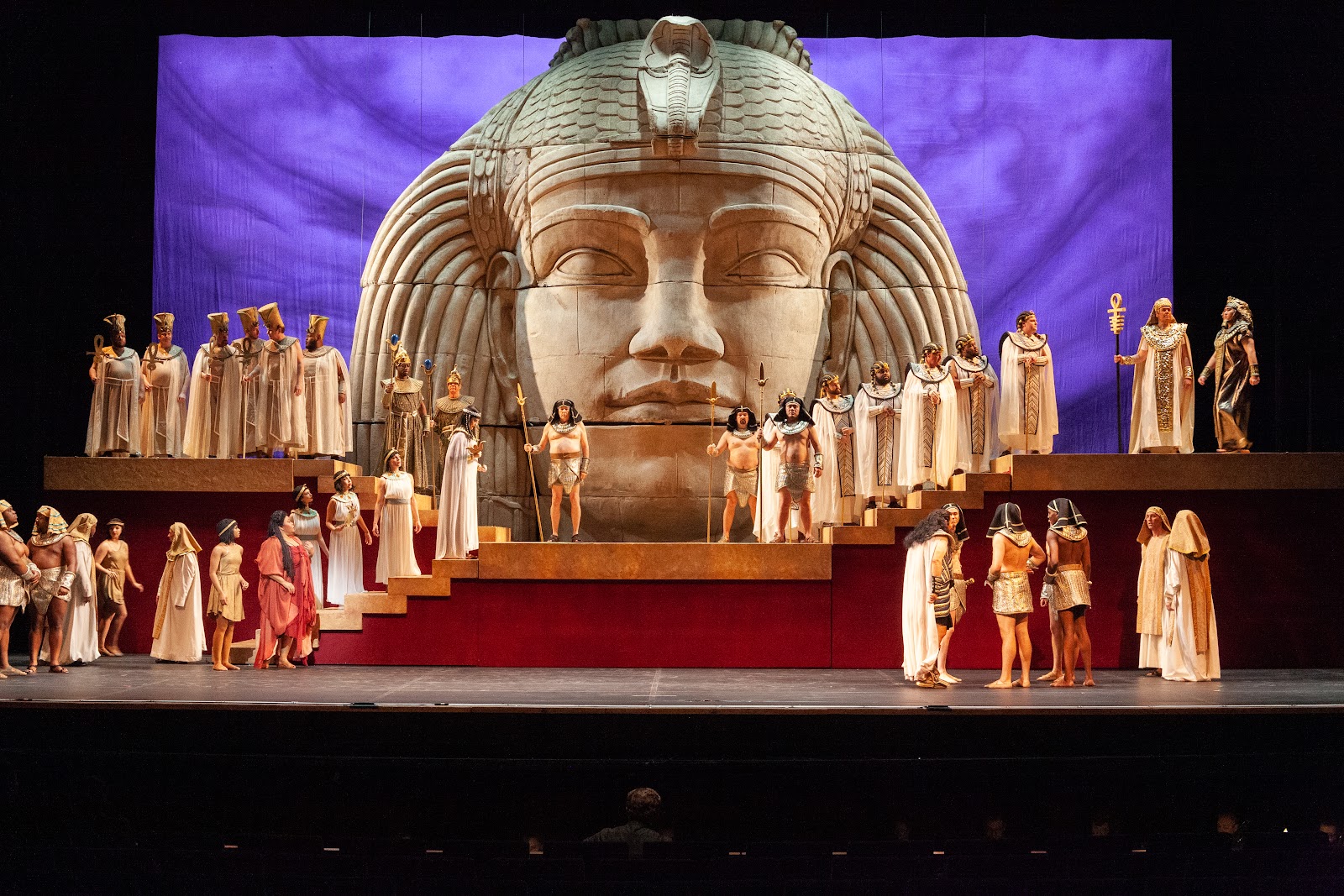
IN REVIEW: the cast of Opera Carolina's April 2022 production of Giuseppe Verdi's AIDA [Photograph by Mitchell Kearney Photography, © by Opera Carolina]GIUSEPPE VEDI (1813 – 1901): Aida – Michelle Johnson (Aida), Peter Scott Drackley (Radamès), Hyona Kim (Amneris), Brian Major (Amonasro), Jordan Bisch (Ramfis), Song Zaikuan (Il re d’Egitto), Jersey Roche (Gran sacerdotessa), Elliott Brown (Un messaggero); Opera Carolina Chorus, Charlotte Symphony Orchestra; James Meena, conductor [Linda Brovsky, director; Michael Baumgarten, lighting Designer; Roberto Oswald, set designer; Anibal Lápiz, costume designer; Martha Ruskai, wig and makeup designer; Gabriela Sevillano, choreographer; Opera Carolina, Belk Theater, Blumenthal Performing Arts, Charlotte, North Carolina, USA; Saturday, 9 April 2022]

An integral part of the unceasing work of safeguarding and enriching the vitality of opera in the Twenty-First Century is the process of assessing the comparative virtues of scores, analyzing their amassed contexts, and debating which pieces merit expenditure of limited resources. Many factors are employed in justifying the popularity of some scores and the neglect of others, one of which is an opera’s appeal to audiences now accustomed to visual-centric cinematic storytelling. Are some operas too intrinsically defined by the times and places of their creation to captivate today’s audiences?

Whether they were conceived for grand public events or in response to milestones in their creators’ lives, are not all works of art inherently pièces d’occasion? Commissioned to inaugurate Cairo’s opulent Khedivial Opera House, constructed in celebration of the completion of the Suez Canal, Giuseppe Verdi’s and Antonio Ghislanzoni’s Aida was the intended product of a grand occasion with few peers in opera’s history. Falling victim to political and logistical complications of war, Aida did not reach the new theater’s stage until 1871, two years after the Khedivial Opera House’s formal christening, for which Rigoletto was substituted for the custom-written score. Its origins notwithstanding, Aida’s drama, centered upon cultural conflicts and collisions of public personas and private sentiments, is as captivating in 2022 as it was in 1871. As Opera Carolina’s exhilarating production tunefully and touchingly demonstrated, the wars by which the world is divided and devastated have grown more calamitous, but Aida’s poignancy remains undamaged.

Dominated by a gargantuan effigy redolent of Nineteenth-Dynasty images of Ramesses II, Roberto Oswald’s set designs transformed the Belk Theater stage into a credible representation of the Egypt that Aida-loving audiences expect to see. Though unfailingly evocative, Aníbal Lápiz’s costumes were inconsistent in paralleling the production’s scenic aesthetic, seeming more Greco-Roman than Egyptian in some scenes. [Opera Carolina’s male choristers and supernumeraries earned particular praise for their bravery in donning attire that left far less to the imagination than some of them might have preferred.]

Looking exceptionally natural, Martha Ruskai’s wigs and makeup were models of operatic stagecraft at its finest, and her work was ideally complemented by Michael Baumgarten’s lighting. Director Linda Brovsky capitalized on these elements to stage an Aida that suited the space in which it was presented. The pageantry of the monumental final scene of Act Two was realized more effectively than in many larger-scaled productions, the procession of conquering warriors and spoils of war cleverly managed. Brovsky offered the Charlotte audience an appealingly traditional Aida that delivered all of the piece’s venerated grandiosity whilst avoiding the pomposity and stereotypes that afflict too many productions of the opera.

Under the baton of Opera Carolina’s Artistic Director James Meena, the Charlotte Symphony musicians played Verdi’s difficult score capably and often gracefully. The high string figrations in the opera’s Prelude were aptly ethereal, and the string playing was consistently musical. Brasses and woodwinds were similarly reliable of balance and intonation, the former enlivening the triumphal scene with sounds of stirring brilliance. The Danza sacra delle sacerdotesse in Act One and the Danza degli schiavi mori and the orgiastic Ballabile in Act Two, expertly choreographed by Gabriella Sevillano, were excellently paced by Meena, whose gift for choosing tempi that serve both composer and performers was evident throughout this Aida. Bolstered by the conductor’s rhythmic clarity, the diligent training of Opera Carolina’s chorus yielded singing of tremendous resonance. Insightfully husbanding the company’s musical resources, Meena brought an Aida worthy of Italy’s great opera houses to the Queen City.

Although Aida is not an ensemble piece in the manner of Verdi’s Falstaff, the quality of a performance of Aida is markedly reduced by poor singing in any of the opera’s principal or secondary rôles. Thankfully, enjoyment of Opera Carolina’s invigorating Aida was lessened by no inadequacies among the cast. Epitomizing the uniformity of the production’s vocal distinction, tenor Elliott Brown sang the Messaggero’s dire pronouncements in Act One rousingly, declaiming ‘Il sacro suolo dell’Egitto è invaso’ with a palpable sense of alarm. Similarly, the Gran Sacerdotessa’s ‘Immenso Fthà, del mondo spirito animator’ in the Gran scena della consacrazione that ends Act One was voiced diaphonously by soprano Jersey Roche, the words floating into the auditorium with fitting reverence.

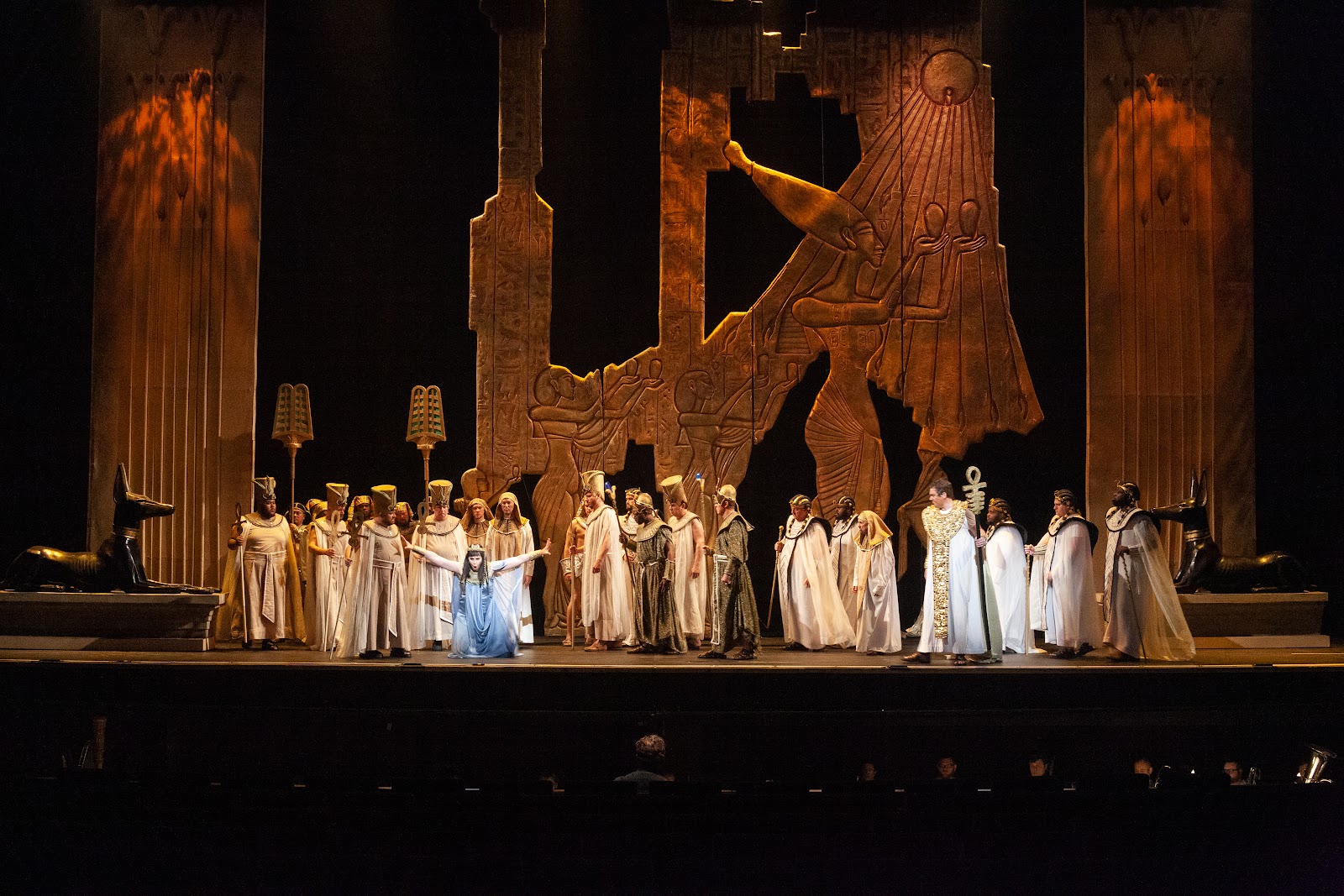
IN REVIEW: the Triumphal Scene in Opera Carolina's April 2022 production of Giuseppe Verdi's AIDA [Photograph by Mitchell Kearney Photography, © by Opera Carolina]Ritorna il salvatore della patria: the Triumphal Scene in Opera Carolina’s April 2022 production of Giuseppe Verdi’s Aida
[Photograph by Mitchell Kearney Photography, © by Opera Carolina]

The mighty Egypt depicted in Opera Carolina’s Aida could only be ruled by a resolute sovereign, and bass Song Zaikuan occupied Il re d’Egitto’s throne with unforced vocal and dramatic authority. The pharoah’s regal demeanor was audible in the singer’s handsome-toned delivery of ‘Alta cagion vi aduna’ in Act One, and he introduced the familiar melody of ‘Su! del Nilo al sacro lido’ with bravado. Glimmers of pragmatic magnanimity shone in Song’s characterization in Act Two, his voicing of ‘Salvator della patria, io ti saluto’ suffused with nationalistic and paternal pride. Sagaciously honoring Radamès’s plea for mercy for the vanquished Ethiopians without wholly disregarding Ramfis’s brutal counsel, Song’s Re sonorously tempered the Egyptians’ unrelenting bloodlust.

As the warmongering Egyptian high priest Ramfis, bass Jordan Bisch was a towering figure whose vocal profile did not always equal his intimidating physicality, especially in the lower reaches of the part’s range. After a marginally unsteady account of ‘Sì: corre voce che l’Etiope ardisca’ in the opera’s opening scene, Bisch’s singing strengthened as the performance progressed, and his dramatic instincts spurred him to enunciate Ramfis’s lines in both the final scene of Act One and the triumphal scene in Act Two with vehemence. The first and final scenes of Act Three were very congenial for the bass, his voice projected with greater ease. The matter-of-fact malace of Bisch’s vocalism in the scena del giudizio in Act Four was chilling, intimating that, to this Ramfis, handing down a death sentence was no more consequential than reciting a prayer. In this portrayal, being the instrument of retribution was a cherished responsibility rather than an inescapable duty of Ramfis’s position.

Even amongst Verdi’s famously demanding rôles for baritone, parts that span virtually the entire Nineteenth-Century musical spectrum, Aida’s father Amonasro is a fearsome character whose vocal and dramatic challenges are confoundingly disproportionate with the duration of his time on stage. It can be argued that Amonasro is Verdi’s most Wagnerian baritone rôle—an argument supported by the shouting heard from some interpreters of the part. In Opera Carolina’s Aida, baritone Brian Major portrayed Amonasro not as an Italian-speaking Holländer on holiday by the Nile but, harkening back to Giuseppe Taddei’s assumption of the part, as an obvious descendant of the bel canto rôles that inspired Verdi’s writing for the baritone voice. The disguised king emerging from the ranks of the Ethiopian prisoners of war in the second act’s triumphal scene, Major sang ‘Suo padre... Anch’io pugnai’ assertively but nobly, the top Es and Fs both forceful and emotive.

Amonasro’s tense meeting with Aida and Amonasro by the Nile in Act Three is one of Italian opera’s most riveting scenes, made all the more engrossing in this performance by the baritone’s electrifying singing of ‘Rivedrai le foreste inbalsamate.’ Torn by his conflicting love for his daughter and quest for vengeance against the Egyptians, Major’s Amonasro startled by infusing the deposed king’s raging with traces of tenderness. There is little subtlety in Amonasro’s exulting in the success of his strategem in the subsequent trio with Aida and Radamès, but the proud man’s aristocratic constitution remained apparent in Major’s refined singing. Vocal control of a now-rare order was the cornerstone of Major’s performance, his fidelity to Verdi’s notes and dynamic markings restoring to Amonasro the musical propriety that he all too often lacks.

IN REVIEW: the Judgment Scene in Opera Carolina's April 2022 production of Giuseppe Verdi's AIDA [Photograph by Mitchell Kearney Photography, © by Opera Carolina]Falsa giustizia: the Judgment Scene in Opera Carolina’s April 2022 production of Giuseppe Verdi’s Aida
[Photograph by Mitchell Kearney Photography. © by Opera Carolina]

The high caliber of singing that has become a hallmark of Opera Carolina productions notwithstandin​g, an Amneris of the stature attained by mezzo-soprano Hyona Kim would have been noteworthy at the Arena di Verona or Teatro alla Scala. Kim’s portrayal of Amneris at once recalled extolled depictions by Ebe Stignani, Giulietta Simionato, and Fiorenza Cossotto and approached the rôle with her own unique sensibilities. This Amneris owned the stage from her first entrance in Act One, intoning ‘Quale insolita fiamma nel tuo sguardo’ in the trio with Radamès and Aida sinisterly. Kim wielded the word ‘sorella’ like a concealed dagger, luring Aida into her confidence and then plunging it into her rival’s heart. Prodding her people to war, this Amneris seemed keen to lead the Egyptian troops into battle herself.

The opening scene of Act Two allows an Amneris to exercise her femininity, and Kim was as convincing as the maidenly princess as she was as the severe tigress in other scenes. Feigned affection coursed through her demure singing in the duetto with Aida, but the daughter of pharaoh’s hidden agenda surged from the mezzo-soprano’s explosive ‘Trema, o vil schiava!’ Frequently shrieked, the top C♭s in the triumphal scene were here genuinely sung, as were the baleful accusations in the final scene of Act Three. Kim’s skills as singer and actress triumphed in Act Four, her account of ‘L’aborrita rivale a me sfuggia’ cogently imparting the wounded woman’s wrath. In the duet with Radamès, she voiced ‘Già i sacerdoti adunansi’ stunningly, dominating the pair of top B♭s. So momentous was Kim’s performance in the scena del giudizio, the top As utterly secure, that the guilt-stricken lover’s humanity overshadowed her treachery. The prayers as Aida and Radamès expired in the tomb were whispered, Amneris facing the demise of her contentment. Musically and histrionically, Kim was an Amneris to the manner born, an of-the-blood princess rather than a pretender.

In his first performance of one of the most daunting spinto rôles in the repertory, tenor Peter Scott Drackley sang Verdi’s music for the Egyptian warrior Radamès with enviable assurance, mastering a tessitura that some of his fellow interpreters of the part are grateful to merely survive. The part’s difficulty is compounded by the character’s sole aria being positionsd in the opera’s first scene, moments after the singer’s initial appearance on stage. If this test unnerved Drackley, trepidation was not discernible in his singing of ‘Se quel guerrier io fossi!’ His timbre and vocal amplitude reminiscent more of Carlo Bergonzi than of Mario del Monaco and Franco Corelli, he simultaneously sang with brawn and lyricism. Untroubled by its three top B♭s (and the numerous recurrences of the tone throughout the opera), he phrased the romanza ‘Celeste Aida, forma divina’ expansively, regarding it as a private reverie rather than a stentorian declaration. Already suspecting Amneris’s duplicity, this Radamès exhibited caution in the terzetto until Aida’s arrival, when his hushed ‘Dessa’ signaled a change in his deportment.

Radamès’s joy upon being named commander of the Egyptian army was unmistakable, but, here and in the cantabile in Act One’s final scene, Drackley also limned the soldier’s cognizance of the risks of his love for Aida. Returning victorious in the triumphal scene, this Radamès’s thoughts again turned to Aida, his request for pharaoh’s pardon for the Ethiopian prisoners born of his empathy for Aids’s suffering. Radamès joining his beloved on the bank of the Nile, unaware of being observed by her father, Drackley voiced ‘Pur ti riveggo, mia dolce Aida’ ardently, passion at last subjugating patriotic loyalty. His horror upon discovering Amonasro’s plot and Aida’s part in it was devastating, the top As with which Radamès lamented his unintended treason thrillingly sung. Drackley was a worthy adversary for Kim in the Act Four duet with Amneris, his defiance boldly but honorably articulated. After his serene ‘La fatal pietra sovra me si chiuse,’ Drackley movingly conveyed Radamès’s anguish at finding Aida concealed in the tomb in which he must perish. In the final duet, the tenor’s voice rose beautifully to the pianissimi above the stave. Crucially, Drackley sang Radamès’s music with his own voice, never forcing the tone or distorting his timbre’s innate luster by attempting to emulate another singer’s portrayal.

Many gifted sopranos have learned through experience that success in the title rôle of Aida depends upon more than possessing a voice with the requisite range and weight for the music. The most memorable interpreters of Aida inhabit the rôle with depth that transcends musical aptitude, and, allied with vocal accomplishment, it was her immersion in the part’s psychological complexity that lent soprano Michelle Johnson’s portrayal of Aida affecting profundity. The hesitation with which her Aida entered in Act One was indicative of her demoralizing discomfort at the Egyptian court, yet her conviction grew with each successive passage of the terzetto with Amneris and Radamès, her voicing of ‘Ohimè! di guerra fremere’ ascending to a resilient top B. Her top Cs in ensembles were fearless, but her traversal of ‘Ritorna vincitor’ touchingly communicated Aida’s consternation, and her ‘L’insana parola, o Numi, sperdete!’ coruscated with emotional intensity. Her singing of ‘Felice esser poss’io’ providing a glimpse of Aida’s true lineage, Johnson’s sparring with Kim in the Act Two duetto with Amneris accentuated the scene’s indebtedness to the ‘dialogo delle due regine’ in Donizetti’s Maria Stuarda. Johnson ensured that Aida’s dismay was omnipresent amidst the triumphal scene’s cacophony.

Alone for the first time in the opera in Act Three, Johnson’s Aida retreated into her own thoughts, voicing ‘Qui Radamès verrà!’ pensively. Its eagerly-awaited exposed top C engenders undue emphasis on the romanza ‘O patria mia! mai più ti rivedrò,’ but Johnson’s performance justified its prominence, the oft-mangled top C intuitively integrated into the line rather than being over-sustained egotistically. Aida’s contemplation interrupted by Amonasro’s unexpected arrival, Johnson uttered ‘Ciel! mio padre!’ with visceral panic, and her vocalism in the harrowing duet and the trio that ensued upon Radamès’s appearance was intriguingly expressive, the listener drawn still further into Aida’s private discord. The rapturous beauty with which she phrased ‘Presago il core della tua condanna’ and the sublime ‘O terra, addio’ revealed the abiding deliverance from sorrow that death alongside Radamès brought Aida. Johnson’s singing was not without effort, but every brief flash of stress heightened the credibility of her appealingly personal interpretation of the part. She was an Aida who felt each of the character’s emotions acutely, and this was an Aida in which the eloquence of Verdi’s music prevailed over the woes of the world.

31 May 2022

PERFORMANCE REVIEW: Wolfgang Amadeus Mozart — COSÌ FAN TUTTE (M. Hansen, L. Chavez, K. Richardson, P. Suliandziga, S. Kim, D. Sedov; Opera in Williamsburg, 29 May 2022)

IN REVIEW: the cast of Opera in Williamsburg's 2022 production of Wolfgang Amadeus Mozart's COSÌ FAN TUTTE [Photograph by Roxane Revon, © by Opera in Williamsburg]WOLFGANG AMADEUS MOZART (1756 – 1791): Così fan tutte, ossia La scuola degli amanti, K. 588 — Meredith Hansen (Fiordigili), Lisa Chavez (Dorabella), Kyaunnee Richardson (Despina), Pavel Suliandziga (Ferrando), Suchan Kim (Guglielmo), Denis Sedov (Don Alfonso); Opera in Williamsburg Chamber Orchestra; Paul Nadler, conductor [Isabel Milenski, stage director; Naama Zahavi-Ely, producer; Troy Martin-O’Shia, lighting designer; Eric Lamp, costume designer; Opera in Williamsburg, Kimball Theatre, Williamsburg, Virginia, USA; Sunday, 29 May 2022]

At the time of his death on 17 August 1838, the Italian poet and priest Lorenzo da Ponte dwelled not in an opulent Viennese abode befitting the foremost librettist in the Habsburg capital in the final quarter of the Eighteenth Century but in a relatively modest flat in New York City. Following the ends of his work with his most celebrated musical collaborator and his career at the imperial court, effected by the respective deaths of Wolfgang Amadeus Mozart and Emperor Joseph II, da Ponte sought new opportunities, settling first in Britain and later in the United States, where he became a naturalized citizen in 1828. Like many immigrants to the USA, da Ponte overcame many setbacks during his three decades in the New World, but even successes like founding the precursor of today’s Metropolitan Opera did not eclipse the legacy of his association with Mozart.

First performed in Vienna’s Burgtheater on 26 January 1790, Così fan tutte was the final fruit of the partnership between da Ponte and Mozart that also yielded Le nozze di Figaro and Don Giovanni. Traditional notions of da Ponte’s work with Mozart have been upended in the past half-century by musicological discoveries of evidence suggesting that the libretto of Così fan tutte was originally intended not for Mozart but for the Salzburger’s superior at the court of Joseph II, Antonio Salieri. Why Salieri might have abandoned the project after having composed the recently-unearthed music for it has not yet been established. Whatever motivated the reassignment, Così landing in Mozart’s hands was one of the most fortuitous occurrences in opera’s history. In Così, Mozart and da Ponte further refined the art of creating nuanced characters through their interactions with one another that so distinguished Le nozze di Figaro and Don Giovanni, propelling opera’s transition from the Baroque focus on solo arias to increased emphasis on ensembles.

From a Twenty-First-Century perspective, Così fan tutte having long been revered as one of its creators’ greatest achievements, it is remarkable to recall that Nineteenth-Century observers, Ludwig van Beethoven among them, considered da Ponte’s libretto unworthy of Mozart’s score, the ‘immoral’ tale of a pair of lovers duplicitously putting their partners’ fidelity to the test disfiguring the noble music to which it was set. This attitude reflects the romanticization to which Mozart was subjected following his early death, as well as nonsensical proto-Victorian misogyny. Thankfully, these distortions and misinterpretations of Così have largely been supplanted by appreciation for the genius of Mozart’s handling of da Ponte’s words and dramatic situations, but some stagings of the opera continue to substitute awkward stereotypes for Mozart’s and da Ponte’s meticulously-wrought characterizations.

Fittingly presented in the historic Kimball Theatre, amidst the Eighteenth-Century surroundings of Colonial Williamsburg, Opera in Williamsburg’s production of Così fan tutte shrank from none of the opera’s complex gender politics, but producer Naama Zahavi-Ely and director Isabel Milenski brought refreshing lightness and sophistication to the work. Aided in no small part by the singers’ well-rehearsed diction, the production concentrated as pointedly on communicating da Ponte’s words as on performing Mozart’s music.

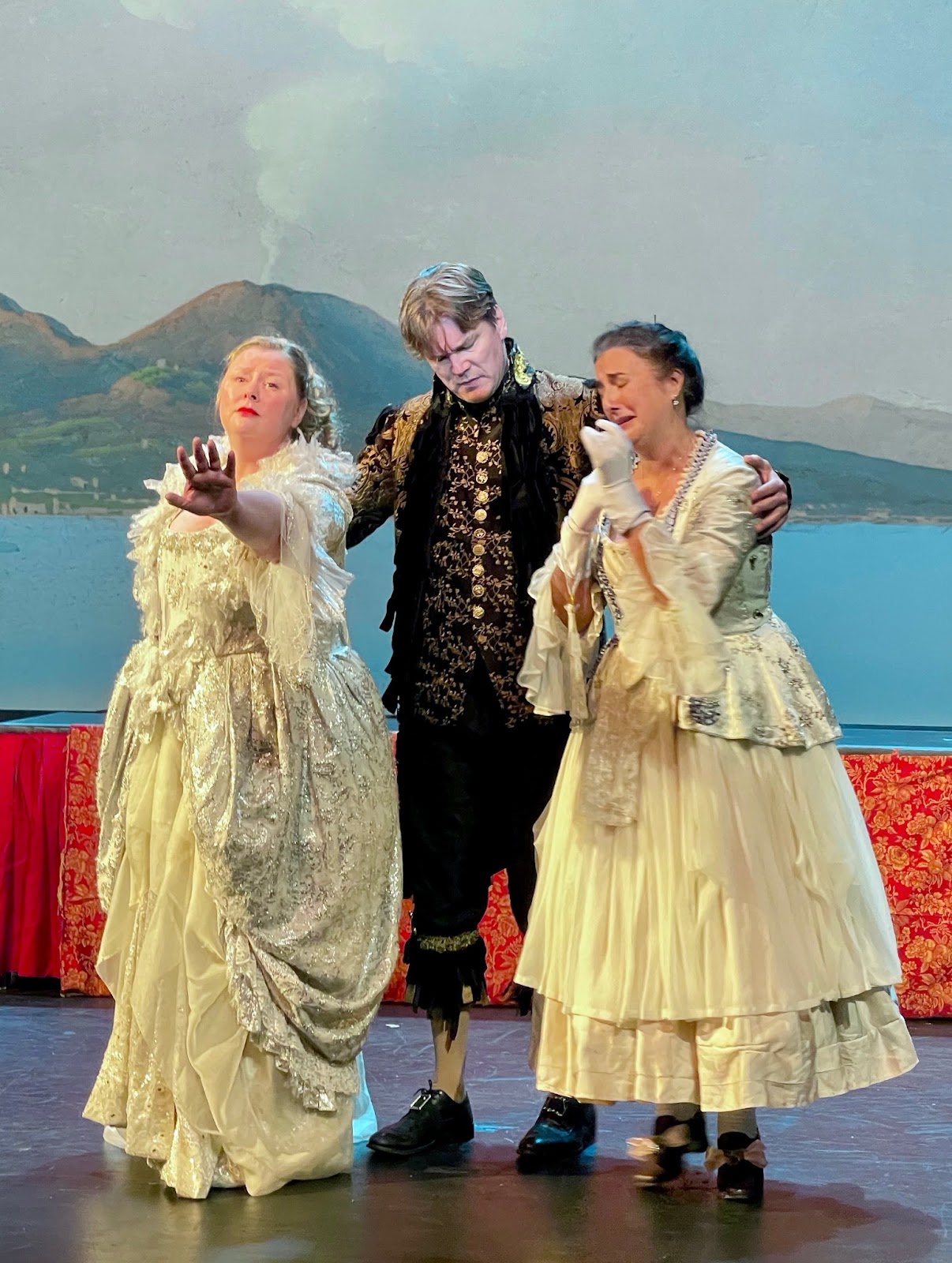
Roxane Revon’s clever visual and projection designs, Troy Martin-O’Shia’s thoughtful lighting, and Eric Lamp’s masterful costumes—luxurious Eighteenth-Century attire for the ‘proper’ Neapolitans, Summer of Love threads for the feigned Albanians, biker glam for the sisters’ Grease-like transformation, and a hilarious nods to Tim Conway and Stevie Wonder for Despina’s turns as the doctor and the notary—metamorphosed with the opera’s shifting moods. Abounding with wit and creative details like staging an ensemble in Act Two with Four Seasons-style choreography, the production was genuinely funny, never subjecting Mozart’s and da Ponte’s farce to overwrought foolishness.

Acclaimed for his work in a number of the world's important opera houses, including the Metropolitan Opera, for which company he has presided over sixty performances to date, conductor Paul Nadler marshaled the musical forces of Opera in Williamsburg’s Così fun tutte with unmistakable assurance. Utilizing an orchestral reduction by Jonathan Lyness, Nadler and the eleven members of the production’s chamber orchestra furnished a surprisingly robust account of the score, proving in the opera’s sparkling Overture that their collective virtuosity rendered their small number inconsequential.

Similarly, unaccustomed attention on the beauties of Mozart’s instrumental writing wholly compensated for the omission of the choral voices from ‘Bella vita militar!’ in Act One and Ferrando’s duettino with Guglielmo in Act Two. Like Nadler’s invigorating but sensitive conducting, Eric Sedgwick’s harpsichord continuo was propulsive without being over-assertive, and, complementing a splendid string quintet, flautist Jen Tobin, oboist George Corbett, clarinettist Shawn Buck, bassoonist Matt Lano, and horn player Cody Halquist executed their parts superbly.

IN REVIEW: soprano KYAUNNEE RICHARDSON as Despina (left) and bass DENIS SEDOV as Don Alfonso (right) in Opera in Williamsburg's 2022 production of Wolfgang Amadeus Mozart's COSÌ FAN TUTTE [Photograph by Roxane Revon, © by Opera in Williamsburg]I piaceri della cospirazione: soprano Kyaunnee Richardson as Despina (left) and bass Denis Sedov as Don Alfonso in Opera in Williamsburg’s 2022 production of Wolfgang Amadeus Mozart’s Così fan tutte
[Photograph by Roxane Revon, © by Opera in Williamsburg]

A particular joy of Opera in Williamsburg’s staging of Così fan tutte was the casting of a young, vibrant Despina who both possesses and wields complete control over a fine voice​. From her first entrance, uttering ‘Che vita maledetta è il far la cameriera’ with bemused ennui, soprano Kyaunnee Richarson ignited the performance with her fiery singing and personality. Manifesting the production’s ethos, her account of the aria ‘In uomini, in soldati sperare fedeltà?’ was riotous without being exaggerated, the no-nonsense maid’s frustration with her stoic mistresses delightfully imparted. In both the rollicking sextet, one of Mozart’s most masterful ensembles, and the Act One finale, Richardson ensured that each of Despina’s words was audible, singing with consummate musicality and an engaging sense of fun.

Despina’s aria in Act Two, ‘Una donna a quindici anni,’ was a highlight of the performance, Richardson’s Despina relaying crucial life experience rather than lecturing. As in Act One, her vocal acting in Act Two’s quartet and final scene delighted. In some productions, Despina’s appearances in disguise, first as the doctor of questionable credentials who revives the Albanians and later as the pedantic notary, are embarrassingly silly, but Richardson enchanted in these scenes, too. Vocally and comedically, Richardson was an atypically endearing Despina who both earned her laughs and sang Mozart’s music with charm and technical flair.

The rôle of Don Alfonso, the cosmopolitan opportunist whose denunciation of the professed fidelity of his friends’ fiancées precipitates Così’s events, is very difficult to cast, and a few unsteady, uncertainly-tuned notes at the top of the range suggested that the music’s compass is not completely ideal for bass Denis Sedov. Despite these fleeting moments of vocal discomfort, Sedov’s performance of the part was magnificent. The voice resounded with tremendous power in Don Alfonso’s trios with Ferrando and Guglielmo in Act One, the bass declaiming ‘Ho i crini già grigi’ with expert timing. His voicing of the aria ‘Vorrei dir, e cor non ho’ was divertingly droll, but this Don Alfonso’s cunning shone most brightly in ensembles, particularly in the quintet and the exquisite terzettino ‘Soave via il vento.’

Sedov voiced ‘Non son cattivo comico’ forcefully and delivered Don Alfonso’s lines in the Act One finale gleefully. The quartet in Act Two was the vehicle for some of Sedov’s best singing of the afternoon, his smoky timbre amplifying the character’s sarcasm. Though brief, Don Alfonso’s aria ‘Tutti accusan le donne ed io le scuso’ encapsulates the wily man’s philosophy. In Sedov’s portrayal, the aria served as the fulcrum that vaulted the opera to its jovial resolution. That such an imposing voice darted through Mozart’s patter was incredible but only one satisfying surprise in a tour-de-force performance.

IN REVIEW: baritone SUCHAN KIM as Guglielmo (left) and tenor PAVEL SULIANDZIGA as Ferrando (right) in Opera in Williamsburg's 2022 production of Wolfgang Amadeus Mozart's COSÌ FAN TUTTE [Photograph by Roxane Revon, © by Opera in Williamsburg]Prima amati, e poi soldati: baritone Suchan Kim as Guglielmo (left) and tenor Pavel Suliandziga as Ferrando (right) in Opera in Williamsburg’s 2022 production of Wolfgang Amadeus Mozart’s Così fan tutte
[Photograph by Roxane Revon, © Opera in Williamsburg]

Following the path traveled in his lauded depictions of Silvio and Belcore in Opera in Williamsburg’s recent productions of Pagliacci and L’elisir d’amore, baritone Suchan Kim sang Guglielmo in Così fan tutte suavely, exhibiting command of the musical language in the Act One trios with Ferrando and Don Alfonso. There was no disputing his sincerity when this Guglielmo declared that ‘La mia Fiordiligi tradirmi non sa,’ and his parts in first the quintet and then the duettino with Ferrando were impeccably voiced. Kim’s traversal of the aria ‘Non siate ritrosi, occhetti vezzosi’ simmered with romantic zeal, a quality that also coursed through his singing in the terzetto and Act One finale.

Throughout Act Two, Kim’s vocalism convincingly limned Guglielmo’s conflicting feelings, each successive ensemble adding a further dimension to his portrayal. In the duet with Dorabella, he voiced ‘Il core vi dono’ seductively, his wooing overwhelming the lady’s defenses. Guglielmo’s anger upon learning of Fiodiligi’s eventual surrender to Ferrando’s advances was scorching, but Kim also emphasized the pain of the betrayal, thereby intensifying the cathartic reconciliation of the opera’s finale. The emotional complexity of his characterization notwithstanding, Kim’s singing elicited nothing but joy.

With his elegantly-sung, captivatingly-acted portrayal of Ferrando, tenor Pavel Suliandziga won the admiration of Opera in Willamsburg’s audience anew. The exchanges with Guglielmo and Don Alfonso in the early scenes of Act One introduced his Ferrando as a fun-loving but intrinsically serious young man, the tenor singing ‘La mia Dorabella capace non è’ and his lines in the quintet with conviction. He reacted with ever-changing vocal colors to the chameleonic sentiments of the duettino with Guglielmo, the terzetto, and the act’s madcap final. Still, the pinnacle of Act One was his performance of the exquisite aria ‘Un’ aura amorosa del nostro tesoro,’ hypnotically sung, the sweetness of his sound mitigating occasional stress above the stave.

Regrettably, both Ferrando’s bravura aria ‘Ah, lo veggio, quell’anima bella’ and the cavatina ‘Tradito, schernito dal perfido cor’ fell victim to cutting, but Suliandziga’s emotive singing in Act Two ensured that the character remained at the center of the comedy. Joining Kim in an alluring account of ‘Secondate, aurette amiche,’ he projected Ferrando’s commitment to his bargain with Don Alfonso and his absolute belief in Dorabella’s fidelity. The voice glowed in the quartet and the duet with Fiordiligi, in which he phrased ‘Ed intanto di dolore’ alluringly. Singing Mozart rôles exposes the flaws in some tenors’ techniques, but his portrayal of Ferrando disclosed the strengths of Suliandziga’s artistry.

IN REVIEW: (from left to right) soprano MEREDITH HANSEN as Fiordiligi, bass DENIS SEDOV as Don Alfonso, and mezzo-soprano LISA CHAVEZ as Dorabella in Opera in Williamsburg's 2022 production of Wolfgang Amadeus Mozart's COSÌ FAN TUTTE [Photograph by Roxane Revon, © by Opera in Williamsburg]Un addio in lacrime: (from left to right) soprano Meredith Hansen as Fiordiligi, bass Denis Sedov as Don Alfonso, and mezzo-soprano Lisa Chavez as Dorabella in Opera in Williamsburg’s 2022 production of Wolfgang Amadeus Mozart’s Così fan tutte
[Photograph by Roxane Revon, © by Opera in Williamsburg]

Though Dorabella’s constancy is ultimately determined to be slightly less durable than her sister’s, there were no inferiorities in mezzo-soprano Lisa Chavez’s portrayal of the spirited young woman. Dueting with Fiordiligi in Act One, Chavez sang ‘Osserva tu un poco’ fetchingly before partnering her colleagues affectingly in the quintet and ‘Soave via il vento.’ Her scintillating performance of the aria ‘Smanie implacabili che m’agitate’ illustrated Dorabella’s individual character. Here and in the Act One finale, the singer’s potent upper register gave Dorabella’s words special vigor.

Dorabella’s adventurousness was evident in Chavez’s voicing of ‘Prenderò quel brunettino’ in the Act Two duet with Fiordiligi. Then, first in the quartet and later in the duet with Guglielmo, in which her passionate ‘Mei date, lo prendo’ was one of those indescribable moments in comedy in which true emotion bursts forth, the mezzo-soprano underscored the genius with which Mozart’s music supports da Ponte’s words. Text was the medium with which Chavez painted her portrait of Dorabella, but it was her earnest, effervescent singing that brought the images to life.

Soprano Meredith Hansen confronted the daunting trials of Fiordiligi’s music unflinchingly, intrepidly approaching a rôle that singers as accomplished as Eleanor Steber and Leontyne Price found perilous. Her singing of ‘Ah, guarda, sorella’ in the duet with Dorabella announced the soprano’s vocal prowess, the voice’s muscular energy giving this Fiordiligi visceral resolve. Her part in the quintet was dispatched ebulliently, and Hansen voiced the high line in ‘Soave via il sento’ radiantly. The sextet and the final ensemble of Act One benefited from the incisiveness of her vocalism, and her account of the aria ‘Come scoglio immoto resta,’ its top B♭s and C, trills, and triplets discharged defiantly, flickered with repressed sensuality.

Mozart delineated Fiordiligi’s evolution from unshakable loyalty to sexual liberation in Act Two with exactingly formidable music. This fueled Hansen’s artistic drive, spurring her to voicings of ‘Ed intanto io col biondino’ in the duet with Dorabella and her passages in the quartet that radiated voluptuous femininity. The expressivity of Hansen’s singing of the rondò ‘Per pietà, ben mio, perdona’ was arresting, every note representative of Fiordiligi’s emotional crisis. The duet with Ferrando finalized this awakening, the soprano singing ‘Fra gli amplessi in pochi istanti’ exultantly. In many performances of Così fan tutte, a Fiordiligi of Hansen’s caliber would claim the laurels. In Opera in Williamsburg’s blissful Così fan tutte, she was a paragon among equals.

27 May 2022

PERFORMANCE REVIEW: Léo Delibes — LAKMÉ (E. Morley, F. Antoun, A. Walker, T. Hoffman, T. Raven, S. Huh, V. Filloux, L. Metzger, M.E. Grey; Washington Concert Opera, 22 May 2022)

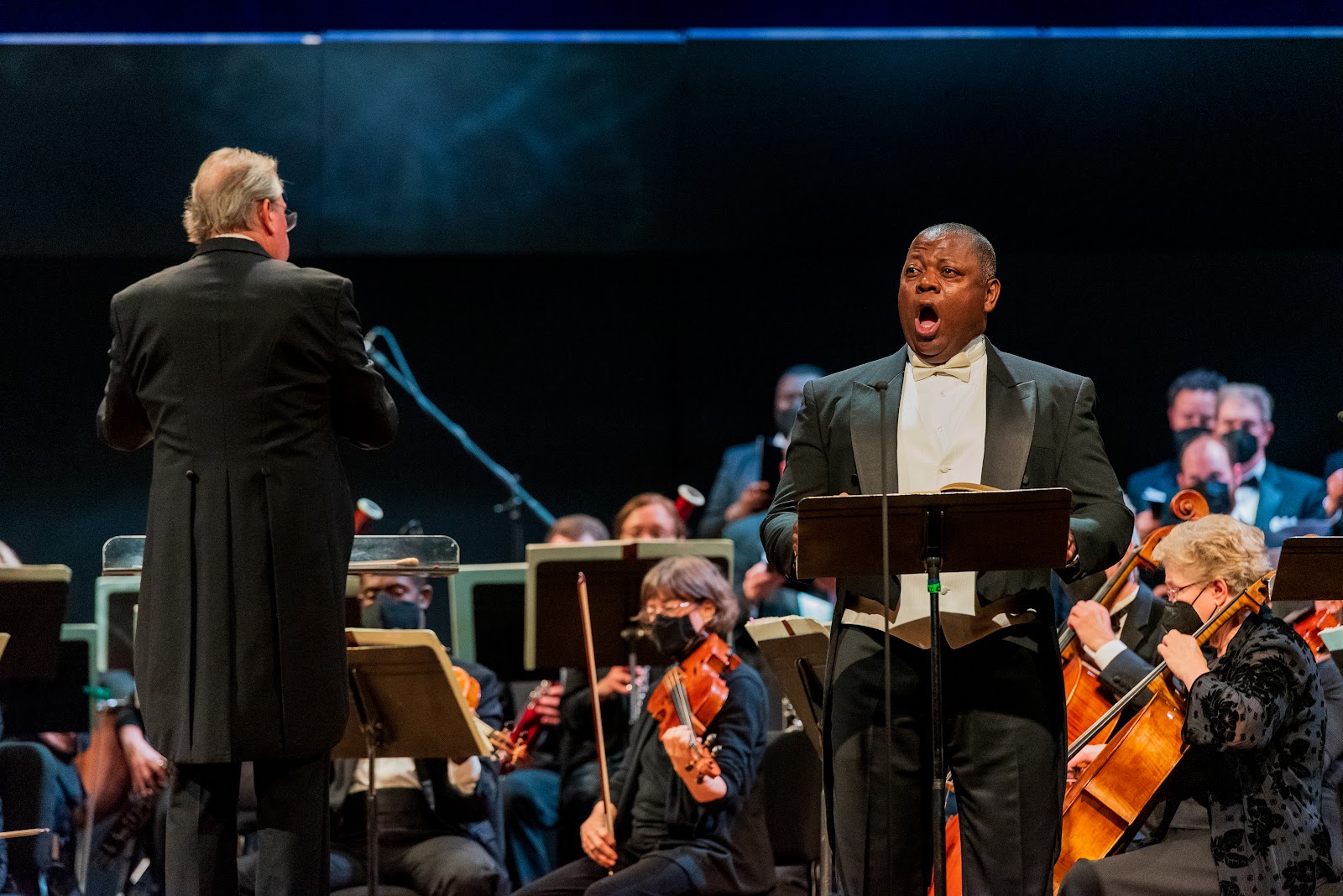
IN REVIEW: (from left to right) bass-baritone ALFRED WALKER as Nilakantha, conductor ANTONY WALKER, and soprano ERIN MORLEY as Lakmé in Washington Concert Opera's performance of Léo Delibes's LAKMÉ, 22 May 2022 [Photograph by Caitlin Oldham, © by Washington Concert Opera]CLÉMENT PHILIBERT LÉO DELIBES (1836 – 1891): Lakmé – Erin Morley (Lakmé), Frédéric Antoun (Gérald), Alfred Walker (Nilakantha), Theo Hoffman (Frédéric), Taylor Raven (Mallika), Sammy Huh (Hadji), Véronique Filloux (Ellen), Lindsay Metzger (Rose), Megan Esther Grey (Mistress Bentson); Washington Concert Opera Chorus and Orchestra; Antony Walker, conductor [Washington Concert Opera, Lisner Auditorium, The George Washington University, Washington, DC, USA; Sunday, 22 May 2022]

Many aspects of the world on and off the lyric stage have changed fundamentally since the world première of Léo Delibes’s best-remembered opera Lakmé at the Opéra-Comique on 14 April 1883. Familiar to Parisians in the final quarter of the Nineteenth Century, the social and cultural prejudices upon which Edmond Gondinet’s and Philippe Gille’s libretto for Lakmé, adapted from a story by Théodore Pavie, are centered are now denounced by civilized communities, yet they persist, gnawing at the fringes of progress. Perhaps this reminder of the ambiguities of societal evolution accounts in some part for the affection for Lakmé in her native France, where the opera continues to be performed, particularly at the Opéra-Comique, considerably more often than it is heard in other countries. Last heard at New York’s Metropolitan Opera in the 1946 - 1947 Season, when Lily Pons and Patrice Munsel alternated in the title rôle, Lakmé has been an infrequent visitor to North America. Is Lakmé’s juxtaposition of enticing exoticism and oppressive colonialism too uncomfortable a parallel to America’s troubled past?

Further expanding the company’s repertory beyond the bel canto and early-Nineteenth-Century works that serve as its cornerstones, Washington Concert Opera’s performance of Lakmé demonstrated that the piece is ideally suited to concert presentation, especially in today’s political climate, in which staging elements of the opera’s cultural stereotypes risks distracting audiences from the felicities of Delibes’s score. The popularity of Lakmé’s celebrated Duo des fleurs and Air des clochettes is warranted, but, by enabling the listener to focus in this performance primarily upon assessing the quality of Delibes’s writing, WCO’s musical forces affirmed that these familiar numbers exemplify rather than markedly exceeding the merits of the work as a whole. WCO’s home at Lisner Auditorium proved to be an exemplary venue for the opera, the size of the house spotlighting many subtle wonders of the composer’s orchestrations and permitting the cast to sing without pushing their voices. Admittedly, the unstaged format, combined with projected supertitles, prompted laughter in moments in which Delibes and his librettists likely would not have expected it, but even this validated the heightened connection between audience and music engendered by this performance.

In recent seasons, the playing of WCO’s orchestra has strengthened with each performance, achieving a high standard of musical integrity that was further elevated in this Lakmé. In his two-decade tenure as WCO’s Artistic Director, conductor Antony Walker has presided over performances of a broad spectrum of repertoire. The elegance of his pacing of bel canto works yielded a reading of Lakmé in which Delibes’s vibrant writing for the orchestra was the infrastructure that allowed the opera’s melodies to flow organically. Walker accentuated the score’s lyricism without shortchanging its surging intensity, Wagnerian grumblings propelling rather than overwhelming dulcet passages. Harpist Eric Sabatino, percussionists Joe McIntyre and John Kilkenny (stewards of the climactic cymbals and the tinkling chimes in the opera’s best-known aria), and the wind players thrilled, but not one of their fellow musicians was audibly daunted by the music’s challenges, not least in the atmospheric Prélude and Entr’actes. Manifested in deft transitions among scenes, Walker’s gift for adopting tempi that are both faithful to the score and supportive of the singers unerringly guided his handling of Lakmé.

Like their colleagues in the orchestra, WCO’s choristers refine their skills with each subsequent performance, building upon David Hanlon’s training to enrich this Lakmé with choral singing of an order comparable to the work of the world’s best opera-house choruses. In the opening scenes of Acts One and Two, the moods of reverence and revelry were compellingly contrasted, but the singers’ musicality was unchanging. Similarly, the sentiments of ‘Des siens séparant le coupable’ in Act Two and ‘Descendons la pente doucement’ in Act Three were differentiated, but both numbers were sung with power and near-perfect ensemble. Delibes’s choral writing plays an integral rôle in creating the hypnotic musical world into which Lakmé’s colonial interlopers trespass, and the WCO chorus performed that rôle stirringly.

IN REVIEW: soprano ERIN MORLEY as Lakmé (left) and tenor SAMMY HUH as Hadji (right) in Washington Concert Opera's performance of Léo Delibes's LAKMÉ, 22 May 2022 [Photograph by Caitlin Oldham, © by Washington Concert Opera]La fille des dieux et son ami fidèle: (from left to right) soprano Erin Morley as Lakmé and tenor Sammy Huh as Hadji in Washington Concert Opera’s performance of Léo Delibes’s Lakmé, 22 May 2022
[Photograph by Caitlin Oldham, © by Washington Concert Opera]

The breadth of talent in the Washington metropolitan area is often evident in WCO performances, the company’s casting taking advantage of the region’s abundant musical resources. The minor rôles of the Marchand chinois, Domben, and Kouravar who appear in the opera’s ‘ scène du marché at the start of Act Two were omitted from this Lakmé, in which the ballet music was also truncated. Nilakantha’s servant Hadji is not a large part, but tenor Sammy Huh sang his music with secure intonation and dramatic instincts that were apparent even in this concert presentation. In Huh’s thoughtful performance, the brief scene in Act Two in which Hadji articulates the depth of his feelings for Lakmé, pledging to punish her enemies and aid her friends, was genuinely touching, the character’s devotion discernibly extending beyond mere loyalty.

IN REVIEW: (from left to right) contralto MEGAN ESTHER GREY as Mistress Bentson, mezzo-soprano LINDSAY METZGER as Rose, and soprano VÉRONIQUE FILLOUX as Ellen in Washington Concert Opera's performance of Léo Delibes's LAKMÉ, 22 May 2022 [Photograph by Caitlin Oldham, © by Washington Concert Opera]Les intruses britanniques: (from left to right): contralto Megan Esther Grey as Mistress Bentson, mezzo-soprano Lindsay Metzger as Rose, and soprano Véronique Filloux as Ellen in Washington Concert Opera’s performance of Léo Delibes’s Lakmé, 22 May 2022
[Photograph by Caitlin Oldham, © by Washington Concert Opera]

In the quintette in Act One and the bazaar and final scenes of Act Two, Delibes’s music for the ladies of the opera’s British contingent—the soldier Gérald’s fiancée Ellen, her confidante Rose, and the governess Mistress Bentson—was sung with apt precision and decorum by soprano Véronique Filloux, mezzo-soprano Lindsay Metzger, and contralto Megan Esther Grey. Filloux voiced Ellen’s couplet, ‘Nous sommes conquises avec moins d’éclat,’ charmingly, her upper register glowing, and Metzger’s Rose sparred with the pragmatic Frédéric with wit and alluring tone. The exasperation with which Grey uttered Mistress Bentson’s objections to the volume of the Hindu celebration—devised solely as a deafening annoyance to the conquering British, she insists—provided a welcome comedic contrast to the drama’s tension.

IN REVIEW: (from left to right) mezzo-soprano TAYLOR RAVEN as Mallika and soprano ERIN MORLEY as Lakmé in Washington Concert Opera's performance of Léo Delibes's LAKMÉ, 22 May 2022 [Photograph by Caitlin Oldham, © by Washington Concert Opera]Les dames aux jasmin: mezzo-soprano Taylor Raven as Mallika (left) and soprano Erin Morley as Lakmé (right) in Washington Concert Opera’s performance of Léo Delibes’s Lakmé, 22 May 2022
[Photograph by Caitlin Oldham, © Washington Concert Opera]

Aside from partnering her mistress in the famed Duo des fleurs, Lakmé’s servant Mallika has little to do as the opera progresses, but mezzo-soprano Taylor Raven made each of the character’s appearances on stage significant. She sang all of Mallika’s lines with sincerity and full, focused tone, but many listeners assess a singer’s success in the part based solely upon her singing of ‘Sous le dôme épais où le blanc jasmin.’ By this narrow measure, too, Raven’s performance was glorious. Even in moments during which she was not singing, Raven was wholly involved in the performance, visibly reacting to the developing drama, but it was her voice that lent her characterization of Mallika depth and humanity.

IN REVIEW: (from left to right) tenor FRÉDÉRIC ANTOUN as Gérald and baritone THEO HOFFMAN as Frédéric in Washington Concert Opera's performance of Léo Delibes's LAKMÉ, 22 May 2022 [Photograph by Caitlin Oldham, © by Washington Concert Opera]Les soldats dévoués: tenor Frédéric Antoun as Gérald (left) and baritone Theo Hoffman as Frédéric (right) in Washington Concert Opera’s performance of Léo Delibes’s Lakmé, 22 May 2022
[Photograph by Caitlin Oldham, © by Washington Concert Opera]

Baritone Theo Hoffman portrayed the savvy Frédéric with humor and sophistication, credibly projecting martial arrogance tempered by empathy whilst adhering to Delibes’s Francophone idiom. Endeavoring in the Act One quintette to offer a nuanced view of Hindu society to the unimpressed Britons, this Frédéric delivered his couplet ‘Leur vertu si bizarre manque d’apparat’ shrewdly, the smile in Hoffman’s voice equally amused and bemused. In the final scene of Act Two, Hoffman voiced ‘C’est pour admirer la déesse’ suavely, Frédéric’s noble spirit emerging from his trenchant banter. Concern for the peril in which Gérald is immersed suffused the baritone’s singing in Act Three, his Frédéric divining that an untroubled resolution of his brother-in-arms’s illicit liaison with Lakmé is impossible. Throughout the evening, Hoffman sang intelligently, employing his handsome timbre rather than pomposity to impart Frédéric’s intuitive sagacity.

IN REVIEW: bass-baritone ALFRED WALKER as Nilakantha in Washington Concert Opera's performance of Léo Delibes's LAKMÉ, 22 May 2022 [Photograph by Caitlin Oldham, © by Washington Concert Opera]Le père vengeur: bass-baritone Alfred Walker as Nilakantha (right) in Washington Concert Opera’s performance of Léo Délibes’s Lakmé, 22 May 2022
[Photograph by Caitlin Oldham, © by Washington Concert Opera]

Lakmé’s father, the implacable Brahman priest Nilakantha, was depicted with unstinting vocal and dramatic force by bass-baritone Alfred Walker, whose clangorous tones imparted the cleric’s warnings ferociously. Recognizing a kinship with Oroveso in Bellini’s Norma, Walker also emphasized the paternal warmth in Nilakantha’s music, voicing ‘Lakmé, c’est toi qui nous protèges’ in Act One affectionately. The portentous lines ‘Dans ma demeure! Un profane est entré chez moi!’ wer​e then declaimed with startling menace, Gérald’s violation of the sanctity of the Brahmans’ enclave awaking Nilakantha’s fury.

The adaptability of Walker’s artistry was exhibited by the affecting gentleness with which he sang Nilakantha’s stances in Act Two, ‘Lakmé, ton doux regard se voile,’ his cantabile singing no less memorable than his roaring admonitions. The impact of his detonation of ‘La rage me dévore’ was wrenching, the father’s indignation yielding to frightening fanaticism. Still, there were suggestions of benevolence in Walker’s account of ‘Au millieu des chants d’allégresse.’ Finding Gérald in Lakmé’s presence in Act Three, this Nilakantha’s declaration of ‘C’est lui!’ was a cry of both hatred and alarm. The priest’s disgust upon perceiving that Lakmé sacrified herself to allaying the dishonor of her forbidden love for Gérald blended with the father’s grief, Walker singing of Lakmé having joined the gods in heaven movingly. Without the aid of staging, Walker made Nilakantha a fascinating, fleetingly sympathetic character, rivaling Ezio Pinza’s portrayal of the rôle in the 1940 and 1941 Metropolitan Opera broadcasts.

IN REVIEW: tenor FRÉDÉRIC ANTOUN as Gérald in Washington Concert Opera's performance of Léo Delibes's LAKMÉ, 22 May 2022 [Photograph by Caitlin Oldham, © by Washington Concert Opera]L’amant en conflit: tenor Frédéric Antoun as Gérald in Washington Concert Opera’s performance of Léo Delibes’s Lakmé, 22 May 2022
[Photograph by Caitlin Oldham, © by Washington Concert Opera]

Like his countryman Raoul Jobin, Québécois tenor Frédéric Antoun brought to the rôle of Gérald the invaluable boons of native French and a voice possessing both the proper placement for Delibes’s musical style and heft sufficient to vault the ardent soldier’s most impassioned passages into the auditorium with little strain. From his first words in the Act One quintette, Antoun evinced Gérald’s fascination with his unfamiliar surroundings, his detachment from his British compatriots increasing as he succumbed to India’s enigmas. The frequent ascents to top A♭ in Gérald’s air ‘Fantaisie aux divins mensonges’ were approached fearlessly, only occasional moments of slight unsteadiness betraying the effort required to sustain the rôle’s high tessitura. The first of Gérald’s amorous duets with Lakmé inspired Antoun to vocalism of romantic zeal, his performance of ‘Oublier que je t’ai vue’ shimmering with burgeoning eroticism.

As Gérald was seized by love for Lakmé in Act Two, the fervor of Antoun’s voicing intensified. His ecstatic enunciation of ‘C’est Lakmé, c’est elle!’ gleamed, and his secure top B♭s and B were rousing but unexaggerated pinnacles of his singing in the duet with Lakmé. Both ‘C’est un rêve, une folie’ in the final scene of Act Two and the cantilène ‘Ah! Viens dans la forêt profonde’ in Act Three were articulated with riveting immediacy, and the tenor intoned ‘Quel est ce chant plein de tendresse’ elegantly. In Antoun’s portrayal, the uncertainty in Gérald’s scene with Frédéric gave way to devastating anguish in the subsequent duet with Lakmé. In the opera’s final scene, Antoun aimed Gérald’s ‘Grand Dieu! Elle meurt pour moi!’ at the audience’s collective heart and squarely hit his target. In truth, Antoun captured the audience’s adulation in his first moments on stage. In the minutes that followed, he earned admiration for his dazzling singing of Delibes’ music.

IN REVIEW: soprano ERIN MORLEY as Lakmé in Washington Concert Opera's performance of Léo Delibes's LAKMÉ, 22 May 2022 [Photograph by Caitlin Oldham, © by Washington Concert Opera]La voix de la légende: soprano Erin Morley as Lakmé in Washington Concert Opera’s performance of Léo Delibes’s Lakmé, 22 May 2022
[Photograph by Caitlin Oldham, © by Washington Concert Opera]

Delibes composed the title rôle in Lakmé for American soprano Marie van Zandt, whose career in Paris garnered both high-society patronage and intrigue. Van Zandt’s début rôle at the Metropolitan Opera was Amina in Bellini’s La sonnambula, but it is difficult to imagine that she elucidated the parallels between Bellini’s and Delibes’s heroines as persuasively as Erin Morley did in her first portrayal of Lakmé. In WCO’s Lakmé, the prière at the beginning of Act One, ‘Blanche Dourga, pâle Siva,’ was pure bel canto, the soprano’s syncopation and trills on top B♭ recalling Norma’s ‘Casta diva.’ Morley dominated these early hazards, technical acuity seconded by often exquisite tonal beauty, and she joined Raven in a bewitching traversal of ‘Sous le dôme épais où le blanc jasmin.’ The simplicity of her rendering of ‘Pourquoi dans les grands bois aimé-je à m’égarer pour y pleurer?’ perfectly suited the poignancy of the music, the girl’s melancholy limned by delicate phrasing. Morley’s vocalism underwent a transformation in the duo with Gérald, the initial trepidation of her ‘D’où viens-tu?’ blossoming into emotional confidence.

Aptly rewarded with a standing ovation, Morley’s performance of ‘Où va la jeune Indoue’ in Act Two, the Légende de la fille du Paria more often identified as the Air des clochettes, was sensational, the sole signal of the music’s difficulty being a floated top B that faltered very briefly. The intonation of the pealing staccati was utterly accurate, and the top Es were effortless. The Légende is the zenith of many Lakmés’ performances, but it was only one peak in the expansive range charted by Morley. Her voicing of ‘Mon ciel n’est pas le tien’ in the duet with Gérald was achingly expressive and complemented by a sublime account of ‘Dans la forêt, près de nous.’ Yet another facet of her characterization sparkled in her conflicted singing of ‘Ils croient leur vengeance assouvie!’ in the act’s final scene.

Another peak in Morley’s performance was the berceuse in Act Three, ‘Sous le ciel tout étoilé,’ resplendently sung and crowned by an especially lovely top C. In this performance, Lakmé’s ‘Quand ils ont effleuré de leurs lèvres brûlantes’ was unmistakably a cousin of Amina’s ‘Ah! non credea mirarti’ in La sonnambula, and Morley voiced Delibes’s music with the poise demanded by bel canto. The last of her duets with Gérald received musical emoting of great poise from this Lakmé, who then voiced ‘Tu m’as donné le plus doux rêve’ and the haunting ‘S’il faut à nos dieux’ with unaffected grace. Beyond the walls of Lisner Auditorium, it was a stormy evening in Washington, and a burst of thunder shook the hall at the moment at which Morley lowered her head to mark Lakmé’s death. Uplifted by an ensemble of artists who liberated Lakmé from the stigma of cultural insensitivity, hers was a performance that literally rose to the heavens.