16 December 2017

DVD REVIEW: Mark Adamo — BECOMING SANTA CLAUS (J. Rivera, J. Blalock, M. Boehler, H. Plitmann, L. Schaufer, K. Jameson, K. Burdette; The Dallas Opera 888295497824)

IN REVIEW: Mark Adamo - BECOMING SANTA CLAUS (The Dallas Opera 888295497824)MARK ADAMO (born 1962): Becoming Santa Claus—Jennifer Rivera (Queen Sophine), Jonathan Blalock (Prince Claus), Matt Boehler (Donkey/Messenger), Hila Plitmann (Yan), Lucy Schaufer (Ib), Keith Jameson (Yab), Kevin Burdette (Ob); Members of the First United Methodist Church of Dallas Children’s Handbell Choir; The Dallas Opera Orchestra; Emmanuel Villaume, conductor [Recorded in performance at The Dallas Opera, The Winspear Opera House, AT&T Performing Arts Center, Dallas, Texas, USA, during December 2015; The Dallas Opera 888295497824 (DVD) / 888295497831 (Blu-ray); Available in DVD and Blu-ray and formats from CD Baby – WORLD PREMIÈRE RECORDING]

In their well-known song ‘Simple Gifts,’ the Shakers sing that ‘when we find ourselves in the place just right, ’twill be in the valley of love and delight.’ It is suggested that this ‘place just right’ is found via continual self-awareness and adjustment, turning one’s life to follow the meandering path of simplicity. This seems straightforward enough, but how complicated it is to be simple in the Twenty-First Century, when every variation of diversion—and perversion—is only a click, a swipe, or a verbal command away, not least in the season of tinsel and twinkling lights!

Too often, the holidays give directors and opera companies excuses to commit and perpetuate artistic atrocities like the plethora of confection-laden, stupidly saccharine performances of Engelbert Humperdinck’s Hänsel und Gretel. There are the heartless Nutcrackers and the progressions of Messiahs so dispiriting that the most ardent admirer of the music thinks that affection misplaced. Like so many aspects of contemporary life, the Arts have largely abandoned the contemplativeness of the holidays in pursuit of the coffers-filling commercialism, embracing the tinkles of coins in the till and ignoring the dormant wonder in the eyes of awed, challenged audiences. That The Dallas Opera upended this trend is surprising to no one familiar with the company’s initiatives and the integrity with which they are enacted, but the success of TDO’s world première of composer Mark Adamo’s Becoming Santa Claus must have stunned those for whom the holidays are defined by reluctant meetings with family, hours spent in queues in shopping malls, and meals with more calories than flavor.

Like Humperdinck’s Hänsel und Gretel, in which there are themes far darker than those explored in many productions, Becoming Santa Claus is not a pièce d’occasion to be performed only when the jingling of sleigh bells perforates the air. No, Becoming Santa Claus is not a festively-attired Ring des Nibelungen in which a department-store St. Nicholas and painted-snow North Pole stand in for Wotan and Walhalla, but Adamo produced a score in which the quest for individual purpose that is the soul of the story forms the foundation of the music’s structure. The development of thematic material in the music complements the interplay of ideas in the text, the musicality of the composer’s libretto meticulously matched with the poetry of his music. To listeners acquainted with Twenty-First-Century opera, the suggestion that a score is accessible to audiences lacking a high tolerance for tuneless droning implies an accusation of banality, but Adamo’s easily-absorbed idiom is sophisticated without demanding that the listener possess an above-average appetite for musical modernity. Both the vocal writing and the orchestrations in Becoming Santa Claus exude ingenuity, but the score’s complexities never mask the opera’s inherent simplicity. The operas of too few contemporary composers exhibit genuine affinity for writing for voices, and one of the greatest accomplishments of Becoming Santa Claus is the adroitness of Adamo’s vocal craftsmanship. Even when dizzyingly difficult, the angular vocal lines are singable and memorable—the hallmarks of effective opera whether composed by Mozart, Verdi, Gounod, Wagner, or Adamo.

In the world-première production preserved on this release, Adamo’s music and words burst into life in The Dallas Opera’s magnificent Winspear Opera House. Stage director and choreographer Paul Curran creates a world in which space is used with exactitude, his movements intrepidly danced by Kym Cartwright, Caradee Cline, Jason Fowler, Matt Holmes, Tom Klips, and Elise Lavallee. The claustrophobia of the opera’s critical emotional conflicts is made all the more gripping by the expansiveness of Curran’s direction, the principals’ individual isolation contrasting tellingly with the lavish brilliance of Gary McCann’s set and costume designs, evocatively illuminated by Paul Hackenmueller’s lighting. The magical transformation of the Winspear stage into a bustling environment in which the significance of moments of profound stillness is apparent is completed by Driscoll Otto’s imaginative projections. David Zimmerman’s wig and makeup designs balance creative uses of the singers as canvases upon which to paint portraits of the characters with practicality that minimizes impediments to motion and vocalism. Above all, the artisans assembled by TDO provided this inaugural production of Becoming Santa Claus with a pervasive atmosphere of open-hearted amazement that fosters the audience’s surrender to the nuances of the opera’s narrative.

Under the musical management of TDO Music Director Emmanuel Villaume, the performance of Becoming Santa Claus on this DVD is an inspiring and never coldly didactic traversal of a score that, as Händel said of his Messiah, was clearly intended to both entertain and enlighten. It is not a score without room for improvement: a few passages, especially those featuring the quartet of elves, could benefit from writing dedicated more to clear articulation of text—a few less words of which would perhaps also prove more effective—than to exploitation of the extremes of the singers’ ranges, and the opera’s dramatic momentum stalls in the final scene. A noted master of the operatic repertoire of his native France [following his début on the podium for Puccini’s Madama Butterfly in the 2004 - 2005 Season, Villaume’s engagements at The Metropolitan Opera have included performances of Gounod’s Roméo et Juliette, Bizet’s Carmen, Saint-Saëns’s Samson et Dalila, and Massenet’s Manon and Thaïs], Villaume responds to the impressionistic aspects of Adamo’s shimmering tonalism with the same intelligence and energy that guided his leadership of TDO’s 1998 production of Gounod’s Faust. The virtuosic handling of Adamo’s music by TDO’s Orchestra is particularly apparent in Kirk Severtson’s and Brian Bentley’s respective playing of the celesta and harpsichord, the latter tuned a quarter-tone flat at the composer’s instruction, but all of the TDO musicians maintain a high level of achievement in their executions of their parts. The young ringers of the First United Methodist Church of Dallas Children’s Handbell Choir perform their task with charm. Collaborating with manifest camaraderie, TDO’s musical forces successfully recreate in sound the visual allure of the production.

Soprano Hila Plitmann as Yan, mezzo-soprano Lucy Schaufer as Ib, tenor Keith Jameson as Yab, and bass Kevin Burdette as Ob fearlessly deliver Adamo’s demanding music for the elves, their complete commitment to their rôles heightening the consequence of parts that might all too easily devolve into a collective cliché. Plitmann’s upper register emerges unscathed from the gauntlet of Adamo’s stratospheric writing, and Schaufer sings and acts with unerring musical and dramatic instincts. Yab’s and Ob’s music does not provide Jameson and Burdette with opportunities to reveal the finest elements of their considerable artistries, but their voices shine individually and in ensemble.

The presence in the dramatis personæ of Becoming Santa Claus of a singing messenger in the form of a donkey raises the specter of an operatic Shrek, but fears of that haunting are alleviated by the spiritedly human performance of the rôle by bass Matt Boehler. Like his colleagues in elven guise, Boehler faces music that tests his powers of intonational accuracy and projection across a broad compass. The part’s low center of vocal gravity is not ideal for Boehler, but the singer’s unflappable musicality and theatrical savvy triumph. Wholly avoiding barking and braying, Boehler utters his character’s messages with vitality and evenly-produced tone.

Mezzo-soprano Jennifer Rivera brings to the rôle of Queen Sophine, Prince Claus’s mother and the figurehead of an oppressive social order, a well-trained, artfully-refined technique and credentials including acclaimed interpretations of an array of rôles in various styles. Imperious and imposing in this performance, she portrays Sophine as a flawed woman and a failing parent, a mother whose relationship with her child is affected by the shallowness of her own self-cognizance. The scion of an absent family, Sophine is the bridge between Claus and the duty to which he is bound, and she takes her responsibility as that link very seriously, to the detriment of her own identity. Of unmistakable importance is Adamo’s sympathetic music for the character, however: as in Verdi’s Rigoletto and Il trovatore, the struggling parent captured the composer’s heart. In Rivera’s performance, Sophine earns the observer’s affection, too. The chill of the queen’s persona is warmed by Rivera’s confidently beautiful singing, and her regal glamor gives way to a touching honesty, not as a near-miraculous metamorphosis but as total recognition of the maternal tenderness that defines her. Rivera reveals that the Sophine who terrorizes her court is a façade: beyond the insatiable pursuit of outward perfection is an overwhelmed, vulnerable woman grappling with the demands of raising a pubescent son.

At the core of TDO’s production of Becoming Santa Claus is boyishly handsome tenor Jonathan Blalock, whose portrayal of the adolescent Prince Claus is an understated tour de force. Vocally, the demands of the part are met with assurance, not least in the frequent flights above the stave, and Blalock enlivens Claus’s music with the same technical acumen that he deploys in Rossini’s writing for Conte Almaviva and Don Ramiro. Though he was an eleventh-hour replacement in this production, Blalock embodies his rôle with a naturalness that belies the opera’s fantastical concept. His Claus is the boy becoming Santa Claus, of course, but he is also a boy on the precipice of manhood, a relative of Saint-Exupéry’s petit prince who must find his own way of surviving in the world into which he was born. Endearingly convincing as a boy of thirteen, Blalock depicts Claus’s maturation as a palpable, sometimes painful transition. Even the timbre of his voice seems to undergo a shift from the bright patina of his early scenes to the burnished richness of the opera’s final quarter-hour. The character’s evolution from petulant selfishness to existential awareness is powerfully conveyed. Nevertheless, this is opera, and it is the voice that matters most. Blalock invigorates Claus with a voice kissed by starlight, here placed at the service of a characterization that is at once subtly perceptive and resoundingly uncomplicated.

Enjoyable as they can be, the world little needs new holiday spectacles of the Dickens and Disney varieties. The holidays should be a time of reflection, not of distraction, but bright lights and garish displays are more comfortably scrutinized than internal shadows. Without eschewing the technicolor pageantry of the season, Mark Adamo’s Becoming Santa Claus is essentially a very straightforward story. A boy destined to become a man of worldwide prominence must first grow into a man capable of understanding why the part that he plays is relevant. Presenting Adamo’s score with flair, finesse, and an omnipresent belief in the viability of modern opera, The Dallas Opera’s production of Becoming Santa Claus movingly affirms that, even for the most famous bringer of holiday joy, it is indeed a gift to be simple.

IN REVIEW: tenor JONATHAN BLALOCK as Prince Claus in The Dallas Opera’s world-première production of Mark Adamo’s BECOMING SANTA CLAUS, December 2015 [Photo by Karen Almond Photography, © by The Dallas Opera]The little St. Nick: tenor Jonathan Blalock as Prince Claus in The Dallas Opera’s world-première production of Mark Adamo’s Becoming Santa Claus, December 2015
[Photo by Karen Almond Photography, © by The Dallas Opera]

15 December 2017

CD REVIEW: A. Boito, S. Donaudy, U. Giordano, R. Leoncavallo, P. Mascagni, A. Mascheroni, A. Ponchielli, G. Puccini, & L. Refice — ETERNAMENTE – The Verismo Album (Angela Gheorghiu, soprano; Warner Classics 0190295780241)

IN REVIEW: Angela Gheorghiu - ETERNAMENTE (Warner Classics 0190295780241)ARRIGO BOITO (1842 – 1918), STEPHANO DONAUDY (1879 – 1925), UMBERTO GIORDANO (1867 – 1948), RUGGERO LEONCAVALLO (1857 – 1919), PIETRO MASCAGNI (1863 – 1945), ANGELO MASCHERONI (1855 – 1905), AMILCARE PONCHIELLI (1834 – 1886), GIACOMO PUCCINI (1858 – 1924), and LICINIO REFICE (1883 – 1954): Eternamente – The Verismo Album—Angela Gheorghiu (soprano); Joseph Calleja (tenor), Richard Novák (bass), Emmanuel von Oeyen (speaker); Pražský filharmonický sbor (Prague Philharmonic Choir); PKF – Prague Philharmonia; Emmanuel Villaume, conductor [Recorded in Smetana Hall, Municipal House, Prague, Czech Republic, on 22 – 24 November and 6, 7, 9, and 10 December 2016 (Gheorghiu) and in Temple Studios, Mistra, Malta, on 10 March 2017 (Calleja); Warner Classics 0190295780241; 1 CD, 60:00; Available from Amazon (USA), fnac (France), iTunes, jpc (Germany), Presto Classical (UK), and major music retailers]

There is an inherent irony in the concept of verismo that not even the most ardent opera lover can deny. However powerfully it can manipulate listeners’ emotions, opera is not truly realistic: whether the music at hand is the sparse arioso of Monteverdi or the lush melodic effusion of Richard Strauss, ordinary people do not course through their daily lives in progressions of recitatives, arias, and ensembles. Still, there is a magnetism in opera that can only be attributed to connections among music, the artists who perform it, and the audiences who hear it.

The international career of Romanian soprano Angela Gheorghiu was catapulted from great promise to established stardom by such a connection: making her rôle début as Violetta in Giuseppe Verdi’s La traviata at London’s Royal Opera House in a 1994 production conducted by Sir Georg Solti, the young singer from Adjud refined the connection between Verdi’s suffering heroine and modern listeners. On stage and on disc, Gheorghiu has subsequently drawn audiences closer to music spanning a wide repertory. From the time of her Metropolitan Opera début as Mimì in La bohème on 4 December 1993 [her Musetta on that auspicious evening was Carol Neblett (1946 – 2017), to whose memory this review is dedicated] , the music of Puccini has figured prominently in Gheorghiu’s career, but the works of Puccini’s contemporaries have remained little-explored territory. With Eternamente, this long-anticipated Warner Classics release, Gheorghiu extends the mastery of her characterizations of Violetta and Mimì to the tempestuous heroines of verismo. Some degree of suspension of disbelief is perhaps required to take the passions of the music on this disc at face value, but appreciation of Gheorghiu’s singing, here wholly dedicated to the music’s dramatic impulses, requires no compromises.

Expertly supported by stylish playing by the PKF – Prague Philharmonia and idiomatic, mostly sympathetic conducting by Emmanuel Villaume, Gheorghiu is rightly the central focus of every selection on the disc, grasping the histrionic reigns with the authority of an operatic Sarah Bernhardt. Whether by circumstance, design, or a blend thereof, there is a vein of roughness in the soprano’s vocalism on this disc that lends urgency to her performances of these demanding pieces. Villaume is most effective when highlighting the lyricism that lurks in much of the music, but he is too savvy a musician to linger over moments of repose at the expense of momentum. He and Gheorghiu occasionally seem to disagree about the punctuation of musical paragraphs, perhaps a result of multiple takes in the recording process, but their collaboration benefits from these differences: in moments of discord, the antiseptic polish of the recording studio is overwhelmed by the thrillingly pungent aroma of theatrical greasepaint.

Eternamente’s opening sequence offers three excerpts from Pietro Mascagni’s Cavalleria rusticana, the score cited by many musicologists as the foundation upon which verismo was built. Prefaced by the Prague Philharmonic Choir’s glorious performance of the ‘Regina cœli,’ both immaculate of ensemble and wholly credible as the en masse effusion of a volatile Sicilian community, Gheorghiu’s account of Santuzza’s ‘Voi lo sapete, o mamma’ is equally defeated and defiant, the character exasperated and exhausted by her predicament. The tessitura of Santuzza’s music is not altogether comfortable for Gheorghiu, but she holds nothing back in her traversal of the romanza, launching the top As with abandon.

Those who supervised the making and release of this disc are to be praised for the candid disclosure of the fact that Gheorghiu’s and Maltese tenor Joseph Calleja’s vocals were not recorded in the same place or at the same time, a reality that in the cases of many other recordings has not been disclosed, however audible it may be. On the whole, there are few signs of Calleja’s contributions having been recorded separately and electronically melded with Gheorghiu’s singing in their performance of the exhilarating duet for Santuzza and Turiddu. Amazement resounds in Calleja’s voicing of ‘Tu qui, Santuzza,’ answered by the growing desperation evinced by Gheorghiu’s delivery of Santuzza’s lines. Calleja’s timbre and vocal amplitude are light for Turiddu, but the tenor capitalizes on the advantages of studio recording, successfully animating the character without forcing the voice. Even without the benefit of face-to-face interaction, Gheorghiu and Calleja compellingly enact the parlous contest between the ill-fated lovers.

Mascagni quipped that, the widespread popularity of Cavalleria rusticana having overshadowed his later, arguably better work, he was crowned before he was king. Though the progress of his own career was quite different from that of his colleague’s, Ruggero Leoncavallo might have expressed similar sentiments about the shadow cast by the popularity of his Pagliacci over the other high-quality scores that he produced. It is its rivalry with Puccini’s better-known setting that has prompted occasional interest in Leoncavallo’s La bohème during the past century, but Leoncavallo’s opera is both in some ways the more faithful adaptation of Henri Murger’s Scènes de la vie de la bohème and a beautifully-crafted, touching work in its own right. Her singing of ‘Ed ora conoscetela’ on this disc imparts that Gheorghiu might prove to be an unusually persuasive advocate for Leoncavallo’s Mimì. The character’s resilience is apparent in this performance of her music, the singer’s sable timbre lending Mimì the world-weary grandeur of a Slavic heroine. Fleana’s ‘Tagliami! Abbruciami!’ from Leoncavallo’s seldom-performed Zingari also proves to be a good fit for Gheorghiu’s vocal estate: though the voice is no longer as pliant as it was when she charmed audiences as Adina in Donizetti’s L’elisir d’amore, the darker colorations now at the singer’s command are employed with sagacity in these performances of Leoncavallo’s music.

The name part in Tosca and Magda in La rondine are Puccini rôles with which Gheorghiu is thoroughly acquainted, but she approaches these ladies’ arias that are included on Eternamente with laudable spontaneity. She sings Tosca’s ‘Vissi d’arte, vissi d’amore’ fervently, her phrasing and ascent to the top B♭ confident and even coarse, intimating that the proximity of a man such as Scarpia taints her noble sentiments with vulgarity. Magda’s ‘Parigi! È la città dei desideri’ is delivered with special sensitivity, the nuances of the character’s dramatic profile clearly of personal significance to Gheorghiu. In both of these selections, the soprano exposes the dualities of the women she briefly portrays, delicacy and determination competing for dominance.

The exquisite ‘Spunta l’aurora pallida’ from Arrigo Boito’s Mefistofele is forthrightly sung by Gheorghiu, her focused articulations of Margherita’s exhortations complemented by renowned bass Richard Novák’s impactful enunciation of the title character’s lines and more fine work by the Prague Philharmonic choristers. In Gheorghiu’s traversal of Stephana’s ‘No! se un pensier tortura’ from Umberto Giordano’s Siberia, the spirit of Rosina Storchio, the first Stephana, seems close at hand: Gheorghiu’s instinct for emoting through music is nowhere more skillfully deployed than in this music, in her performance of which suggestions of effort are transformed into expressions of the character’s complex, shifting emotions. Notes above the stave now require more calculated approaches than in past, but Gheorghiu artfully fuses vocal caution with dramatic abandon. Calleja is heard again—and again with total enjoyment—in the title character’s duet with Maddalena from Act Four of Giordano’s Andrea Chénier, ‘Vicino a te s’acqueta.’ Here, the effects of the voices having been recorded separately are more noticeable. Ecstatically greeting death with negotiations of punishing tessitura in tandem is more dependent than hurling insults upon precision of ensemble, and a marginal lack of frisson is perceptible. Nevertheless, this is high-octane singing by shrewd, stylish artists, and the spirit of the scene is emphatically imparted.

Several of the most intriguing minutes of Eternamente are devoted to a performance of the title character’s Shakespearean monologue ‘Suicidio! In questi fieri momenti’ from Act Four of Amilcare Ponchielli’s La gioconda. As in the music from Tosca and, to a slightly lesser extent, Andrea Chénier, the principal standard by which Gheorghiu’s navigation of the music is measured is Callas’s handling of the scene. In this context, however, the models that the Romanian soprano’s singing most readily brings to mind are those of Anita Corridori and Milka Stojanović, both uncommonly effective interpreters of Gioconda. Gheorghiu shares with Corridori a bluntness of attack that lends her portrayal raw power, but, like Stojanović, she rounds the sharp edges of her characterization with a tempering dose of decency. Musically, Gheorghiu traverses the scene with less effort than some very memorable Giocondas have expended, but this is a discernibly studio-bound reading, ever admirable but never remarkable.

The products of the excursions of masters of verismo into the realm of Art Song are infrequent destinations in singers’ recital journeys, making the inclusion of three songs, all performed here using tasteful orchestrations by Andrea Tudor, a notable novelty. Stefano Donaudy’s ‘O del mio amato ben’ is the vehicle for some of Gheorghiu’s most sincere and attractive singing on this disc, the melodic line spun with elegant phrasing and handsome tone. Though he is little remembered today, the ordained priest Refice scored a tremendous success with his opera Cecilia, premièred in Rome in 1934 with Claudia Muzio in the title rôle. It was whilst supervising rehearsals for a production of the opera mounted for Renata Tebaldi two decades later in Rio de Janeiro that Refice died, and Cecilia was later espoused by another celebrated mistress of verismo, Renata Scotto. Were she ever to have an opportunity to sing the title rôle in full, Gheorghiu would surely be a worthy heiress to the Cecilia mantle of Muzio, Tebaldi, and Scotto, and she here establishes herself as a puissant advocate for the composer’s music with her refined, reflective voicing of Refice’s song ‘Ombra di nube.’ It is from Angelo Mascheroni’s ‘Eternamente’ that this release takes its name, and Gheorghiu’s singing of the piece exudes an aura of heightened emotional engagement, aptly melodramatic but unexaggerated. Using the text as her blueprint, she builds an impressive musical edifice on the proper scale, the slow simmer of the vocal line brought to a boil by the soprano’s performance. The singing of Lieder has not been a cornerstone of Gheorghiu’s career to date, but her accounts of the songs on Eternamente are evidence of the broad compass of her interpretive gifts.

Some of the sopranos for whom Puccini, Leoncavallo, Mascagni, Giordano, and their contemporaries wrote music were among the most renowned operatic personalities of the late Nineteenth and early Twentieth Centuries, and Angela Gheorghiu is unquestionably one of their best-qualified successors. The foremost practitioner of authentic verismo, the Italian soprano Magda Olivero, once remarked that ‘if one just sings, without putting in any heart or soul, it remains just beautiful singing, and not a soul that sings.’ The heart and soul of which Olivero spoke are the qualities that separate a true prima donna from the altre donne. They are also the qualities that have defined Angela Gheorghiu’s career. With Eternamente, she expands both her own and listeners’ sensibilities by venturing into neglected niches of verismo repertory. Propelled by an artist of Gheorghiu’s abilities, might not overlooked verismo scores prove just as deserving of rediscovery as the bevies of Baroque and bel canto works revived in recent years?

05 November 2017

PERFORMANCE REVIEW: Georg Friedrich Händel — ALCINA (A. Meade, E. DeShong, Y. Fang, D. Mack, R. Tester, M. Adams; Washington National Opera, 4 November 2017)

IN PERFORMANCE: Soprano ANGELA MEADE in the title rôle (center left) and mezzo-soprano ELIZABETH DESHONG as Ruggiero (center right) in Washington National Opera’s production of Georg Friedrich Händel’s ALCINA, November 2017 [Photo by Scott Suchman, © by Washington National Opera]GEORG FRIEDRICH HÄNDEL (1685 – 1759): Alcina, HWV 34—Angela Meade (Alcina), Elizabeth DeShong (Ruggiero), Ying Fang (Morgana), Daniela Mack (Bradamante), Rexford Tester (Oronte), Michael Adams (Melisso); Washington National Opera Chorus and Orchestra; Jane Glover, conductor [Anne Bogart, Director; Neil Patel, Set Designer; James Schuette, Costume Designer; Christopher Akerlind, Lighting Designer; Barney O’Hanlon, Choreographer; David C. Zimmerman, Hair and Makeup Designer; Washington National Opera, Eisenhower Theater, John F. Kennedy Center for the Performing Arts, Washington, DC, USA; Saturday, 4 November 2017]

1735 was a remarkable year in the history of London’s Theatre Royal, Covent Garden. The year began with the first production of Georg Friedrich Händel’s Ariodante, a splendid setting of a story drawn from Ludovico Ariosto’s then-widely-known epic Orlando furioso, a source of inspiration for composers during and beyond the Eighteenth Century. Three months later, on 16 April, Covent Garden witnessed the première of another Händel adaptation of a subject derived from Orlando furioso, that of the sorceress Alcina and her ill-fated dalliance with the knight Ruggiero. Written for an illustrious cast that included soprano Anna Maria Strada del Pò in the title rôle, castrato Giovanni Carestini as Ruggiero, and tenor John Beard as Oronte, Alcina was liberally adapted from a libretto, now attributed by some musicologists to Antonio Fanzaglia, used seven years earlier by Riccardo Broschi, brother of the celebrated castrato Farinelli. Broschi ignited the words with bursts of bravura fireworks, but Händel gave the story psychological depth that transcended (and continues to transcend) the plot’s pseudo-Medieval pageantry. Since the dawn of the revival of interest in Händel’s operas in the second half of the Twentieth Century, a number of renowned sopranos have sung the title rôle in Alcina with varying degrees of success, but it was the soprano who was perhaps the least-obvious Händelian among them who contributed most thrillingly to the reversal of Alcina’s fortunes: Dame Joan Sutherland. It was in response to her now-legendary 1960 portrayal of Alcina in their city’s Teatro La Fenice that the Venetians awarded Sutherland the epithet La Stupenda, and, though she did not enjoy opportunities to return to her frequently, Alcina remained in her repertory for more than two decades. Sixty years after Sutherland’s first performances of Alcina, a new production by Washington National Opera brings a stupendous soprano who is in many ways the best-qualified successor to Sutherland to Kennedy Center for her own inaugural interpretation of Händel’s tempestuous heroine. The casting of Angela Meade in the title rôle may not have been the sole raison d’être for WNO’s staging of Alcina, but her performance fully demonstrated why, 282 years after it was first heard in London, Alcina remains a vital, engaging work of musical and dramatic ingenuity.

Like most of his operas, Alcina was largely forgotten by the time of Händel’s death in 1759, and the titular amorous conjurer would wait nearly two centuries until a pioneering Leipzig production in 1928 to again cast her spells. Less fantastical in scope than Francesca Caccini’s 1625 La liberazione di Ruggiero dall’isola di Alcina and Broschi’s L’isola di Alcina, premièred in Rome in 1728, Händel’s Alcina has nonetheless fallen victim in recent years to misguided direction that emphasized the absurdities rather than the still-relevant emotional conflicts in the story. Handsomely evoked by James Schuette’s attractive but not always flattering costume designs, the glowing jewel tones for Alcina and Morgana sharply offset by the drabness of Ruggiero’s and Bradamante’s fatigues, a vague but unmistakably modern locale stood in for the sorceresses’ mythical island in Anne Bogart’s WNO staging of Alcina. A practiced denizen of the theatre with wide-ranging credentials, Bogart’s work is characterized by an obvious dedication to finding inspiration within a piece rather than imposing prefabricated concepts upon it. Under her direction, her introduction to Washington National Opera, charisma was at the core of Alcina’s enchantment: psychological trickery was considerably more treacherous than threats of physical danger, and the performance was most effective when the singers were allowed to connect with the audience via Händel’s music without contrivance or affectation.

The play of Christopher Akerlind’s straightforward lighting on Neil Patel’s spartan sets and David C. Zimmerman’s delightfully uncomplicated hair and makeup designs heightened the contrast between Alcina’s and Ruggiero’s societies that was a principal feature of Bogart’s production, lending Alcina and Morgana an ethereal glamor, reminiscent of the era of Greta Garbo, that was at odds with the militaristic coarseness of the intruders on their island. Only Bradamante, disguising herself as her own brother Ricciardo in order to pursue her wandering betrothed but ultimately clothed in pure white as she reclaimed her rightful identity, seemed capable of inhabiting both worlds. With sequences devised to suit the gifts of the celebrated Marie Sallé, dance played an important part in Alcina at Covent Garden in 1735, and Barney O’Hanlon’s choreography brought movement to the Eisenhower Theater stage that honored this tradition without impeding the opera’s dramatic progress. Notably, this Alcina was uncommonly successful in presenting a cogent linear narrative, mostly avoiding any suggestion of the inert processions of arias in costume that weaken some performances of Händel’s operas. Eliminating the rôle of the boy Oberto, whose search for his missing father on Alcina’s island is dramatically superfluous despite Händel having given him lovely music, and substituting a two-part structure with the split logically placed after Alcina’s ‘Ah! mio cor! schernito sei!’ for Händel’s original three-act design, Bogart’s direction worked in tandem with her colleagues’ efforts to nurture an Alcina that was unafraid of humor but never sought to provoke laughter at the expense of Händel’s impeccably-crafted music.

IN PERFORMANCE: (from left to right) soprano ANGELA MEADE in the title rôle, mezzo-soprano ELIZABETH DESHONG as Ruggiero, baritone MICHAEL ADAMS as Melisso, mezzo-soprano DANIELA MACK as Bradamante, and soprano YING FANG as Morgana in Washington National Opera’s production of Georg Friedrich Händel’s ALCINA, November 2017 [Photo by Scott Suchman, © by Washington National Opera]Gli spettatori ad un matrimonio: (from left to right): soprano Angela Meade in the title rôle, mezzo-soprano Elizabeth DeShong as Ruggiero, baritone Michael Adams as Melisso, mezzo-soprano Daniela Mack as Bradamante, and soprano Ying Fang in Washington National Opera’s production of Georg Friedrich Händel’s Alcina, November 2017
[Photo by Scott Suchman, © by Washington National Opera]

Their ranks augmented by the inclusion of harpsichord and theorbo, respectively—and masterfully—played by Michael Baitzer and Richard Stone, the musicians of the Washington National Opera Orchestra exhibited undeniable absorption of the benefit of their occasional proximity in their Kennedy Center home to historically-informed practitioners like Lafayette Opera. A renowned interpreter of Baroque repertory, conductor and WNO débutante Jane Glover further advanced the production’s period-appropriate authenticity, judging tempi with comprehensive knowledge of Händel’s music and generally responding sympathetically to the singers’ needs. In comparison with the leadership of WNO conductors such as Philippe Auguin and the late Heinz Fricke, Glover’s conducting style is unorthodox, but Alcina is unlike Madama Butterfly and Die Walküre. Like Auguin and Fricke, though, Glover was immersed in the music at hand, and the orchestra reacted accordingly, delivering Händel’s score as authoritatively under Glover’s supervision as they have played music by Puccini and Wagner under Auguin’s and Fricke’s batons. Alcina’s crackling Overture was here a fitting preface to both the opera and the performance, its dance rhythms sharply defined by Glover’s beat, and the bits of Händel’s music for Madame Sallé that were retained were nimbly played. Trained by Steven Gathman, the reduced forces of the WNO Chorus sang their numbers vividly, no less involved with conveying the emotions of their music than the principals. Representing the natural and bestial mutations of Alcina’s enemies and discarded lovers, the choristers individually returning to normalcy as the magic that bound them was destroyed in the opera’s final scene came perilously close to mocking the reawakening of the children transformed into gingerbread by the Knusperhexe in Humperdinck’s Hänsel und Gretel. In reality, it was Glover who brought continuo, orchestra, and chorus to life. In this performance, she was as passionate and persuasive an advocate as Alcina has known in the ninety years since the score’s introduction to the modern age.

Ruggiero’s tutor Melisso, as much a mentor in arms as a moral guide in this production, was sung with suavity and bravado by baritone Michael Adams, a WNO Domingo-Cafritz Young Artist whose technical finesse is matched by the fine quality of the voice. An imposingly masculine, assertive presence whenever he was on stage, Adams’s Melisso was equal parts confidant, mediator, and catalyst. The singer established the character’s pivotal rôle in the drama with his clear, confident manner in recitatives in Act One despite blocking that put him in awkward poses and had him incessantly walking in circles, flailing his arms, and mussing his hair, and his singing of Melisso’s sole aria, ‘Pensa a chi geme d’amor piagata,’ was both stylish and sensitive, accurate in both rhythm and intonation. Adams’s mastery of the production’s stagecraft was as complete as his comfort with the music was natural, and he revealed Melisso to be unexpectedly three-dimensional and himself to be a singer of ebullient charm and inviolable musicality.

Singing Oronte, Morgana’s paramour, WNO Domingo-Cafritz Young Artist Program alumnus Rexford Tester brought to his music a reedy tenor of timbre and texture virtually ideal for the music. The number of his collaborations with Händel indicates that John Beard was Hanoverian England’s foremost tenor, and the music that the composer created for him leaves no doubt about the quality of his voice. Not unlike Monteverdi’s writing for the hateful Nerone, Händel gave the scheming Oronte music that surely pleased Beard. As sung by Tester, Oronte’s music cannot have failed to please the Kennedy Center audience, as well. The young tenor’s account of the aria ‘Semplicetto! a donna credi?’ was distinguished by evenly-produced tone and undaunted negotiations of fiorature. Oronte’s aria ‘Tra speme e timore’ was lost to editorial prerogative, but Tester launched Part Two with a virtuosic traversal of ‘È un folle, è un vil affetto.’ It can be argued that the bel canto aria for tenor was born with Händel’s aria for Oronte in Act Three [Part Two in WNO’s production], ‘Un momento di contento dolce rende a un fido amante.’ More than a century before Donizetti wrote L’elisir d’amore, Händel perfected the formula that produced Nemorino’s ‘Quanto è bella, quanto è cara’ and ‘Una furtiva lagrima,’ and Tester’s performance of ‘Un momento di contento’ recalled the singing of tenors like Luigi Alva and Nicola Monti, singers who moved effortlessly between Baroque and bel canto repertories. Tester’s crisp vocalism gave Oronte added integrity, making the self-serving character uncommonly deserving of the musical riches with which Händel endowed him.

IN PERFORMANCE: mezzo-soprano DANIELA MACK as Bradamante in Washington National Opera’s production of Georg Friedrich Händel’s ALCINA, November 2017 [Photo by Scott Suchman, © by Washington National Opera]Una fidanzata in travesti: mezzo-soprano Daniela Mack as Bradamante in Washington National Opera’s production of Georg Friedrich Händel’s Alcina, November 2017
[Photo by Scott Suchman, © by Washington National Opera

Argentine-born mezzo-soprano Daniela Mack is rapidly garnering recognition as one of her generation’s most talented and versatile singers. Blessed with beauty of voice and appearance, she is poised to achieve a level of stardom rare for opera singers in the years since the death of Luciano Pavarotti. If a mention of Pavarotti suggests some measure of sacrificing artistry in the pursuit of celebrity, the suggestion does not apply to Mack, whose reputation is founded upon the spirit, preparedness, and vocal opulence of her performances. Her portrayal of Bradamante in WNO’s Alcina provided abundant evidence of her boundless aptitude for lifting music and words off of the page and projecting them to audiences with singing of tremendous immediacy. Bradamante’s despair and desperation were apparent from Mack’s first entrance, and her encounter with the amorous Morgana further troubled the young woman’s mission to rescue Ruggiero from Alcina’s clutches. Mack delivered the aria ‘È gelosia’ with easy handling of the music’s difficulties and tasteful ornamentation. Similarly, her command of the bravura effects in the magnificent aria ‘Vorrei vendicarmi del perfido cor’ was astounding, and she impressed all the more by approaching the divisions not as vehicles for vocal showmanship but as organic components of Bradamante’s struggle to reclaim her lover’s affection. The apex of Mack’s characterization was her performance of ‘All’alma fedel l’amore placato,’ which poured from her with the awing inevitability of a waterfall. In the trio with Alcina and Ruggiero, Mack blended her voice with that of her Ruggiero sensually, rejoicing in her hard-fought triumph but continuing to guard against Alcina’s duplicity. Still, the most touching moment in Mack’s performance and the emotional dénouement of the production was a single knowing glance that Bradamante cast upon the vanquished Alcina: even whilst consumed by loathing for her rival’s villainy, Mack’s Bradamante felt the crippling pain of a fellow woman’s heartbreak. With acting as appropriate to the rôle as her singing was to the music, Mack gave this Alcina its conscience.

IN PERFORMANCE: soprano YING FANG as Morgana in Washington National Opera’s production of Georg Friedrich Händel’s ALCINA, November 2017 [Photo by Scott Suchman, © by Washington National Opera]La bella sorella: soprano Ying Fang as Morgana in Washington National Opera’s production of Georg Friedrich Händel’s Alcina, November 2017
[Photo by Scott Suchman, © by Washington National Opera]

Similar in her petite stature and sparkling timbre to the inimitable Lily Pons, Chinese soprano Ying Fang depicted Alcina’s sister Morgana with singing of gossamer but never insubstantial beauty. She sang her Andante entrance aria, ‘O s’apre il riso, o parla, o tace,’ with a light touch, highlighting the character’s playfulness. A good-natured girl in love with the idea of being in love more than a calculating vixen who derived pleasure from hurting others, Fang’s Morgana was as much a victim of Alcina’s infatuation with Ruggiero as Alcina herself. In WNO’s production, ‘Tornami a vagheggiar’ was sung by Morgana as Händel intended rather than being reassigned to Alcina, and Fang sang the aria dazzlingly, her ascents above the stave unfailingly brought off with dizzying aplomb. Her coloratura singing was wonderful, but the simplicity of her voicing of ‘Ama, sospira, ma non t’offende,’ sung with the excellent violinist Michelle Kim on stage as though performing the aria as an entertainment for Alcina after the manner of Iopas’s ‘O blonde Cérès’ in Berlioz’s Les troyens [later having the horn players on stage during Ruggiero’s ‘Stà nell’Ircana’ made less sense], was hypnotic. Duetting with the ravishing cello obligato, Fang voiced ‘Credete al mio dolore, luci tiranne, e care!’ exquisitely: only a deaf Oronte could have failed to have been moved by her singing. Wielding vocalism of crystalline purity and technical prowess allied with disarmingly ingratiating stage presence, it is only because her colleagues were so capable that Fang did not completely steal the show.

IN PERFORMANCE: (from left to right) soprano ANGELA MEADE in the title rôle and mezzo-sopranos ELIZABETH DESHONG and DANIELA MACK as Ruggiero and Bradamante in Washington National Opera’s production of Georg Friedrich Händel’s ALCINA, November 2017 [Photo by Scott Suchman, © by Washington National Opera]Due donne ed il loro guerriero: (from left to right) soprano Angela Meade in the title rôle and mezzo-sopranos Elizabeth DeShong and Daniela Mack as Ruggiero and Bradamante in Washington National Opera’s production of Georg Friedrich Händel’s Alcina, November 2017
[Photo by Scott Suchman, © by Washington National Opera]

Mezzo-soprano Elizabeth DeShong returned to the rôle of Ruggiero, which she first sang with Wolf Trap Opera in 2008, with a decade of experience in an extensive repertory to her credit. Earlier in 2017, she partnered Sondra Radvanovsky as Adalgisa in Lyric Opera of Chicago’s production of Bellini’s Norma, and she joins Angela Meade later in the 2017 – 2018 Season as Arsace in the Metropolitan Opera’s much-anticipated revival of Rossini’s Semiramide. Ruggiero might seem an unlikely stop along the path from Adalgisa to Arsace, but DeShong’s performance proved that Händel’s music is a viable destination for any singer with the needed skillset and determination—qualities that DeShong possesses in spades. She sang both of Ruggiero’s arias in Händel’s Act One, ‘Di te mi rido, semplice stolto’ and ‘La bocca vaga quell’occhio nero,’ expertly, meeting both the musical and dramatic demands of the complex writing. The ariosi ‘Col celarvi a chi v’ama un momento’ and ‘Qual portento mi richiama la mia mente a rischiarar?’ received from DeShong performances of concentrated beauty, the voice most focused in the middle of the range, where the intonation of many singers of this repertory falter. Her reading of ‘Mi lusinga il dolce affetto con l’aspetto del mio bene’ was exemplary, the register shifts sometimes bringing to mind the fearless singing of Huguette Tourangeau, like DeShong an artist most appreciated in other repertory whose Händel performances were uniquely satisfying. This Ruggiero’s reassurance of Alcina of his undiminished fidelity was half-hearted at best, but there was nothing missing from the mezzo-soprano’s submersion in the part. ‘Verdi prati, selve amene’ is rightly one of Händel’s most familiar arias, now as it was in the Eighteenth Century, when Carestini’s singing of it drew praise from Charles Burney, and DeShong won the audience’s approbation with singing of beauty and expressivity. The challenges of ‘Stà nell’Ircana pietrosa tana’ were met unhesitatingly, and the rollicking martial air of the piece, undermined by a few missed notes from the horns, suited DeShong’s feisty persona perfectly. Like Mack, DeShong devoted close attention to maintaining balance with her colleagues in the trio with Alcina and Bradamante. DeShong’s articulations of fiorature were marginally imprecise in a few passages, but she never lost her vocal footing. She was a Ruggiero whose virtues made Alcina’s obsession and Bradamante’s devotion plausible, one who verified DeShong’s place in the annals of excellent Händel singing.

IN PERFORMANCE: soprano ANGELA MEADE in the title rôle in Washington National Opera’s production of Georg Friedrich Händel’s ALCINA, November 2017 [Photo by Scott Suchman, © by Washington National Opera]Ombre pallide non più: soprano Angela Meade in the title rôle in Washington National Opera’s production of Georg Friedrich Händel’s Alcina, November 2017
[Photo by Scott Suchman, © by Washington National Opera]

Already an electrifying exponent of the title rôle in Donizetti’s Anna Bolena whilst still a student at Philadelphia’s Academy of Vocal Arts, Angela Meade has built a career that encompasses acclaimed performances of some of the most difficult rôles in the soprano repertoire. She débuted at Washington National Opera in 2013 as Bellini’s Norma, a part to which she returns at New York’s Metropolitan Opera after the conclusion of WNO’s Alcina. Like Sutherland’s, Meade’s is a larger sound than audiences are accustomed to hearing in performances of Händel’s music, but Alcina’s is not a demure, ‘small’ personality. There was audible—and welcome—restraint in Meade’s singing, but the extent to which she maintained fidelity to Händel’s score, eschewing the extravagant ornaments and cadenzas and interpolated top notes of which she is eminently capable, addressed any concerns about the voice’s aptness for Baroque rôles. She sang the Andante larghetto aria ‘Di’, cor mio, quanto t’amai’ with intensity and glistening trills, traits that also gave her account of ‘Sì: son quella, non più bella’ particular elegance. Meade was indeed a very sophisticated Alcina, truly a woman of the world rather than a backwater despot with a magic wand. Ending Part One in Bogart’s production, Meade unleashed a torrent of feeling in the inventive aria ‘Ah! mio cor! schernito sei!’ Händel here set Alcina apart from his other operatic heroines, shaping her musical profile with intervals and chromaticism as redolent of Lully’s Armide as of his own Cleopatra and Rodelinda, and Meade wrung the emotional sap out of every phrase of the music, distilling the surprisingly pungent tonalities into an elixir of intoxicating tragedy.

Surprised and stung by Ruggiero’s betrayal, Meade’s Alcina dug into the words of the accompagnato ‘Ah! Ruggiero crudel, tu non m’amasti!’ with unstinting force, and the soprano enunciated ‘Del pallido Acheronte spiriti abitatori’ not as a sort of Baroque mad scene but as a sudden awareness of blinding clarity. Sensing the twilight of the already-broken woman’s power, Meade voiced ‘Ombre pallide, lo so, mi udite’ with wrenching angst, her rage increasingly turned against herself. This was self-recrimination on a near-Wagnerian scale, echoed by Meade’s singing: in this performance, the music required nothing less. Alcina’s pair of arias in Händel’s Act Three are very different, and Meade sang ‘Ma quando tornerai di lacci avvinto il piè’ with a bitterness that rendered the sadness of ‘Mi restano le lagrime; direi dell’alma i voti’ extraordinarily touching. In the trio with Ruggiero and Bradamante, ‘Non è amor, nè gelosia,’ Meade hurled out Alcina’s lines with defiance, making a brave last stand before crumpling to the ground in defeat. Were this Alcina’s apologies and proposals of mercy sincere? There is no answer, but Meade inspired the listener to care enough to wonder. The histrionic pathos and formidable vocal solidity of her first Alcina offered mesmerizing glimpses of what Meade might achieve in music for a broad spectrum of opera’s long-suffering heroines: Gluck’s Armide, Mozart’s Elettra, Elisabetta in Verdi’s Don Carlo, the Kaiserin in Richard Strauss’s Die Frau ohne Schatten, and Cordelia in Reimann’s Lear, among many possibilities. What she achieved in Alcina’s music was, on Händel’s and her own terms, total success.

Händel’s operas may never be marketable in America. Whereas some later operas require the listener to turn up, settle into a seat, listen to pleasing tunes, laugh or cry as the situation dictates, and depart without any great expenditure of intellect, Händel’s operas ask the listener to follow sometimes long threads of recitative, believe that ladies with high voices portray men of virility and heroism, accept that halting the action to ponder emotional strife in ten-minute arias is inevitable, and embrace the unlikely as symbolic of reality. Among Händel’s operas, Alcina is neither the most dramatically cohesive nor the most musically inspired, but it is a score of emotional depth and artistic refinement that reward the modern listener willing to invest time, attention, and inquisitiveness when experiencing a performance. Like the score itself, Washington National Opera’s Alcina was not without problems, but it also was not without many moments of stirring, unforgettable music making. Curiosity may be fatal for felines, but, when it exposes them to singing such as this cast accomplished and this conductor facilitated, it can immeasurably alter the perceptions and gladden the hearts of open-minded opera lovers.

08 October 2017

PERFORMANCE REVIEW: Giuseppe Verdi — OTELLO (R. Thomas, M. E. Williams, N. Ford, B. Bliss, A. Woodley, K. Leemhuis, M. Mykkanen, N. Garrett, S. Mayer; Atlanta Symphony Orchestra, 7 October 2017)

IN PERFORMANCE: (from left to right) soprano MARY ELIZABETH WILLIAMS as Desdemona, tenor RUSSELL THOMAS as Otello, and Maestro ROBERT SPANO in Atlanta Symphony Orchestra's concert performance of Giuseppe Verdi's OTELLO, 7 October 2017 [Photo by Jeff Roffman, © by Atlanta Symphony Orchestra]GIUSEPPE VERDI (1813 – 1901): Otello—Russell Thomas (Otello), Mary Elizabeth Williams (Desdemona), Nmon Ford (Iago), Ben Bliss (Cassio), Arthur Woodley (Lodovico), Kathryn Leemhuis (Emilia), Miles Mykkanen (Roderigo), Norman Garrett (Montano), Sean Mayer (Un araldo); Atlanta Symphony Chorus and Orchestra; Robert Spano, conductor [Atlanta Symphony Hall, Atlanta, Georgia, USA; Saturday, 7 October 2017]

In the Twentieth and Twenty-First Centuries, notions of farewell and retirement in the Performing Arts have become increasingly farcical. The invaluable lesson of an important artist like Dame Janet Baker bidding the stage adieu whilst still at the height of her abilities is seldom heeded. Rather, stages groan beneath the dead weight of egos too bloated to appreciate that their legacies are better served by memories of great performances than by careers prolonged by performances that the most forgiving admirers prefer to forget. After the completion and première of Aida in 1871, Giuseppe Verdi felt that the time for his final bow had come, his three decades of prominence in the repertories of Europe’s opera houses having advanced the evolution of Italian opera as markedly as Monteverdi’s work had done two centuries earlier. Aida was the work of an artist still in command of the finest of his faculties, but Verdi justifiably felt that he had earned a quiet retirement. Keen to avoid overstaying his welcome in the world’s opera houses, the composer retreated to the relative peace of his villa near Le Roncole, the town of his birth. Like the green-eyed monster that prowls in the play’s drama, it was into the idyllic environment of Verdi’s self-imposed artistic exile that William Shakespeare’s Othello soon intruded, the treachery in this instance not Iago’s but that of publisher Giulio Ricordi and composer and librettist Arrigo Boito.

Perhaps fittingly for a Shakespearean subject, the course of the gestation of Verdi’s and Boito’s Otello was anything but smooth. Verdi’s history with Boito was complicated, the latter having been allied with a cabal that, in supporting the composer and conductor Franco Faccio, who later conducted the first productions of the revised Simon Boccanegra, the Milan adaptation of Don Carlos, and Otello, mocked and criticized Verdi as an exemplar of an operatic ancien régime. The alleged-to-be-passé composer was sufficiently pleased with Boito’s work on the revision of the Simon Boccanegra libretto, likely undertaken at least in part as a gauge of Verdi’s capacity for magnanimity, to overlook the affront to his artistic integrity, and, clandestinely securing the assistance of Verdi’s wife, Ricordi managed over a period of several years to slowly and diplomatically steer the non-committal composer’s interest towards a setting of Othello with Boito as librettist. Adamant that, like Rossini in the decades of his life following the completion of Guillaume Tell, he was content to observe rather than participate in the mayhem of opera, Verdi worked intermittently on his score for Otello, periods of prolonged inactivity alternating with bouts of creative concentration. The work that emerged from these toils proved to be worth the wait: receiving its world première at Milan’s Teatro alla Scala on 5 February 1887, Otello was immediately and almost universally acclaimed as a triumph for both Verdi and Boito. 130 years after the opera’s first performance, Otello retains still-astonishing musical modernity and dramatic credibility, qualities that exploded from the stage in Atlanta Symphony Orchestra’s concert performance of the opera. This traversal of the score gloriously elucidated the perceptiveness with which Verdi explored the appalling ugliness of humanity via music of timeless, time-halting beauty.

Scored for an orchestra of near-Wagnerian proportions, Otello makes grueling demands on every instrument included in its orchestrations—demands that were met in this performance with exceptional precision and fervor by the Atlanta Symphony musicians. From the first bars of the opera’s frenetic Allegro agitato opening, the ASO instrumentalists were involved in the performance in a way that opera house pit orchestras rarely are, the sea of musicians standing in for the tempestuous waters that imperil Otello’s vessel in the opera’s first scene. Ranging from diaphanous to demonstratively virtuosic, Verdi’s string writing was realized with accuracy and ardor by the ASO strings, with the cellists playing with special mastery, and the brasses, woodwinds, and percussion lifted their parts off of the pages of the score, bringing the music to life as characters in rather than accompaniment to the drama.

Giving voice to the populace who witness the fatal trajectory of Otello’s jealousy, the ASO choristers sang robustly under the direction of Norman Mackenzie, not least in the cacophonous Uragano that begins Act One and the Cypriots’ terrified monitoring of the storm. In this performance, the cries of ‘È salvo!’ wielded a cathartic impact similar to the penetration of newly-created light into the chaos of the first movement of Haydn’s Die Schöpfung. ‘Si calma la bufera’ and ‘Fuoco di gioia!’ were delivered with gusto, and, in more jovial mood, the choir’s singing of ‘Bevi, bevi con me’ crackled with excitement. In Act Two, the ladies began ‘Dove guardi splendono raggi’ with sweetness perpetuated by the choir’s voicing of ‘T’offriamo il giglio soave stel,’ and the boundless energy of the exclamations of ‘Viva! Evviva!’ in Act Three markedly raised the dramatic temperature of the scene. Mistakes are virtually inevitable in live performances and are an integral component of the excitement of opera, but the paucity of flaws in this performance, remarkable in a work as complex as Otello, was evidence of meticulous rehearsal that deprived the drama of none of its potent immediacy. This was neither a passive nor a routine traversal of the score: lofted by Verdi’s music, the spirit of Shakespeare’s tragedy filled Symphony Hall even when none of the principals was singing.

A much-discussed zenith of the 2017 Aspen Music Festival was a performance of Hector Berlioz’s La damnation de Faust in which ASO’s Music Director Robert Spano confirmed his credentials as one of today’s conductors most skilled at fully unleashing the dramatic potential of a theatrical score in a concert setting. The intelligence apparent in Spano’s conducting of La damnation de Faust inhabited every aspect of his leadership of this performance of Otello. Conducting a work like Otello requires far more than setting tempi and managing ensembles: Verdi’s music demands the presence of a tactician, not merely a timekeeper. In Spano, Otello had a musical strategist worthy of the legacy of his Atlanta predecessor Robert Shaw. The internal logic of Spano’s shaping of the public scenes recalled Toscanini’s pacing of the 1947 NBC Symphony broadcast performance, and the intimacy of the private moments among characters was achieved with conversational directness rather than exaggeration. By closely following Verdi’s indicated tempi and dynamics, Spano revealed the score’s still-fascinating novelty. Under his baton, Iago’s menace resounded in the orchestra, and passages of repose trembled with Desdemona’s innocence and Otello’s suspicion. Most impressively, Spano conducted each of Otello’s four acts with understanding of both its unique needs and its place in the opera’s broader structure. Eliminating the task of coordinating podium, pit, and stage in a fully-staged production makes Otello slightly less daunting—but only very slightly. Spano presided over a performance of Otello in which, without costumes and scenery, the drama sprang to life in the listener’s imagination.

Few studio recordings and even fewer staged productions of Otello have benefited from casting as uniformly strong as that of ASO’s performance. As the Araldo in Act Three, bass Sean Mayer voiced ‘La vedetta del porto ha segnalato’ commandingly, compellingly establishing the atmosphere for the scenes that followed. Baritone Norman Garrett enunciated Montano’s ‘È l’alato Leon!’ and ‘Capitano, v’attende la fazione ai baluardi’ in Act One and the character’s critical interjections in Act Four with conviction and steady, muscular tone. To Lodovico’s ‘Il Doge ed il Senato salutano l’eroe trionfatore di Cipro’ in Act Three and febrile lines in Act Four bass Arthur Woodley brought rugged musical solidity and dramatic commitment. Tenor Miles Mykkanen was a Roderigo who was noteworthy for the right reasons, foremost among which was the vocal opulence epitomized by his singing of ‘Il rostro piomba su quello scoglio!’ in Act One. The young tenor’s voice moved through Roderigo’s music with assurance and lent the duplicitous character a reptilian but engagingly virile charisma.

Though her lines are comparatively few, Emilia is considerably more important to Otello’s plot than a conventional operatic confidante like Ines in Il trovatore. Mezzo-soprano Kathryn Leemhuis portrayed Emilia with sincerity, ably conveying both the lady’s concern and compassion for Desdemona and her increasing fear of her husband Iago and his manipulation. In the expansive ensemble at the core of Act Two, Leemhuis sang ‘Il tuo nefando livor m’è noto’ handsomely and with clear comprehension of Emilia’s pivotal if involuntary rôle in the fatal trap being laid by Iago. Her vocalism again shone in ensemble in Act Three, the singer’s clear diction deepening her characterization. Leemhuis’s Emilia matured as a dramatic entity in Act Four, her query of ‘Era più calmo?’ already bearing the weight of impending tragedy. Responding to the sounds of Desdemona’s struggle with Otello, this Emilia quickly subdued panic in a desperate effort to rescue her mistress from unjust accusation and retribution. Denouncing her own husband’s maleficent handiwork, she uttered ‘Iago, smentisci quel vile assassino’ with disgust, and her voicing of ‘Costui dalla mia man quel fazzoletto svelse a viva forza’ throbbed with sadness and anger. Emilia can easily be marginalized by the powerhouse confrontations of Desdemona, Otello, and Iago, but Leemhuis’s Emilia was a woman who would not be sidelined despite moments in which her best efforts at projecting her lovely tones into the auditorium fell victim to the orchestral din.

As Cassio, the unwitting pawn in Iago’s relentless pursuit of fatal checkmate against Otello, tenor Ben Bliss sang appealingly, lending the character legitimacy as a potential suitor for Desdemona. Performances often fail to recognize that, in order to be a meaningful cog in Iago’s cruel machinations, Cassio must be accepted by both Otello and audiences as a viable rival for Desdemona’s love: unless the rôle is sung as romantically as Bliss sang it in this performance, Cassio can seem like a shallow, rather stupid boy in a very dangerous man’s world. Bliss’s Cassio was an eager narrator in the opera’s opening pages, relaying ‘Or la folgor lo svela’ and ‘Essa infiora questo lido’ with a troubadour’s communicativeness. Cassio’s combustive temper began to simmer in the tenor’s heated articulation of ‘Questa del pampino verace manna,’ contrasting tellingly with his dulcetly-phrased ‘Come un armonico liuto oscillo.’ Bliss effortlessly braved the repeated top As, his upper register hearteningly unforced. In the scene with Iago at the start of Act Two, this Cassio acquiesced all too willingly to Iago’s suggestion that he seek Desdemona’s intercession in reversing his demotion. In Act Three, the singer’s accounts of ‘Questo nome d’onor suona ancor vano per me’ and ‘Miracolo vago dell’aspo e dell’ago’ were both nuanced and tonally mellifluous, and Bliss sang Cassio’s lines in Act Four with urgency and horror. In Otello’s 130-year performance history, a number of eminent lyric tenors have sung Cassio in the early years of their careers. His sterling performance in ASO’s Otello promised that Bliss with continue the tradition of Anton Dermota, Giuseppe Zampieri, John Alexander, and Giuliano Ciannella.

IN PERFORMANCE: (from left to right) tenor RUSSELL THOMAS as Otello, baritone NMON FORD as Iago, and Maestro ROBERT SPANO in Atlanta Symphony Orchestra's concert performance of Giuseppe Verdi's OTELLO, 7 October 2017 [Photo by Jeff Roffman, © by Atlanta Symphony Orchestra]Sì, pel ciel marmoreo giuro: (from left to right) tenor Russell Thomas as Otello, baritone Nmon Ford as Iago, and Maestro Robert Spano in Atlanta Symphony Orchestra’s concert performance of Giuseppe Verdi’s Otello, 7 October 2017
[Photo by Jeff Roffman, © by Atlanta Symphony Orchestra]

Iago is one of the most irredeemably evil figures in any of Shakespeare’s plays, and Verdi set his scheming to music that exudes inimical bravado. An Iago must choose whether he will be insinuating, openly hostile, or some combination of these traits, with the most imaginative of Iagos finding a balance between baseness and charm. Freed in ASO’s concert presentation from the necessity of projecting Iago’s motivations to the last row of an opera house, Panama-born baritone Nmon Ford focused on mining the riches in Verdi’s music, and his success was sensational. That a genuine Verdi baritone is one of opera’s most elusive creatures is an observation that few operaphiles who love Verdi’s music will dispute, but Ford’s credentials in rôles ranging from Nabucco to Rodrigo in Don Carlo qualify him as a viable candidate for that rare distinction. His Iago in ASO’s Otello thrilled with vocal authority and dramatic instinct, displaying the legitimacy of the singer’s assumption of Verdi repertory.

A viper is slain upon sight unless he arrays himself in comeliness that belies his venom, and Ford’s Iago slithered into striking distance of Otello by feigning absolute honesty and reliability. Asserting his presence in Act One, Ford sang ‘È infranto l’artimon!’ and ‘Suvvia, fa senno, aspetta l’opra del tempo’ suggestively, cloaking Iago’s agenda in uncomplicated amicability. His sly ‘Ei favella già con troppo bollor’ was followed by understated but unmistakably meaningful accounts of ‘Inaffia l’ugola!’ and ‘Chi all’esca ha morso,’ his easy trill and soaring top As further verifying his suitability for this rôle.

The true spectrum of Iago’s depravity began to show in Ford’s singing of ‘Non ti crucciar’ and the exchange with Cassio at the beginning of Act Two. The difficult triplets and high tessitura of ‘Credo in un Dio crudel’ were handily conquered by Ford, directing the listener’s attention to his pointed recitation of the text. The baritone’s ‘Ciò m’accora’ at the start of the scene with Otello was the turning point in his portrayal of Iago: here, certain destruction of his enemy came into view, and the transition from planning to execution was palpable in Ford’s performance. He sang ‘Cassio, nel primi dì del vostro amor’ with the requisite persuasiveness but mostly eschewed the unmusical snarling that many Iagos deploy in this scene. ‘È un’idra fosca’ bristled with hatred, the trill an eruption of loathing. In the ensuing ensemble, this Iago growled ‘Dammi quel vel!’ to Emilia with imperiousness that could not be refused. The self-satisfaction of his ‘Con questi fili tramerò la prova del peccato d’amor’ was staggering, and Ford sang both ‘Pace, signor’ to the raging Otello and ‘Divina grazia difendimi!’ with mocking smugness. Iago’s Andantino invention of Cassio’s dream, ‘Era la notte, Cassio dormia,’ and the caustic ‘Non v’alzate ancor!’ were intoned with deceptive grace. Thanks in no small part to Ford’s bold singing, the performance of the duet with Otello at the end of Act Two was rewarded with a standing ovation at the interval.

Luring first Cassio and then Otello headlong into his snare at the start of Act Three, Ford’s Iago delighted in the effectiveness of his wiles. After singing ‘Questa è una ragna dove il tuo cuor casca’ with unbridled viciousness, he fired the sadistic cry of ‘Ecco il Leone!’ into the auditorium like a missile armed with an emotional warhead: its detonation reduced Otello’s and Desdemona’s lives to rubble. Iago’s contributions to Act Four consist only of a fleeting chance for gloating, a brief denial of his wrongdoing, and flight, but Ford made even those moments count, running from the stage with a demonic smirk. His was as fully-acted an Iago as might be found in any staged production, but, more importantly, his was a fully-sung Iago, as well. Had Verdi wanted Iago’s villainy enacted in pitchless ranting, he would have written the rôle accordingly, but he wrote music for the character, a fact obscured by some performances of the part. Ford’s portrayal was a welcome reminder of how exhilarating Iago’s music can when it is sung as the score dictates—and as well as Ford sang it.

In recent years, the links among the bel canto of Verdi’s youth and his Shakespearean heroines in Otello and Falstaff have largely been severed, but hearing very different Desdemonas of past generations—Rosanna Carteri, Montserrat Caballé, Renata Scotto, and Dame Joan Sutherland, for instance—reminds listeners that the distance from Verdi’s early, bel canto heroines to Desdemona is shorter than it might superficially seem to be. In Carteri’s Desdemona, there are elements of Adina’s inherent goodness in L’elisir d’amore; in Caballé’s, reminiscences of Elisabetta’s foreboding in Roberto Devereux; in Scotto’s, hints of Lucia’s girlish innocence; and in Sutherland’s, echoes of the wronged wife in Bellini’s Beatrice di Tenda. It is not insignificant that soprano Mary Elizabeth Williams, Atlanta’s Desdemona, was the stylish Elisabetta in Seattle Opera’s 2016 production of Donizetti’s Maria Stuarda. Desdemona’s music possesses none of Elisabetta’s fiery bravura writing, but the English queen is in some ways as much a victim of her circumstances as Desdemona is condemned to be. Resplendently beautiful in a shimmering gown, Williams’s Desdemona was an angelic vision, a figure of feminine grace and purity out of her element in Otello’s gritty, bellicose world.

Greeting Otello in Act One with a radiant ‘Mio superbo guerrier!’ in which Verdi’s ‘sempre dolce’ marking was meticulously heeded, Williams placed the top A♭ with delicacy and certain intonation. In the love duet, she sang exquisitely, phrasing with romantic feeling and maintaining a hypnotic aura of nocturnal ecstasy. Williams answered the serenade that Desdemona received from the chorus in Act Two with a beguiling ‘Splende il cielo, danza l’aura’ that began an extended musical paragraph punctuated by a golden top B. Asking Otello to restore Cassio’s rank and good standing, Williams’s Desdemona voiced ‘D’un uom che geme sotto il tuo disdegno la preghiera ti porto’ with mesmerizing simplicity, making the emotional shifts of ‘Perchè torbida suona la voce tua?’ and ‘Se inconscia, contro te, sposo, ho peccato’ all the more moving, the singer’s well-supported lower register providing a sonorous foundation for her dolcissimo top ♭.

Williams rose magnificently to the challenges of Act Three, depicting Desdemona as a woman for whom the loss of dignity is as much death as the loss of life. She caressed the words of ‘Dio ti giocondi, o sposo dell’alma mia sovrano’ and ‘Tu di me ti fai gioco,’ seeking beyond his slashing anger and bitterness the familiar devotion and tenderness of her beloved husband. The soprano’s top C was an impassioned peal of anguish. Williams sang ‘E un di sul mio sorriso fioria la speme e il bacio’ eloquently, descending from the pair of top C♭s with irreproachable musicality.

From her first pained utterance of ‘Mi parea,’ it was clear that this Desdemona sensed and even welcomed the approach of death in Act Four. Williams performed the widely-known Canzon del Salice with vocal control that recalled Teresa Żylis-Gara’s singing of the music, the consonants of ‘Piangea cantando nell’erma landa’ used to propel the line. Williams was the rare Desdemona who sounded as though her sympathy was genuine when she sighed ‘Povera Barbara!’ The sudden deluge of her ‘Ah! Emilia, Emilia, addio,’ a passage not unlike Violetta’s ‘Amami, Alfredo’ in Act Two of La traviata, was heartbreaking. She proceeded cautiously through the succession of Es at the bottom of the stave with which Desdemona begins ‘Ave Maria, piena di grazia,’ generally avoiding chest register here and elsewhere, and the dividend was a serene top A ♭. Her ‘Chi è là?’ as Otello figuratively crept into her chamber was a rhetorical question: the character Williams created knew who was there and why he had come. There was vehemence but no rancor in this Desdemona’s final protestation of her innocence. Resigned to death at the hands of the man she loved, there was still adoration in her voice when she absolved Otello of responsibility for her murder. The sensuality in Williams’s portrayal gave Desdemona added psychological depth, rendering her a woman who chose to die in preservation of her blamelessness rather than a hapless victim. Like Ford’s Iago, though, it was the quality of Williams’s vocalism, utterly right for the music, that made her Desdemona memorable.

IN PERFORMANCE: soprano MARY ELIZABETH WILLIAMS as Desdemona (left) and tenor RUSSELL THOMAS as Otello (right) in Atlanta Symphony Orchestra's concert performance of Giuseppe Verdi's OTELLO, 7 October 2017 [Photo by Jeff Roffman, © by Atlanta Symphony Orchestra]Già nella notte densa s’estingue ogni clamor: soprano Mary Elizabeth Williams as Desdemona (left) and tenor Russell Thomas as Otello (right) in Atlanta Symphony Orchestra’s concert performance of Giuseppe Verdi’s Otello, 7 October 2017
[Photo by Jeff Roffman, © by Atlanta Symphony Orchestra]

Paralleling the singular significance of Shakespeare’s titular moor of Venice in Elizabethan theatre, the title rôle in Verdi’s Otello is virtually sui generis in Italian opera. The name part in Boito’s seldom-performed Nerone and Puccini’s Johnson and Calàf are similarly daunting assignments for tenors, but Otello is his own game. With this performance, Atlanta resident Russell Thomas added this epic rôle to his repertory, expanding an already remarkable versatility that extends from the Verdi and Puccini canons to the title rôle in Mozart’s La clemenza di Tito, wearing whose crown he débuted at the 2017 Salzburger Festspiele. Having successfully sung other Verdi tenor rôles does not necessarily qualify a singer to take on Otello [hearing Thomas as Malcolm in Adrian Noble’s production of Verdi’s Macbeth at the Metropolitan Opera in 2007 caused this listener to think him qualified to sing virtually any rôle he chooses to learn], but Thomas is a shrewd artist who makes repertory decisions based upon aptitude and readiness. That he was ready to sing Otello was declared emphatically by this performance.

The singer who approaches the progression of top G♯s, As, and B in Otello’s punishingly declamatory entrance music, ‘Esultate! L’orgoglio musulmano sepolto è in mar,’ without some degree of trepidation is either worryingly over-confident or the reincarnation of Leo Slezak. Tamagno, Martinelli, Vinay, and Vickers cannot have sung their first Otellos without anxiety, but whatever nerves Thomas felt were calmed by his obvious comfort with the music. The appearance of effortlessness that characterized Mario del Monaco’s singing of Otello’s entrance was revived in Thomas’s performance. Throughout the evening, his singing was notable for its blend of unaffected lyricism and stunning natural power. Returning to halt the tumult instigated by Iago, Thomas hurled ‘Abbasso le spade!’ into the fracas. Otello’s disappointment glowed in the tenor’s voicing of ‘Cassio, come obliasti te stesso a tal segno?’ Some Otellos are brutes who seem incapable of the lightness of touch necessary to win the heart of a woman like Desdemona, but Thomas’s Otello wooed Williams’s Desdemona anew in their blissful singing of ‘Già nella notte densa s’estingue ogni clamor.’ His gossamer top A ♭ and sotto voce singing were amorous weapons in this martial but sensitive Otello’s arsenal.

In the Act Two scene in which Iago planted the seeds that eventually germinated into a noxious weed of despair and death, Thomas voiced ‘Pel cielo, tu sei l’eco dei detti miei’ grandiloquently, the top B ringing out rousingly. Then, approached by his doting bride, his exclamations of ‘Non ora’ in response to her arguments on Cassio’s behalf were stinging—and more effective for being sung rather than shouted. The cruelty of his commands of ‘Mi lascia!’ seemed to wound this Otello as greatly as they hurt and confused Desdemona, and Thomas phrased ‘Forse perchè gl’inganni d’arguto amor non tendo’ with wrenching doubt and distress. Trading top B♭s with Williams, he dominated the ensemble. With the two words ‘Desdemona rea!’ the demeanor of Thomas’s Otello metamorphosed from vulnerability to an obsessive quest for vengeance. The zeal of his singing of ‘Ora e per sempre addio sante memorie’ was invigorating, and he and Ford collaborated in an account of ‘Sì, pel ciel marmoreo giuro!’ that satisfied as both great Verdi singing and riveting theatre.

In Act Three, Thomas’s portrayal of Otello was a keen case study of a deceived man whose bullying was born of insecurity. The mercilessness of his denunciation of Desdemona was startling, especially as it was so handsomely vocalized. Both ‘Grazie, madonna, datemi la vostra eburnea mano’ and ‘Giura e ti danna! were delivered with unstinting intensity that spilled over into Thomas’s tormented, stimulating ‘Dio! mi potevi scagliar tutti i mali della miseria.’ This performance of Otello’s despondent soliloquy, distinguished by one of the most dependable top Cs heard in this music since the death of Franco Bonisolli, was worthy of Shakespeare. There was a sickening delight in Thomas’s singing of ‘Questa giustizia tua mi piace,’ and his irascible ‘Fuggirmi io sol non so!’ left no doubt of the character’s resolve to kill his wife.

Otello’s predatory entrance in Act Four could hardly be more different from the stentorian trumpeting of his introduction in Act One, and Thomas further highlighted the disparity by suffusing his singing of Otello’s first lines in Act Four with maniacal determination. He brought an eery tranquility to ‘Diceste questa sera le vostre preci?’ and ‘Pensa ai tuoi peccati,’ invoking an honest concern for the sanctity of Desdemona’s soul. The divergent sentiments of ‘Bada allo spergiuro’ and the haunting ‘Calma come la tomba’ drew from Thomas singing of heightened textual specificity. ‘E il ciel non ha più fulmini?’ was sung with greater finesse than many Otellos can or care to manage, particularly on the rise to top A. Here voiced with superb legato, the similarities between Otello’s ‘Niun mi tema s’anco armato mi vede’ and Edgardo’s final scene in Donizetti’s Lucia di Lammermoor were unusually discernible. Revisiting the words and music of the love duet in Act One, Thomas sighed ‘Un bacio ancora’ with a voice drained of life. Dramatically, experience in the rôle in staged productions will undoubtedly refine Thomas’s interpretation of Otello, but his inaugural effort impressively transcended its setting, offering the audience a noble characterization that allowed the listener to forget the formal attire, score, and music stand. Musically, Thomas needs only to sing the rôle as he sang it in this performance to be remembered as one of history’s great Otellos.

Otello is an opera that is not always successful in concert, and some of its pitfalls were not entirely circumvented in ASO’s performance. Soloists’ voices suffer less when battling an orchestra in a pit and an opera company’s smaller chorus, for instance, and staging can elucidate the workings of Iago’s cunning. There were passing moments in this performance in which its Otello’s aural impact was marginally diminished, but Otello’s dramatic might was never lessened. All of the advantages of performing Grand Opera in concert were achieved in this Otello, however. The sole priority of the performance was faithful service to Verdi’s genius, and that service was rendered on a monumental scale. Thank you, Verdi, for sacrificing years of your well-earned retirement to the composition of a score that inspired—and deserves—a performance such as this.

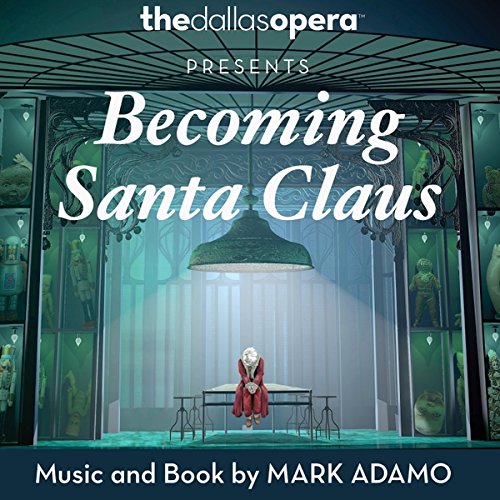
02 October 2017

RECORDING OF THE MONTH | October 2017: Wolfgang Amadeus Mozart — IL SOGNO DI SCIPIONE, K. 126 (S. Jackson, K. Ek, S. Mafi, K. Adam, R. Murray, C. Skerath; Classical Opera; Signum Classics SIGCD499)

RECORDING OF THE MONTH | October 2017: Wolfgang Amadeus Mozart - IL SOGNO DI SCIPIONE, K. 126 (Signum Classics SIGCD499)WOLFGANG AMADEUS MOZART (1756 – 1791): Il sogno di Scipione, K. 126—Stuart Jackson (Scipione), Klara Ek (Costanza), Soraya Mafi (Fortuna), Krystian Adam (Publio), Robert Murray (Emilio), Chiara Skerath (Licenza); The Choir and Orchestra of Classical Opera; Ian Page, conductor [Recorded in the Church of St. Augustine, Kilburn, London, UK, 16 – 19 October 2016; Signum Classics SIGCD499; 2 CDs, 108:14; Available from Classical Opera, Signum Records, Naxos Direct, Amazon (USA), jpc (Germany), Presto Classical (UK), and major music retailers]

What a music lovers’ paradise the Alpine oasis of Salzburg must have seemed in 1771. Beneath its imposing Eleventh-Century hilltop Schloss, Salzburg had grown from its Roman roots as an important center of salt mining to the archiepiscopal seat of some of Europe’s most well-connected prelates, the rulers of the independent Prince-Archbishopric of Salzburg. Exercising both clerical and secular authority from the Middle Ages until the first decade of the Nineteenth Century, Salzburg’s Prince-Archbishops cultivated a cosmopolitan court that by the middle of the Eighteenth Century was housed in a town that boasted of Baroque opulence uncommon north of the Dolomites. It was for the Salzburg court that the violinist, pedagogue, and composer Leopold Mozart left his native Augsburg, another of the Holy Roman Empire’s self-sufficient Prince-Archbishoprics, in 1743. Thirteen years later, on 27 January 1756, Mozart and his wife welcomed their final child, a son christened as Johannes Chrysostomus Wolfgangus Theophilus, whom the proud father later famously deemed ‘the miracle which God let be born in Salzburg.’

By December 1771, Salzburg was distinguished by a flourishing musical society that, in addition to the fifteen-year-old Mozart, his father, and his twenty-year-old sister, included Johann Michael Haydn, younger—and artistically worthy—brother of the famous Franz Joseph Haydn. Published in the year of Wolfgang’s birth, the elder Mozart’s tome on violin technique, still an invaluable source of information for scholars of historically-accurate performance practices, had advanced acknowledgement of Leopold’s standing as a master of the instrument throughout Europe. It was in this setting that the adolescent Mozart’s Il sogno di Scipione sprang to life. Planned as an homage to the reign of Prince-Archbishop Sigismund von Schrattenbach, an enlightened patron friendly to the Mozarts, performance of the azione teatrale was hindered by the Prince-Archbishop’s untimely death. As history recounts, the younger Mozart’s professional relationship with von Schrattenbach’s successor to the archiepiscopal throne, Hieronymus von Colloredo, was anything but cordial, but it began with a celebratory performance of a brief excerpt from Il sogno di Scipione that concluded with an adaptation of Licenza’s aria specially revised to flatter the new Prince-Archbishop—an auspicious inauguration of what proved to be a contentious association.

Ultimately, Il sogno di Scipione is not known to have been performed in the form in which Mozart originally set Pietro Metastasio’s libretto until 1979, in which year it was staged in the city for which it was written with a cast who also recorded the score in studio. Featuring an ensemble of renowned Mozarteans including Peter Schreier, Lucia Popp, Edita Gruberová, and Edith Mathis under the direction of Leopold Hager, Scipione’s first recorded outing remains an enjoyable performance that plausibly conjures the musical environment of Eighteenth-Century Salzburg. This new recording from Signum Classics, masterfully produced and engineered by Andrew Mellor, writes an engaging new chapter in Il sogno di Scipione’s history with a cast of singers competitive with the finest Mozarteans of previous generations and music making of timeless excellence.

There are a number of clever names among today’s musical ensembles, many of which are largely meaningless. ‘What’s in a name?’ Shakespeare’s Juliet opines, both articulating a fateful query with implications that she and her Romeo are never able to wholly transcend and succinctly expressing one of humanity’s gnawing conundrums: is the value of a thing meaningfully affected by the name by which it is identified? A ‘royal philharmonic’ might be addressed as such without being regal in bearing or patronage or truly being a friend of music, but there could be no more aptly descriptive or well-deserved name for the ensemble that provides the musical foundation for this recording of Il sogno di Scipione than Classical Opera. In this score, Mozart’s compositional style remains a work in progress, the orchestral and vocal writing reminiscent more of the operas of late-career Hasse and Mysliveček than of Don Giovanni and Die Zauberflöte. Already a shrewd musical innovator at the age of fifteen, Mozart nevertheless wrote music that highlights the limited philosophical and psychological nuances of Metastasio’s words, old-fashioned even in 1771. [Mozart would return to a Metastasio libretto two decades later in La clemenza di Tito, one of his most emotionally profound works for the stage.]

Classical Opera’s founder and Artistic Director Ian Page again proves as skilled and sagacious an interpreter of Mozart’s music as the first seventeen years of the Twenty-First Century have seen—as Leopold Mozart might have surmised, a musical talent gifted by providence to the new millennium. Page’s leadership of this recording exhibits the crucial understanding that Il sogno di Scipione is neither a conventional Classical opera seria like Mysliveček’s Il gran Tamerlano, a direct contemporary of Scipione, nor a seminal work of the significance of Don Giovanni and Così fan tutte. Il sogno di Scipione is an important step in Mozart’s development as a composer of secular vocal music and an enjoyable, often sophisticated work in its own right, however, and Page’s management of this performance of the score allows the listener to hear the music as Mozart would have expected it to sound. Serious artist though he was from an astonishingly young age, irreverence was a vital aspect of Mozart’s character, and not even his most solemn music lacks joy. Page’s conducting, the choristers’ vibrant singing of ‘Germe di cento eroi’ and ‘Cento volte con lieto sembiante,’ and the orchestra’s flawlessly-articulated playing exude not only the humor that Mozart wove into the score but an unmistakable elation at the opportunity to recreate this invigorating work. Whether their instruments are voices, violins, or batons, too many artists seemingly fail to appreciate that performing on stage or in studio is a privilege. Page and Classical Opera do not take for granted that Il sogno di Scipione is a piece that modern listeners want to hear: rather, they offer today’s listeners a performance of Il sogno di Scipione that must be heard, both by lovers of Mozart’s music and by those who simply enjoy splendid performances of good music.

The top calibre of the vocal talent assembled for this recorded performance of Il sogno di Scipione is apparent in every bar of secco recitative, enlivened in this performance by the continuo playing of harpsichordist Christopher Bucknall, cellist Luise Buchberger, and double bassist Cecelia Bruggemeyer. Traversing Mozart’s musical paths under the guidance of Page and the continuo, the singers make the recitatives genuine conversations among the work’s historical and allegorical characters. To both the revision of Licenza’s aria ‘Ah, perchè cercar degg’io’ that was likely performed in celebration of the 1772 coronation of Prince-Archbishop von Colloredo and the original, more elaborate version of the aria soprano Chiara Skerath brings technical accomplishment worthy of the music and ably-projected, appealing tone. Her account of the aria and its introductory recitative constitutes a true narrative. Similarly, tenors Robert Murray and Krystian Adam sing superbly as Emilio and Publio. Murray delivers Emilio’s aria ‘Voi colaggiù ridete’ with virtuosity and vigor, the stylistic panache and attractiveness of his vocalism recalling the Mozart singing of Léopold Simoneau. Adam’s performances of Publio’s demanding arias ‘Se vuoi che te raccolgano’ and ‘Quercia annosa su l’erte pendici’ impress with technical finesse and tonal focus that is unimpeded by Mozart’s divisions.

As the dueling Fortuna and Costanza, sopranos Soraya Mafi and Klara Ek meet the challenges of their music with assurance and persuasiveness: weighing the merits of their competing cases would be a Herculean task for even the most savvy Scipione! Mafi delivers Fortuna’s aria ‘Lieve sono al par del vento’ with ideal vocal amplitude, conveying both the literal and figurative meanings of the text. The deftness of her bravura singing lends Fortuna credibility as the bringer of earthly pleasures, her vocalism always a pleasure to hear. Mafi’s interpretation of ‘A chi serena io miro’ is no less intelligent, and her silvery, dexterous vocalism is still finer. Ek offers a sparkling reading of Costanza’s ‘Ciglio che al sol si gira’ in which ornamentation—the composer’s and the soprano’s—serves a clearly-defined dramatic purpose. Like Mafi, Ek is even more effective in her character’s second aria. The unaffected brilliance of her singing of ‘Biancheggia in mar lo scoglio’ imparts the absolute sincerity of Costanza’s mission, depicted by Mozart with purity of form that is perceptible in Ek’s performance. Both singers occasionally venture higher in cadenzas than is wholly comfortable, but these risks are products of the ladies’ immersion in the arguments they are charged with presenting. Their voices are sufficiently contrasted to enable immediate identification, and two instruments could hardly have been better matched for these rôles, in the casting of which Mozart would surely have wanted equals like Faustina Bordoni and Francesca Cuzzoni or Giulia Grisi and Giuditta Pasta. History does not permit certainty about the identities of the singers by whom Mozart may have intended Fortuna and Costanza to have been sung, but he could not have failed to have been pleased by Mafi and Ek.

Tenor Stuart Jackson was the excellent Soliman in Classical Opera’s standard-setting recording of Mozart’s Zaide, and he is here a fantastic interpreter of the title rôle in Il sogno di Scipione. Such are the difficulties of the consul’s music that his dream can easily become a nightmare for listeners, but Jackson sings so ably, adroitly, and affably that this Sogno is a consistent delight. In Scipione’s first aria, ‘Risolver non osa,’ Jackson makes the character’s indecision and ambivalence palpable, his unflinching negotiation of the fiorature suggesting the rapid-fire interplay of ideas in Scipione’s mind. Then, he delivers ‘Dì’ che sei l’arbitra del mondo intero’ with an apparent sense of a responsible ruler’s integrity. Complementing his soft-grained timbre with a lightness of touch that lends his portrayal of Scipione a vein of tenderness and vulnerability, the tenor sings sweetly even when taxed by Mozart’s vocal gymnastics. In his intrepid ascents into the vocal stratosphere at and beyond top C, Jackson perpetuates the tradition of haute-contre singing prevalent in the latter half of the Eighteenth Century, producing the highest notes with a handsomely-wielded voix mixte. In its wonderful way, Jackson’s Scipione is as memorable as Ernst Haefliger’s Belmonte, Stuart Burrows’s Don Ottavio, and Fritz Wunderlich’s Tamino; in other words, Mozart singing of the highest quality.

Not every note committed to parchment by Mozart bears the unmistakable mark of genius, but his least-inspired music possesses a level of craftsmanship superior to that of the efforts of all but the most talented of his contemporaries. What, in part, makes Ian Page’s and Classical Opera’s performances and recordings of Mozart’s pre-Idomeneo theatrical works invaluable is the avoidance of well-meaning but ill-advised endeavors to inflate the music’s importance. Left to its own devices, genius reveals itself without meddlesome provocation, and this is a performance of Il sogno di Scipione in which the budding genius of the score’s adolescent composer is all the more evident for being celebrated without exaggeration. The equilibrium that was so prized an aspect of Classicism, both in antiquity and in Eighteenth-Century music, but is so often missing in today’s opera performances is the hallmark of this Sogno di Scipione and of Classical Opera’s work in general. That, dear Juliet, is what’s in this name.