08 October 2017

PERFORMANCE REVIEW: Giuseppe Verdi — OTELLO (R. Thomas, M. E. Williams, N. Ford, B. Bliss, A. Woodley, K. Leemhuis, M. Mykkanen, N. Garrett, S. Mayer; Atlanta Symphony Orchestra, 7 October 2017)

IN PERFORMANCE: (from left to right) soprano MARY ELIZABETH WILLIAMS as Desdemona, tenor RUSSELL THOMAS as Otello, and Maestro ROBERT SPANO in Atlanta Symphony Orchestra's concert performance of Giuseppe Verdi's OTELLO, 7 October 2017 [Photo by Jeff Roffman, © by Atlanta Symphony Orchestra]GIUSEPPE VERDI (1813 – 1901): OtelloRussell Thomas (Otello), Mary Elizabeth Williams (Desdemona), Nmon Ford (Iago), Ben Bliss (Cassio), Arthur Woodley (Lodovico), Kathryn Leemhuis (Emilia), Miles Mykkanen (Roderigo), Norman Garrett (Montano), Sean Mayer (Un araldo); Atlanta Symphony Chorus and Orchestra; Robert Spano, conductor [Atlanta Symphony Hall, Atlanta, Georgia, USA; Saturday, 7 October 2017]

In the Twentieth and Twenty-First Centuries, notions of farewell and retirement in the Performing Arts have become increasingly farcical. The invaluable lesson of an important artist like Dame Janet Baker bidding the stage adieu whilst still at the height of her abilities is seldom heeded. Rather, stages groan beneath the dead weight of egos too bloated to appreciate that their legacies are better served by memories of great performances than by careers prolonged by performances that the most forgiving admirers prefer to forget. After the completion and première of Aida in 1871, Giuseppe Verdi felt that the time for his final bow had come, his three decades of prominence in the repertories of Europe’s opera houses having advanced the evolution of Italian opera as markedly as Monteverdi’s work had done two centuries earlier. Aida was the work of an artist still in command of the finest of his faculties, but Verdi justifiably felt that he had earned a quiet retirement. Keen to avoid overstaying his welcome in the world’s opera houses, the composer retreated to the relative peace of his villa near Le Roncole, the town of his birth. Like the green-eyed monster that prowls in the play’s drama, it was into the idyllic environment of Verdi’s self-imposed artistic exile that William Shakespeare’s Othello soon intruded, the treachery in this instance not Iago’s but that of publisher Giulio Ricordi and composer and librettist Arrigo Boito.

Perhaps fittingly for a Shakespearean subject, the course of the gestation of Verdi’s and Boito’s Otello was anything but smooth. Verdi’s history with Boito was complicated, the latter having been allied with a cabal that, in supporting the composer and conductor Franco Faccio, who later conducted the first productions of the revised Simon Boccanegra, the Milan adaptation of Don Carlos, and Otello, mocked and criticized Verdi as an exemplar of an operatic ancien régime. The alleged-to-be-passé composer was sufficiently pleased with Boito’s work on the revision of the Simon Boccanegra libretto, likely undertaken at least in part as a gauge of Verdi’s capacity for magnanimity, to overlook the affront to his artistic integrity, and, clandestinely securing the assistance of Verdi’s wife, Ricordi managed over a period of several years to slowly and diplomatically steer the non-committal composer’s interest towards a setting of Othello with Boito as librettist. Adamant that, like Rossini in the decades of his life following the completion of Guillaume Tell, he was content to observe rather than participate in the mayhem of opera, Verdi worked intermittently on his score for Otello, periods of prolonged inactivity alternating with bouts of creative concentration. The work that emerged from these toils proved to be worth the wait: receiving its world première at Milan’s Teatro alla Scala on 5 February 1887, Otello was immediately and almost universally acclaimed as a triumph for both Verdi and Boito. 130 years after the opera’s first performance, Otello retains still-astonishing musical modernity and dramatic credibility, qualities that exploded from the stage in Atlanta Symphony Orchestra’s concert performance of the opera. This traversal of the score gloriously elucidated the perceptiveness with which Verdi explored the appalling ugliness of humanity via music of timeless, time-halting beauty.

Scored for an orchestra of near-Wagnerian proportions, Otello makes grueling demands on every instrument included in its orchestrations—demands that were met in this performance with exceptional precision and fervor by the Atlanta Symphony musicians. From the first bars of the opera’s frenetic Allegro agitato opening, the ASO instrumentalists were involved in the performance in a way that opera house pit orchestras rarely are, the sea of musicians standing in for the tempestuous waters that imperil Otello’s vessel in the opera’s first scene. Ranging from diaphanous to demonstratively virtuosic, Verdi’s string writing was realized with accuracy and ardor by the ASO strings, with the cellists playing with special mastery, and the brasses, woodwinds, and percussion lifted their parts off of the pages of the score, bringing the music to life as characters in rather than accompaniment to the drama.

Giving voice to the populace who witness the fatal trajectory of Otello’s jealousy, the ASO choristers sang robustly under the direction of Norman Mackenzie, not least in the cacophonous Uragano that begins Act One and the Cypriots’ terrified monitoring of the storm. In this performance, the cries of ‘È salvo!’ wielded a cathartic impact similar to the penetration of newly-created light into the chaos of the first movement of Haydn’s Die Schöpfung. ‘Si calma la bufera’ and ‘Fuoco di gioia!’ were delivered with gusto, and, in more jovial mood, the choir’s singing of ‘Bevi, bevi con me’ crackled with excitement. In Act Two, the ladies began ‘Dove guardi splendono raggi’ with sweetness perpetuated by the choir’s voicing of ‘T’offriamo il giglio soave stel,’ and the boundless energy of the exclamations of ‘Viva! Evviva!’ in Act Three markedly raised the dramatic temperature of the scene. Mistakes are virtually inevitable in live performances and are an integral component of the excitement of opera, but the paucity of flaws in this performance, remarkable in a work as complex as Otello, was evidence of meticulous rehearsal that deprived the drama of none of its potent immediacy. This was neither a passive nor a routine traversal of the score: lofted by Verdi’s music, the spirit of Shakespeare’s tragedy filled Symphony Hall even when none of the principals was singing.

A much-discussed zenith of the 2017 Aspen Music Festival was a performance of Hector Berlioz’s La damnation de Faust in which ASO’s Music Director Robert Spano confirmed his credentials as one of today’s conductors most skilled at fully unleashing the dramatic potential of a theatrical score in a concert setting. The intelligence apparent in Spano’s conducting of La damnation de Faust inhabited every aspect of his leadership of this performance of Otello. Conducting a work like Otello requires far more than setting tempi and managing ensembles: Verdi’s music demands the presence of a tactician, not merely a timekeeper. In Spano, Otello had a musical strategist worthy of the legacy of his Atlanta predecessor Robert Shaw. The internal logic of Spano’s shaping of the public scenes recalled Toscanini’s pacing of the 1947 NBC Symphony broadcast performance, and the intimacy of the private moments among characters was achieved with conversational directness rather than exaggeration. By closely following Verdi’s indicated tempi and dynamics, Spano revealed the score’s still-fascinating novelty. Under his baton, Iago’s menace resounded in the orchestra, and passages of repose trembled with Desdemona’s innocence and Otello’s suspicion. Most impressively, Spano conducted each of Otello’s four acts with understanding of both its unique needs and its place in the opera’s broader structure. Eliminating the task of coordinating podium, pit, and stage in a fully-staged production makes Otello slightly less daunting—but only very slightly. Spano presided over a performance of Otello in which, without costumes and scenery, the drama sprang to life in the listener’s imagination.

Few studio recordings and even fewer staged productions of Otello have benefited from casting as uniformly strong as that of ASO’s performance. As the Araldo in Act Three, bass Sean Mayer voiced ‘La vedetta del porto ha segnalato’ commandingly, compellingly establishing the atmosphere for the scenes that followed. Baritone Norman Garrett enunciated Montano’s ‘È l’alato Leon!’ and ‘Capitano, v’attende la fazione ai baluardi’ in Act One and the character’s critical interjections in Act Four with conviction and steady, muscular tone. To Lodovico’s ‘Il Doge ed il Senato salutano l’eroe trionfatore di Cipro’ in Act Three and febrile lines in Act Four bass Arthur Woodley brought rugged musical solidity and dramatic commitment. Tenor Miles Mykkanen was a Roderigo who was noteworthy for the right reasons, foremost among which was the vocal opulence epitomized by his singing of ‘Il rostro piomba su quello scoglio!’ in Act One. The young tenor’s voice moved through Roderigo’s music with assurance and lent the duplicitous character a reptilian but engagingly virile charisma.

Though her lines are comparatively few, Emilia is considerably more important to Otello’s plot than a conventional operatic confidante like Ines in Il trovatore. Mezzo-soprano Kathryn Leemhuis portrayed Emilia with sincerity, ably conveying both the lady’s concern and compassion for Desdemona and her increasing fear of her husband Iago and his manipulation. In the expansive ensemble at the core of Act Two, Leemhuis sang ‘Il tuo nefando livor m’è noto’ handsomely and with clear comprehension of Emilia’s pivotal if involuntary rôle in the fatal trap being laid by Iago. Her vocalism again shone in ensemble in Act Three, the singer’s clear diction deepening her characterization. Leemhuis’s Emilia matured as a dramatic entity in Act Four, her query of ‘Era più calmo?’ already bearing the weight of impending tragedy. Responding to the sounds of Desdemona’s struggle with Otello, this Emilia quickly subdued panic in a desperate effort to rescue her mistress from unjust accusation and retribution. Denouncing her own husband’s maleficent handiwork, she uttered ‘Iago, smentisci quel vile assassino’ with disgust, and her voicing of ‘Costui dalla mia man quel fazzoletto svelse a viva forza’ throbbed with sadness and anger. Emilia can easily be marginalized by the powerhouse confrontations of Desdemona, Otello, and Iago, but Leemhuis’s Emilia was a woman who would not be sidelined despite moments in which her best efforts at projecting her lovely tones into the auditorium fell victim to the orchestral din.

As Cassio, the unwitting pawn in Iago’s relentless pursuit of fatal checkmate against Otello, tenor Ben Bliss sang appealingly, lending the character legitimacy as a potential suitor for Desdemona. Performances often fail to recognize that, in order to be a meaningful cog in Iago’s cruel machinations, Cassio must be accepted by both Otello and audiences as a viable rival for Desdemona’s love: unless the rôle is sung as romantically as Bliss sang it in this performance, Cassio can seem like a shallow, rather stupid boy in a very dangerous man’s world. Bliss’s Cassio was an eager narrator in the opera’s opening pages, relaying ‘Or la folgor lo svela’ and ‘Essa infiora questo lido’ with a troubadour’s communicativeness. Cassio’s combustive temper began to simmer in the tenor’s heated articulation of ‘Questa del pampino verace manna,’ contrasting tellingly with his dulcetly-phrased ‘Come un armonico liuto oscillo.’ Bliss effortlessly braved the repeated top As, his upper register hearteningly unforced. In the scene with Iago at the start of Act Two, this Cassio acquiesced all too willingly to Iago’s suggestion that he seek Desdemona’s intercession in reversing his demotion. In Act Three, the singer’s accounts of ‘Questo nome d’onor suona ancor vano per me’ and ‘Miracolo vago dell’aspo e dell’ago’ were both nuanced and tonally mellifluous, and Bliss sang Cassio’s lines in Act Four with urgency and horror. In Otello’s 130-year performance history, a number of eminent lyric tenors have sung Cassio in the early years of their careers. His sterling performance in ASO’s Otello promised that Bliss with continue the tradition of Anton Dermota, Giuseppe Zampieri, John Alexander, and Giuliano Ciannella.

IN PERFORMANCE: (from left to right) tenor RUSSELL THOMAS as Otello, baritone NMON FORD as Iago, and Maestro ROBERT SPANO in Atlanta Symphony Orchestra's concert performance of Giuseppe Verdi's OTELLO, 7 October 2017 [Photo by Jeff Roffman, © by Atlanta Symphony Orchestra]Sì, pel ciel marmoreo giuro: (from left to right) tenor Russell Thomas as Otello, baritone Nmon Ford as Iago, and Maestro Robert Spano in Atlanta Symphony Orchestra’s concert performance of Giuseppe Verdi’s Otello, 7 October 2017
[Photo by Jeff Roffman, © by Atlanta Symphony Orchestra]

Iago is one of the most irredeemably evil figures in any of Shakespeare’s plays, and Verdi set his scheming to music that exudes inimical bravado. An Iago must choose whether he will be insinuating, openly hostile, or some combination of these traits, with the most imaginative of Iagos finding a balance between baseness and charm. Freed in ASO’s concert presentation from the necessity of projecting Iago’s motivations to the last row of an opera house, Panama-born baritone Nmon Ford focused on mining the riches in Verdi’s music, and his success was sensational. That a genuine Verdi baritone is one of opera’s most elusive creatures is an observation that few operaphiles who love Verdi’s music will dispute, but Ford’s credentials in rôles ranging from Nabucco to Rodrigo in Don Carlo qualify him as a viable candidate for that rare distinction. His Iago in ASO’s Otello thrilled with vocal authority and dramatic instinct, displaying the legitimacy of the singer’s assumption of Verdi repertory.

A viper is slain upon sight unless he arrays himself in comeliness that belies his venom, and Ford’s Iago slithered into striking distance of Otello by feigning absolute honesty and reliability. Asserting his presence in Act One, Ford sang ‘È infranto l’artimon!’ and ‘Suvvia, fa senno, aspetta l’opra del tempo’ suggestively, cloaking Iago’s agenda in uncomplicated amicability. His sly ‘Ei favella già con troppo bollor’ was followed by understated but unmistakably meaningful accounts of ‘Inaffia l’ugola!’ and ‘Chi all’esca ha morso,’ his easy trill and soaring top As further verifying his suitability for this rôle.

The true spectrum of Iago’s depravity began to show in Ford’s singing of ‘Non ti crucciar’ and the exchange with Cassio at the beginning of Act Two. The difficult triplets and high tessitura of ‘Credo in un Dio crudel’ were handily conquered by Ford, directing the listener’s attention to his pointed recitation of the text. The baritone’s ‘Ciò m’accora’ at the start of the scene with Otello was the turning point in his portrayal of Iago: here, certain destruction of his enemy came into view, and the transition from planning to execution was palpable in Ford’s performance. He sang ‘Cassio, nel primi dì del vostro amor’ with the requisite persuasiveness but mostly eschewed the unmusical snarling that many Iagos deploy in this scene. ‘È un’idra fosca’ bristled with hatred, the trill an eruption of loathing. In the ensuing ensemble, this Iago growled ‘Dammi quel vel!’ to Emilia with imperiousness that could not be refused. The self-satisfaction of his ‘Con questi fili tramerò la prova del peccato d’amor’ was staggering, and Ford sang both ‘Pace, signor’ to the raging Otello and ‘Divina grazia difendimi!’ with mocking smugness. Iago’s Andantino invention of Cassio’s dream, ‘Era la notte, Cassio dormia,’ and the caustic ‘Non v’alzate ancor!’ were intoned with deceptive grace. Thanks in no small part to Ford’s bold singing, the performance of the duet with Otello at the end of Act Two was rewarded with a standing ovation at the interval.

Luring first Cassio and then Otello headlong into his snare at the start of Act Three, Ford’s Iago delighted in the effectiveness of his wiles. After singing ‘Questa è una ragna dove il tuo cuor casca’ with unbridled viciousness, he fired the sadistic cry of ‘Ecco il Leone!’ into the auditorium like a missile armed with an emotional warhead: its detonation reduced Otello’s and Desdemona’s lives to rubble. Iago’s contributions to Act Four consist only of a fleeting chance for gloating, a brief denial of his wrongdoing, and flight, but Ford made even those moments count, running from the stage with a demonic smirk. His was as fully-acted an Iago as might be found in any staged production, but, more importantly, his was a fully-sung Iago, as well. Had Verdi wanted Iago’s villainy enacted in pitchless ranting, he would have written the rôle accordingly, but he wrote music for the character, a fact obscured by some performances of the part. Ford’s portrayal was a welcome reminder of how exhilarating Iago’s music can when it is sung as the score dictates—and as well as Ford sang it.

In recent years, the links among the bel canto of Verdi’s youth and his Shakespearean heroines in Otello and Falstaff have largely been severed, but hearing very different Desdemonas of past generations—Rosanna Carteri, Montserrat Caballé, Renata Scotto, and Dame Joan Sutherland, for instance—reminds listeners that the distance from Verdi’s early, bel canto heroines to Desdemona is shorter than it might superficially seem to be. In Carteri’s Desdemona, there are elements of Adina’s inherent goodness in L’elisir d’amore; in Caballé’s, reminiscences of Elisabetta’s foreboding in Roberto Devereux; in Scotto’s, hints of Lucia’s girlish innocence; and in Sutherland’s, echoes of the wronged wife in Bellini’s Beatrice di Tenda. It is not insignificant that soprano Mary Elizabeth Williams, Atlanta’s Desdemona, was the stylish Elisabetta in Seattle Opera’s 2016 production of Donizetti’s Maria Stuarda. Desdemona’s music possesses none of Elisabetta’s fiery bravura writing, but the English queen is in some ways as much a victim of her circumstances as Desdemona is condemned to be. Resplendently beautiful in a shimmering gown, Williams’s Desdemona was an angelic vision, a figure of feminine grace and purity out of her element in Otello’s gritty, bellicose world.

Greeting Otello in Act One with a radiant ‘Mio superbo guerrier!’ in which Verdi’s ‘sempre dolce’ marking was meticulously heeded, Williams placed the top A♭ with delicacy and certain intonation. In the love duet, she sang exquisitely, phrasing with romantic feeling and maintaining a hypnotic aura of nocturnal ecstasy. Williams answered the serenade that Desdemona received from the chorus in Act Two with a beguiling ‘Splende il cielo, danza l’aura’ that began an extended musical paragraph punctuated by a golden top B. Asking Otello to restore Cassio’s rank and good standing, Williams’s Desdemona voiced ‘D’un uom che geme sotto il tuo disdegno la preghiera ti porto’ with mesmerizing simplicity, making the emotional shifts of ‘Perchè torbida suona la voce tua?’ and ‘Se inconscia, contro te, sposo, ho peccato’ all the more moving, the singer’s well-supported lower register providing a sonorous foundation for her dolcissimo top ♭.

Williams rose magnificently to the challenges of Act Three, depicting Desdemona as a woman for whom the loss of dignity is as much death as the loss of life. She caressed the words of ‘Dio ti giocondi, o sposo dell’alma mia sovrano’ and ‘Tu di me ti fai gioco,’ seeking beyond his slashing anger and bitterness the familiar devotion and tenderness of her beloved husband. The soprano’s top C was an impassioned peal of anguish. Williams sang ‘E un di sul mio sorriso fioria la speme e il bacio’ eloquently, descending from the pair of top C♭s with irreproachable musicality.

From her first pained utterance of ‘Mi parea,’ it was clear that this Desdemona sensed and even welcomed the approach of death in Act Four. Williams performed the widely-known Canzon del Salice with vocal control that recalled Teresa Żylis-Gara’s singing of the music, the consonants of ‘Piangea cantando nell’erma landa’ used to propel the line. Williams was the rare Desdemona who sounded as though her sympathy was genuine when she sighed ‘Povera Barbara!’ The sudden deluge of her ‘Ah! Emilia, Emilia, addio,’ a passage not unlike Violetta’s ‘Amami, Alfredo’ in Act Two of La traviata, was heartbreaking. She proceeded cautiously through the succession of Es at the bottom of the stave with which Desdemona begins ‘Ave Maria, piena di grazia,’ generally avoiding chest register here and elsewhere, and the dividend was a serene top A ♭. Her ‘Chi è là?’ as Otello figuratively crept into her chamber was a rhetorical question: the character Williams created knew who was there and why he had come. There was vehemence but no rancor in this Desdemona’s final protestation of her innocence. Resigned to death at the hands of the man she loved, there was still adoration in her voice when she absolved Otello of responsibility for her murder. The sensuality in Williams’s portrayal gave Desdemona added psychological depth, rendering her a woman who chose to die in preservation of her blamelessness rather than a hapless victim. Like Ford’s Iago, though, it was the quality of Williams’s vocalism, utterly right for the music, that made her Desdemona memorable.

IN PERFORMANCE: soprano MARY ELIZABETH WILLIAMS as Desdemona (left) and tenor RUSSELL THOMAS as Otello (right) in Atlanta Symphony Orchestra's concert performance of Giuseppe Verdi's OTELLO, 7 October 2017 [Photo by Jeff Roffman, © by Atlanta Symphony Orchestra]Già nella notte densa s’estingue ogni clamor: soprano Mary Elizabeth Williams as Desdemona (left) and tenor Russell Thomas as Otello (right) in Atlanta Symphony Orchestra’s concert performance of Giuseppe Verdi’s Otello, 7 October 2017
[Photo by Jeff Roffman, © by Atlanta Symphony Orchestra]

Paralleling the singular significance of Shakespeare’s titular moor of Venice in Elizabethan theatre, the title rôle in Verdi’s Otello is virtually sui generis in Italian opera. The name part in Boito’s seldom-performed Nerone and Puccini’s Johnson and Calàf are similarly daunting assignments for tenors, but Otello is his own game. With this performance, Atlanta resident Russell Thomas added this epic rôle to his repertory, expanding an already remarkable versatility that extends from the Verdi and Puccini canons to the title rôle in Mozart’s La clemenza di Tito, wearing whose crown he débuted at the 2017 Salzburger Festspiele. Having successfully sung other Verdi tenor rôles does not necessarily qualify a singer to take on Otello [hearing Thomas as Malcolm in Adrian Noble’s production of Verdi’s Macbeth at the Metropolitan Opera in 2007 caused this listener to think him qualified to sing virtually any rôle he chooses to learn], but Thomas is a shrewd artist who makes repertory decisions based upon aptitude and readiness. That he was ready to sing Otello was declared emphatically by this performance.

The singer who approaches the progression of top G♯s, As, and B in Otello’s punishingly declamatory entrance music, ‘Esultate! L’orgoglio musulmano sepolto è in mar,’ without some degree of trepidation is either worryingly over-confident or the reincarnation of Leo Slezak. Tamagno, Martinelli, Vinay, and Vickers cannot have sung their first Otellos without anxiety, but whatever nerves Thomas felt were calmed by his obvious comfort with the music. The appearance of effortlessness that characterized Mario del Monaco’s singing of Otello’s entrance was revived in Thomas’s performance. Throughout the evening, his singing was notable for its blend of unaffected lyricism and stunning natural power. Returning to halt the tumult instigated by Iago, Thomas hurled ‘Abbasso le spade!’ into the fracas. Otello’s disappointment glowed in the tenor’s voicing of ‘Cassio, come obliasti te stesso a tal segno?’ Some Otellos are brutes who seem incapable of the lightness of touch necessary to win the heart of a woman like Desdemona, but Thomas’s Otello wooed Williams’s Desdemona anew in their blissful singing of ‘Già nella notte densa s’estingue ogni clamor.’ His gossamer top A ♭ and sotto voce singing were amorous weapons in this martial but sensitive Otello’s arsenal.

In the Act Two scene in which Iago planted the seeds that eventually germinated into a noxious weed of despair and death, Thomas voiced ‘Pel cielo, tu sei l’eco dei detti miei’ grandiloquently, the top B ringing out rousingly. Then, approached by his doting bride, his exclamations of ‘Non ora’ in response to her arguments on Cassio’s behalf were stinging—and more effective for being sung rather than shouted. The cruelty of his commands of ‘Mi lascia!’ seemed to wound this Otello as greatly as they hurt and confused Desdemona, and Thomas phrased ‘Forse perchè gl’inganni d’arguto amor non tendo’ with wrenching doubt and distress. Trading top B♭s with Williams, he dominated the ensemble. With the two words ‘Desdemona rea!’ the demeanor of Thomas’s Otello metamorphosed from vulnerability to an obsessive quest for vengeance. The zeal of his singing of ‘Ora e per sempre addio sante memorie’ was invigorating, and he and Ford collaborated in an account of ‘Sì, pel ciel marmoreo giuro!’ that satisfied as both great Verdi singing and riveting theatre.

In Act Three, Thomas’s portrayal of Otello was a keen case study of a deceived man whose bullying was born of insecurity. The mercilessness of his denunciation of Desdemona was startling, especially as it was so handsomely vocalized. Both ‘Grazie, madonna, datemi la vostra eburnea mano’ and ‘Giura e ti danna! were delivered with unstinting intensity that spilled over into Thomas’s tormented, stimulating ‘Dio! mi potevi scagliar tutti i mali della miseria.’ This performance of Otello’s despondent soliloquy, distinguished by one of the most dependable top Cs heard in this music since the death of Franco Bonisolli, was worthy of Shakespeare. There was a sickening delight in Thomas’s singing of ‘Questa giustizia tua mi piace,’ and his irascible ‘Fuggirmi io sol non so!’ left no doubt of the character’s resolve to kill his wife.

Otello’s predatory entrance in Act Four could hardly be more different from the stentorian trumpeting of his introduction in Act One, and Thomas further highlighted the disparity by suffusing his singing of Otello’s first lines in Act Four with maniacal determination. He brought an eery tranquility to ‘Diceste questa sera le vostre preci?’ and ‘Pensa ai tuoi peccati,’ invoking an honest concern for the sanctity of Desdemona’s soul. The divergent sentiments of ‘Bada allo spergiuro’ and the haunting ‘Calma come la tomba’ drew from Thomas singing of heightened textual specificity. ‘E il ciel non ha più fulmini?’ was sung with greater finesse than many Otellos can or care to manage, particularly on the rise to top A. Here voiced with superb legato, the similarities between Otello’s ‘Niun mi tema s’anco armato mi vede’ and Edgardo’s final scene in Donizetti’s Lucia di Lammermoor were unusually discernible. Revisiting the words and music of the love duet in Act One, Thomas sighed ‘Un bacio ancora’ with a voice drained of life. Dramatically, experience in the rôle in staged productions will undoubtedly refine Thomas’s interpretation of Otello, but his inaugural effort impressively transcended its setting, offering the audience a noble characterization that allowed the listener to forget the formal attire, score, and music stand. Musically, Thomas needs only to sing the rôle as he sang it in this performance to be remembered as one of history’s great Otellos.

Otello is an opera that is not always successful in concert, and some of its pitfalls were not entirely circumvented in ASO’s performance. Soloists’ voices suffer less when battling an orchestra in a pit and an opera company’s smaller chorus, for instance, and staging can elucidate the workings of Iago’s cunning. There were passing moments in this performance in which its Otello’s aural impact was marginally diminished, but Otello’s dramatic might was never lessened. All of the advantages of performing Grand Opera in concert were achieved in this Otello, however. The sole priority of the performance was faithful service to Verdi’s genius, and that service was rendered on a monumental scale. Thank you, Verdi, for sacrificing years of your well-earned retirement to the composition of a score that inspired—and deserves—a performance such as this.

02 October 2017

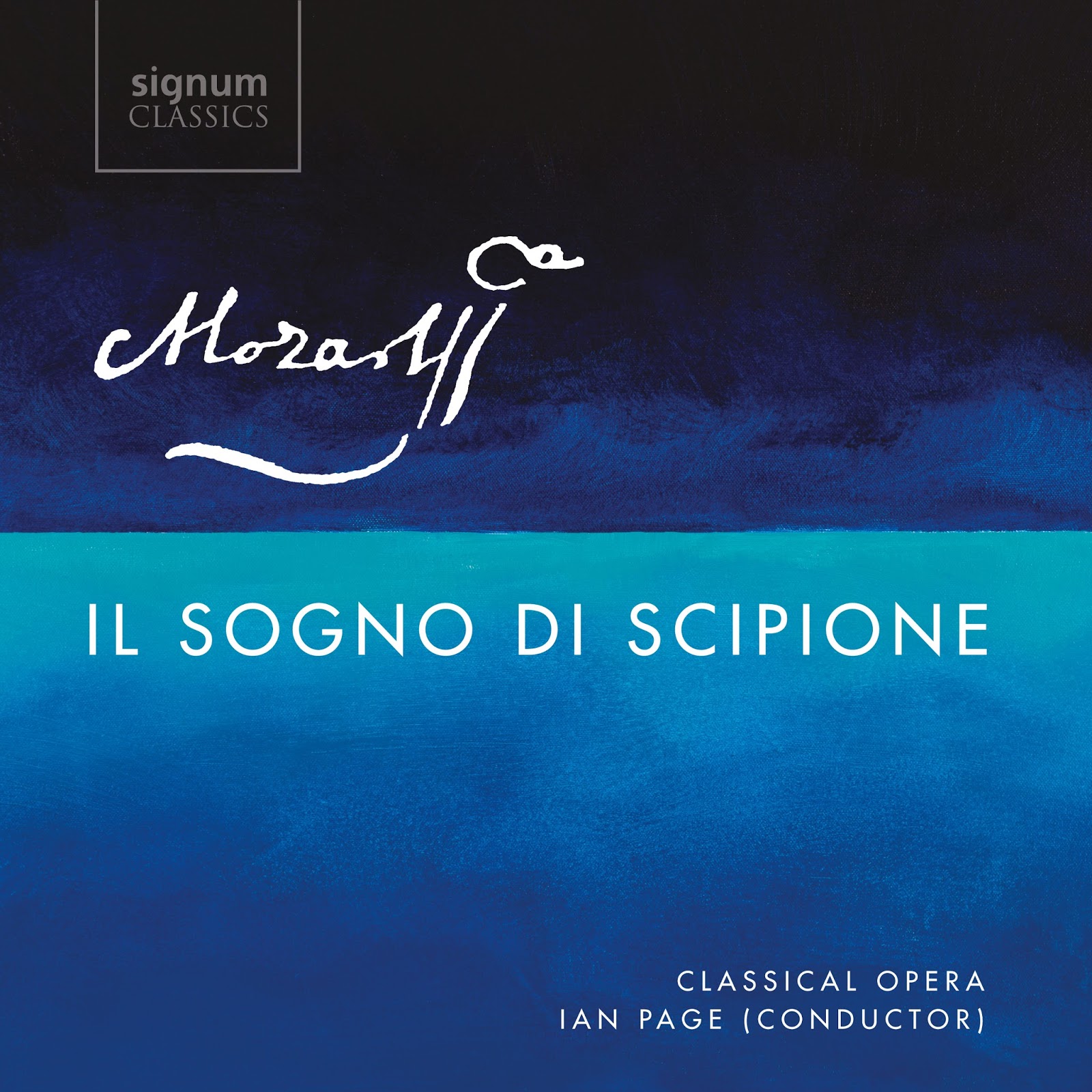
RECORDING OF THE MONTH | October 2017: Wolfgang Amadeus Mozart — IL SOGNO DI SCIPIONE, K. 126 (S. Jackson, K. Ek, S. Mafi, K. Adam, R. Murray, C. Skerath; Classical Opera; Signum Classics SIGCD499)

RECORDING OF THE MONTH | October 2017: Wolfgang Amadeus Mozart - IL SOGNO DI SCIPIONE, K. 126 (Signum Classics SIGCD499)WOLFGANG AMADEUS MOZART (1756 – 1791): Il sogno di Scipione, K. 126Stuart Jackson (Scipione), Klara Ek (Costanza), Soraya Mafi (Fortuna), Krystian Adam (Publio), Robert Murray (Emilio), Chiara Skerath (Licenza); The Choir and Orchestra of Classical Opera; Ian Page, conductor [Recorded in the Church of St. Augustine, Kilburn, London, UK, 16 – 19 October 2016; Signum Classics SIGCD499; 2 CDs, 108:14; Available from Classical Opera, Signum Records, Naxos Direct, Amazon (USA), jpc (Germany), Presto Classical (UK), and major music retailers]

What a music lovers’ paradise the Alpine oasis of Salzburg must have seemed in 1771. Beneath its imposing Eleventh-Century hilltop Schloss, Salzburg had grown from its Roman roots as an important center of salt mining to the archiepiscopal seat of some of Europe’s most well-connected prelates, the rulers of the independent Prince-Archbishopric of Salzburg. Exercising both clerical and secular authority from the Middle Ages until the first decade of the Nineteenth Century, Salzburg’s Prince-Archbishops cultivated a cosmopolitan court that by the middle of the Eighteenth Century was housed in a town that boasted of Baroque opulence uncommon north of the Dolomites. It was for the Salzburg court that the violinist, pedagogue, and composer Leopold Mozart left his native Augsburg, another of the Holy Roman Empire’s self-sufficient Prince-Archbishoprics, in 1743. Thirteen years later, on 27 January 1756, Mozart and his wife welcomed their final child, a son christened as Johannes Chrysostomus Wolfgangus Theophilus, whom the proud father later famously deemed ‘the miracle which God let be born in Salzburg.’

By December 1771, Salzburg was distinguished by a flourishing musical society that, in addition to the fifteen-year-old Mozart, his father, and his twenty-year-old sister, included Johann Michael Haydn, younger—and artistically worthy—brother of the famous Franz Joseph Haydn. Published in the year of Wolfgang’s birth, the elder Mozart’s tome on violin technique, still an invaluable source of information for scholars of historically-accurate performance practices, had advanced acknowledgement of Leopold’s standing as a master of the instrument throughout Europe. It was in this setting that the adolescent Mozart’s Il sogno di Scipione sprang to life. Planned as an homage to the reign of Prince-Archbishop Sigismund von Schrattenbach, an enlightened patron friendly to the Mozarts, performance of the azione teatrale was hindered by the Prince-Archbishop’s untimely death. As history recounts, the younger Mozart’s professional relationship with von Schrattenbach’s successor to the archiepiscopal throne, Hieronymus von Colloredo, was anything but cordial, but it began with a celebratory performance of a brief excerpt from Il sogno di Scipione that concluded with an adaptation of Licenza’s aria specially revised to flatter the new Prince-Archbishop—an auspicious inauguration of what proved to be a contentious association.

Ultimately, Il sogno di Scipione is not known to have been performed in the form in which Mozart originally set Pietro Metastasio’s libretto until 1979, in which year it was staged in the city for which it was written with a cast who also recorded the score in studio. Featuring an ensemble of renowned Mozarteans including Peter Schreier, Lucia Popp, Edita Gruberová, and Edith Mathis under the direction of Leopold Hager, Scipione’s first recorded outing remains an enjoyable performance that plausibly conjures the musical environment of Eighteenth-Century Salzburg. This new recording from Signum Classics, masterfully produced and engineered by Andrew Mellor, writes an engaging new chapter in Il sogno di Scipione’s history with a cast of singers competitive with the finest Mozarteans of previous generations and music making of timeless excellence.

There are a number of clever names among today’s musical ensembles, many of which are largely meaningless. ‘What’s in a name?’ Shakespeare’s Juliet opines, both articulating a fateful query with implications that she and her Romeo are never able to wholly transcend and succinctly expressing one of humanity’s gnawing conundrums: is the value of a thing meaningfully affected by the name by which it is identified? A ‘royal philharmonic’ might be addressed as such without being regal in bearing or patronage or truly being a friend of music, but there could be no more aptly descriptive or well-deserved name for the ensemble that provides the musical foundation for this recording of Il sogno di Scipione than Classical Opera. In this score, Mozart’s compositional style remains a work in progress, the orchestral and vocal writing reminiscent more of the operas of late-career Hasse and Mysliveček than of Don Giovanni and Die Zauberflöte. Already a shrewd musical innovator at the age of fifteen, Mozart nevertheless wrote music that highlights the limited philosophical and psychological nuances of Metastasio’s words, old-fashioned even in 1771. [Mozart would return to a Metastasio libretto two decades later in La clemenza di Tito, one of his most emotionally profound works for the stage.]

Classical Opera’s founder and Artistic Director Ian Page again proves as skilled and sagacious an interpreter of Mozart’s music as the first seventeen years of the Twenty-First Century have seen—as Leopold Mozart might have surmised, a musical talent gifted by providence to the new millennium. Page’s leadership of this recording exhibits the crucial understanding that Il sogno di Scipione is neither a conventional Classical opera seria like Mysliveček’s Il gran Tamerlano, a direct contemporary of Scipione, nor a seminal work of the significance of Don Giovanni and Così fan tutte. Il sogno di Scipione is an important step in Mozart’s development as a composer of secular vocal music and an enjoyable, often sophisticated work in its own right, however, and Page’s management of this performance of the score allows the listener to hear the music as Mozart would have expected it to sound. Serious artist though he was from an astonishingly young age, irreverence was a vital aspect of Mozart’s character, and not even his most solemn music lacks joy. Page’s conducting, the choristers’ vibrant singing of ‘Germe di cento eroi’ and ‘Cento volte con lieto sembiante,’ and the orchestra’s flawlessly-articulated playing exude not only the humor that Mozart wove into the score but an unmistakable elation at the opportunity to recreate this invigorating work. Whether their instruments are voices, violins, or batons, too many artists seemingly fail to appreciate that performing on stage or in studio is a privilege. Page and Classical Opera do not take for granted that Il sogno di Scipione is a piece that modern listeners want to hear: rather, they offer today’s listeners a performance of Il sogno di Scipione that must be heard, both by lovers of Mozart’s music and by those who simply enjoy splendid performances of good music.

The top calibre of the vocal talent assembled for this recorded performance of Il sogno di Scipione is apparent in every bar of secco recitative, enlivened in this performance by the continuo playing of harpsichordist Christopher Bucknall, cellist Luise Buchberger, and double bassist Cecelia Bruggemeyer. Traversing Mozart’s musical paths under the guidance of Page and the continuo, the singers make the recitatives genuine conversations among the work’s historical and allegorical characters. To both the revision of Licenza’s aria ‘Ah, perchè cercar degg’io’ that was likely performed in celebration of the 1772 coronation of Prince-Archbishop von Colloredo and the original, more elaborate version of the aria soprano Chiara Skerath brings technical accomplishment worthy of the music and ably-projected, appealing tone. Her account of the aria and its introductory recitative constitutes a true narrative. Similarly, tenors Robert Murray and Krystian Adam sing superbly as Emilio and Publio. Murray delivers Emilio’s aria ‘Voi colaggiù ridete’ with virtuosity and vigor, the stylistic panache and attractiveness of his vocalism recalling the Mozart singing of Léopold Simoneau. Adam’s performances of Publio’s demanding arias ‘Se vuoi che te raccolgano’ and ‘Quercia annosa su l’erte pendici’ impress with technical finesse and tonal focus that is unimpeded by Mozart’s divisions.

As the dueling Fortuna and Costanza, sopranos Soraya Mafi and Klara Ek meet the challenges of their music with assurance and persuasiveness: weighing the merits of their competing cases would be a Herculean task for even the most savvy Scipione! Mafi delivers Fortuna’s aria ‘Lieve sono al par del vento’ with ideal vocal amplitude, conveying both the literal and figurative meanings of the text. The deftness of her bravura singing lends Fortuna credibility as the bringer of earthly pleasures, her vocalism always a pleasure to hear. Mafi’s interpretation of ‘A chi serena io miro’ is no less intelligent, and her silvery, dexterous vocalism is still finer. Ek offers a sparkling reading of Costanza’s ‘Ciglio che al sol si gira’ in which ornamentation—the composer’s and the soprano’s—serves a clearly-defined dramatic purpose. Like Mafi, Ek is even more effective in her character’s second aria. The unaffected brilliance of her singing of ‘Biancheggia in mar lo scoglio’ imparts the absolute sincerity of Costanza’s mission, depicted by Mozart with purity of form that is perceptible in Ek’s performance. Both singers occasionally venture higher in cadenzas than is wholly comfortable, but these risks are products of the ladies’ immersion in the arguments they are charged with presenting. Their voices are sufficiently contrasted to enable immediate identification, and two instruments could hardly have been better matched for these rôles, in the casting of which Mozart would surely have wanted equals like Faustina Bordoni and Francesca Cuzzoni or Giulia Grisi and Giuditta Pasta. History does not permit certainty about the identities of the singers by whom Mozart may have intended Fortuna and Costanza to have been sung, but he could not have failed to have been pleased by Mafi and Ek.

Tenor Stuart Jackson was the excellent Soliman in Classical Opera’s standard-setting recording of Mozart’s Zaide, and he is here a fantastic interpreter of the title rôle in Il sogno di Scipione. Such are the difficulties of the consul’s music that his dream can easily become a nightmare for listeners, but Jackson sings so ably, adroitly, and affably that this Sogno is a consistent delight. In Scipione’s first aria, ‘Risolver non osa,’ Jackson makes the character’s indecision and ambivalence palpable, his unflinching negotiation of the fiorature suggesting the rapid-fire interplay of ideas in Scipione’s mind. Then, he delivers ‘Dì’ che sei l’arbitra del mondo intero’ with an apparent sense of a responsible ruler’s integrity. Complementing his soft-grained timbre with a lightness of touch that lends his portrayal of Scipione a vein of tenderness and vulnerability, the tenor sings sweetly even when taxed by Mozart’s vocal gymnastics. In his intrepid ascents into the vocal stratosphere at and beyond top C, Jackson perpetuates the tradition of haute-contre singing prevalent in the latter half of the Eighteenth Century, producing the highest notes with a handsomely-wielded voix mixte. In its wonderful way, Jackson’s Scipione is as memorable as Ernst Haefliger’s Belmonte, Stuart Burrows’s Don Ottavio, and Fritz Wunderlich’s Tamino; in other words, Mozart singing of the highest quality.

Not every note committed to parchment by Mozart bears the unmistakable mark of genius, but his least-inspired music possesses a level of craftsmanship superior to that of the efforts of all but the most talented of his contemporaries. What, in part, makes Ian Page’s and Classical Opera’s performances and recordings of Mozart’s pre-Idomeneo theatrical works invaluable is the avoidance of well-meaning but ill-advised endeavors to inflate the music’s importance. Left to its own devices, genius reveals itself without meddlesome provocation, and this is a performance of Il sogno di Scipione in which the budding genius of the score’s adolescent composer is all the more evident for being celebrated without exaggeration. The equilibrium that was so prized an aspect of Classicism, both in antiquity and in Eighteenth-Century music, but is so often missing in today’s opera performances is the hallmark of this Sogno di Scipione and of Classical Opera’s work in general. That, dear Juliet, is what’s in this name.

12 September 2017

PERFORMANCE REVIEW: Giuseppe Verdi — AIDA (L. Crocetto, M. Prudenskaya, C. Tanner, G. Hawkins, M. Robinson, S. Howard; Washington National Opera, 10 September 2017)

IN PERFORMANCE: Francesca Zambello's production of Giuseppe Verdi's AIDA, seen at Washington National Opera on 10 September 2017 [Photo from San Francisco Opera's 2016 staging of the Zambello production; photo by Cory Weaver, © by San Francisco Opera]GIUSEPPE VERDI (1813 – 1901): AidaLeah Crocetto (Aida), Marina Prudenskaya (Amneris), Carl Tanner (Radamès), Gordon Hawkins (Amonasro), Morris Robinson (Ramfis), Soloman Howard (Il Re d’Egitto), Madison Leonard (Gran Sacerdotessa), Frederick Ballentine (Messaggero); Washington National Opera Chorus and Orchestra; Evan Rogister, conductor [Francesca Zambello, Director; E. Loren Meeker, Associate Director; RETNA, Original Sketches and Concept Design; Michael Yeargan, Set Designer; Anita Yavich, Costume Designer; Mark McCullough, Lighting Designer; Jessica Lang, Choreographer—Washington National Opera, Opera House, John F. Kennedy Center for the Performing Arts, Washington, DC, USA; Sunday, 10 September 2017]

In Italian opera’s wondrous evolution from Paisiello to Puccini in the Nineteenth Century, more than half a century of the art form’s history was dominated by a single composer: Giuseppe Verdi. From the première of Oberto, conte di San Bonifacio in 1839 until the last laugh of Falstaff in 1893, Verdi’s operas were the musical manifestations of the turmoil and triumphs that engendered Italian unification and nationalism. Beyond Italy’s borders, far more composers were influenced by Verdi’s work than would ever have admitted it, and it was from Verdi’s heroines that Puccini’s Manon Lescaut, Mimì, Cio-Cio San, Minnie, and Liù received their lifeblood. Now, 116 years after Verdi’s death, affection for his music is stronger than ever. Operatic laity have never hesitated to declare passionate devotion to Verdi’s operas, but elitists and so-called connoisseurs have often hidden their tears for Gilda and Violetta. Perhaps Aida inspires fewer tears than some of her sisters, but few of opera’s protagonists have sparked imaginations and won devotion as Aida has done in the century-and-a-half since she first sang in 1871. Obliged throughout so much of the opera to take refuge within her own guarded hope for deliverance, sustained only by dreams of a life ever receding further into impossibility, she is the rare Verdi heroine for whom escape is feasible. When she might flee to the cherished land of her birth, Aida prefers death in the arms of her lover. Her ultimate choice is not the enslavement of living without the love for which she braved the perils of a princess’s hatred but the liberation of death on her own terms. She is a modern woman in an ancient setting, made timeless by music that throbs with every beat of her tormented heart.

The longtime slogan of the National Endowment for the Arts, ‘a great nation deserves great art,’ can be easily adapted for the opera house. Grand stages deserve—and demand—grand opera. As the intimate theatres in which opera’s infancy and childhood transpired gave way to more expansive spaces, the dimensions of the music written to fill them—the music of opera’s tempestuous adolescence—also grew more imposing. Horns found work as more than harbingers of distant huntsmen, and string sections became small towns. The complex stage machinery of Baroque and Classical opera incorporated every relevant technological advancement, bringing everything from live animals to running water to the world’s opera houses. The charismatic Khedive of Egypt and Sudan, Ismail the Magnificent, undoubtedly wanted an opera that reflected his epithet to inaugurate the opera house built in Cairo as a part of his initiatives to modernize and cosmopolitanize the Egyptian capital. Though the first production suffered the ill effects of the Franco-Prussian War, the score that Verdi produced in fulfillment of the Khedive’s commission ingeniously amalgamated elements of Italian lyricism and Parisian grand opera in a work requiring grandiose scenic effects, episodic dance, and voices of the highest calibre. The set pieces of Verdi’s early and middle periods are still present, but the skill with which Verdi integrated them into the opera’s through-composed structure yielded a piece with tremendous theatrical impact. His republican sensibilities incensed, Verdi bitterly objected to the first Cairo performance of Aida playing to a specially-invited audience of aristocrats and dignitaries. The composer’s revenge goes on unabated: aside from Bizet’s Carmen and Puccini’s Mimì, few operatic heroines have touched as many ‘ordinary’ lives as Aida continues to do everywhere that opera is performed.

IN PERFORMANCE: display of artwork by RETNA in Kennedy Center's Hall of Nations in conjunction with Washington National Opera's production of Giuseppe Verdi's AIDA, September 2017 [Photo by the author]Seeking Aida: a display of artwork by RETNA in Kennedy Center’s Hall of Nations in conjunction with Washington National Opera’s production of Giuseppe Verdi’s Aida, 10 September 2017
[Photo by the author]

In an absence as inexplicable as many of Washington’s political quagmires, which is to suggest that money is likely at least partly responsible, Aida has not been staged at Kennedy Center since 1990, when the cast included Aprile Millo and Maria Noto as Aida, Vladimir Popov as Radamès, and Stefania Toczyska as Amneris. That the 1990 production failed to win its scheduled leading lady’s approval is part of American opera lore, but Kennedy Center’s new effort, a production shared with San Francisco Opera, Seattle Opera, and Minnesota Opera, is a colorful, even flamboyant experience in which audiences are asked not only to listen to Verdi’s music but also to ponder why the characters sing it. Under the direction of WNO Artistic Director Francesca Zambello, whose work exhibits an uncanny gift for finding new but valid ways of interpreting familiar repertory. Her groundbreaking productions of Berlioz’s Les Troyens and Wagner’s Der Ring des Nibelungen enriched these works’ performance histories with visions both innovative and intuitive. With the assistance of Associate Director E. Loren Meeker, whose gorgeous production of Madama Butterfly for North Carolina Opera is among that company’s greatest artistic successes, Zambello staged Aida with an apparent goal of bringing the opera’s narrative closer to modern audiences without distancing it from Verdi and his librettist, Antonio Ghislanzoni.

The political fray that serves as the backdrop against which Aida’s personal dramas play out was meaningfully integrated into the production, emphasizing the tense atmosphere in which Aida’s, Amneris’s, and Radamès’s lives intersect. The tableau of Amneris and Radamès receiving the acclaim of the Egyptian people in the Triumphal Scene was reminiscent of images of Eva and Juan Perón on the balcony of Casa Rosada, and the subjugation of the conquered Ethiopians evoked scenes of oppression from Biblical times to Tiananmen Square. Jessica Lang’s athletic but artistic choreography was characterized by a range of motions both stylized and natural: muscles and emotions moved in tandem, and the dancers—Patrick Coker, Julie Fiorenza, John Harnage, Eve Jacobs, Kana Kimura, Milan Misko, Thomas Ragland, Rachel Secrest, and Jammie Walker, complemented in the entertainment for Amneris at the start of Act Two by a troupe of splendidly acrobatic boys—executed Lang’s steps expertly. The vehemence of the Egyptian priests’ calls for the slaughter of their Ethiopian prisoners was a timely reminder of the sickening toll of fanaticism, making the horrors of Aida’s life at the mercy of her foes real for the audience. Art cannot and must not always be comfortable and comforting. Art plays a vital rôle in altering perceptions and ending prejudices, and in doing so it must press observers to face truths that are less threatening when ignored. Zambello’s Aida is not a Boudicca, Jeanne d’Arc, or Libuše, but she is a woman with a fully-developed social conscience that did not impede her ability to loft Verdi’s melodies to the farthest reaches of the auditorium.

IN PERFORMANCE: (from left to right) tenor CARL TANNER as Radamès, mezzo-soprano MARINA PRUDENSKAYA as Amneris, and soprano LEAH CROCETTO as Aida in Washington National Opera's production of Giuseppe Verdi's AIDA, September 2017 [Photo by Scott Suchman, © by Washington National Opera]Trema, o rea schiava: (from left to right) tenor Carl Tanner as Radamès, mezzo-soprano Marina Prudenskaya as Amneris, and soprano Leah Crocetto as Aida in Washington National Opera’s production of Giuseppe Verdi’s Aida, September 2017
[Photo by Scott Suchman, © by Washington National Opera]

This Aida leapt from imagination to stage via the concept design and sketches of graphic artist RETNA (né Marquis Duriel Lewis). Patrons who expected a graffiti artist’s Aida were either surprised or disappointed. His was no glitzy but generic Hollywood-esque Old Kingdom with cardboard pyramids and potted palms. Rather, the opera house’s stage became the epicenter of a functioning totalitarian state in which clerical authority superseded even royal prerogative. RETNA’s sketches produced artwork that dressed the stage in dazzling jewel tones. The visual symbolism incorporated into virtually every aspect of the production was remarkable for both looking authentically Egyptian and being wholly original. Even without an ankh to be seen, the production was more faithful to Verdi’s score and Ghislanzoni’s libretto than many stagings that go to ridiculous lengths in efforts at achieving ‘authenticity.’ Bringing to his work on this production nearly fifty years of experience, Michael Yeargan designed sets that were ideal canvases for RETNA’s graphics. Intelligently illuminated by University of North Carolina School of the Arts alumnus Mark McCullough’s lighting designs, the sets were dynamic without being distracting. The military attire central to Anita Yavich’s costume designs for the male characters would not have been out of place in Mussolini’s Italy, Stalin’s Soviet Union, Castro’s Cuba, Gaddafi’s Libya, or Mubarak’s Egypt, and Aida’s simple dress contrasted starkly with the stunning citrine, pure white, and sapphire gowns for Amneris. The visual components of this Aida amplified the emotions of Verdi’s music and Ghislanzoni’s words, not grasping at manufactured relevance but harnessing the wealth of pertinence that already exists in the opera’s drama.

Conductor Evan Rogister paced the performance with energy, but his leadership was occasionally undermined by idiosyncratic tempi and breakdowns in coordination between stage and pit. Balances and timing in the largest ensembles were fortunately spot on, but there were instances in which principals and conductor disagreed about niceties of phrasing. Still, Rogister cued the singers impressively, and his conducting was attuned to the subtleties of Verdi’s orchestrations. Verdi composed a large-scale Overture for Aida as an afterthought but ultimately preferred the simpler Preludio with which he originally launched the opera. At Rogister’s slow tempo, the music seemed almost Impressionistic: unexpectedly, Pelléas et Mélisande loomed as prominently on the musical horizon as Otello. Throughout the performance, the WNO Orchestra’s playing was marvelous, with the masters of the difficult herald trumpets in the Triumphal Scene earning particular admiration for their flawless intonation. The rhythmic bite of the musicians’ performances of the dance interludes—the Danza sacra delle sacerdotesse (actually della sacerdotessa in this production) in the second scene of Act One, the Danza di piccoli schiavi mori in the second scene of Act Two, and the Ballabile in the Triumphal Scene—gave these passages the momentum that they need. Chorus Master Steven Gathman rehearsed the WNO Chorus to a level of preparation that rendered the choral singing one of the finest elements of the performance. As Pharaoh’s army, the Egyptian populace, the captive Ethiopians, and the priests standing in judgement of Radamès, the choristers sang fantastically. Unlike their colleagues at Teatro alla Scala and the Metropolitan Opera, WNO’s chorus and orchestra cannot boast of career-long acquaintances with Aida, but their performance benefited tremendously from the absence of routine.

IN PERFORMANCE: mezzo-soprano MARINA PRUDENSKAYA as Amneris (left) and soprano LEAH CROCETTO as Aida (right) in Washington National Opera's production of Giuseppe Verdi's AIDA, September 2017 [Photo by Scott Suchman, © by Washington National Opera]Son tua rivale…Figlia dei Faraoni: mezzo-soprano Marina Prudenskaya (left) as Amneris and soprano Leah Crocetto (right) as Aida in Washington National Opera’s production of Giuseppe Verdi’s Aida, September 2017
[Photo by Scott Suchman, © by Washington National Opera]

Washington National Opera’s Domingo-Cafritz Young Artists Program is a phenomenal source of young talent with which to populate the casts of the company’s productions, and enjoyment of this Aida was markedly enhanced by the presence of well-trained singers with voices of true quality in rôles in which mediocrity is all too frequently encountered. As the Messaggero who brings the momentous news of the Ethiopians’ invasion of Egypt, tenor Frederick Ballentine voiced ‘Il sacro suolo dell’Egitto è invaso dai barbari Etiopi’ incisively, his voice secure throughout the range of the music. In the second scene of Act One, soprano Madison Leonard sang the exotic exhortation ‘Possente Fthà, del mondo spirito animator’ with attractive tone and excellent breath control. Both of these young artists will be welcome additions to the rosters of the world’s opera companies.

Another alumnus of WNO’s Domingo-Cafritz Young Artist Program, bass Soloman Howard has already offered audiences a plethora of evidence of his mastery of Verdi repertory, which he will expand further with his portrayal of Sparafucile in North Carolina Opera’s January 2018 production of Rigoletto. As the Re d’Egitto, the rôle of his Metropolitan Opera début, the strikingly handsome singer’s Pharaoh exuded the confidence that comes with unflappable comfort with the music. Vocally, his performance began promisingly and continued to gather strength with each successive phrase. In Act One, Howard voiced ‘Alta cagion v’aduna, o fidi Egizii’ with firm, rounded tone, and he declaimed ‘Iside venerata di nostre schiere in vitte già designava il condottier supremo’ with the majesty of a man in communion with his deities. His ‘Su! del Nilo al sacro lido’ radiated patriotic fervor. In Act Two’s Triumphal Scene, Howard’s Re addressed Radamès with a robust ‘Salvator della patria, io ti saluto,’ but his solemn delivery of ‘Al tuo consiglio io cedo’ suggested that a shrewd statesman lurked behind the warmongering façade. In the long performance and recording histories of Aida, many voices have been heard in the Re’s music that caused listeners to wonder whether it might have been Pharaoh’s wobbling that dislodged the Sphinx’s nose. There was no wobbling in this performance to endanger the integrity of Egypt’s infrastructure, but the sheer power of Howard’s vocalism was awesome.

IN PERFORMANCE: bass SOLOMAN HOWARD as il Re d'Egitto (center) in Washington National Opera's production of Giuseppe Verdi's AIDA, 10 September 2017 [Photo by the author]Re e guerriero: bass Soloman Howard as il Re d’Egitto (center) in Washington National Opera’s production of Giuseppe Verdi’s Aida, 10 September 2017
[Photo by the author]

Imposing bass Morris Robinson was a Ramfis who towered over his countrymen, in stature and in menace. A priest who did not hesitate to use violence to advance his agenda [even the unoffending Messaggero fell victim to his fists], this Ramfis was unmistakably an ancestor of the Grand Inquisitor in Don Carlo. In Aida’s opening scene, he sang ‘Sì: corre voce che l’Etiope ardisca sfidarci ancora’ zealously, and ‘Gloria ai Numi! ognun rammenti ch’essi reggono gli eventi’ poured from him like the surging Nile. ‘Mortal, diletto ai Numi, a te fidate son d’Egitto le sorti’ in the scene in the Temple of Vulcan was dispatched with near-fanatical ardor. There was no lunging for the top F: the note was in the voice, and Robinson found it effortlessly. The rugged brawn of his singing was stirring, but his handling of the lovely cantabile ‘Nume, custode e vindice di questa sacra terra’ was also riveting. It was obvious in his granitic ‘Ascolta, o Re’ in the Triumphal Scene that this Ramfis expected his advice to be heeded. It was equally apparent in ‘Vieni d’Iside al tempio’ in Act Three and in the Judgment Scene in Act Four that neither Amneris’s despair nor her fury were of the slightest consequence to Ramfis. Robinson voiced ‘Spirto del Nume, sovra noi discendi!’ lithely. His thunderous repetitions of ‘Radamès!’ were terrifying: the final utterance of the name, each syllable forcefully articulated, was haunting. In a sense, Ramfis is the last man standing when Aida reaches it conclusion. Aida and Radamès have perished, Amneris is devastated by guilt, and the legitimacy of the King’s reign has been weakened by his espousal of a traitor. In some performances of Aida, these outcomes seem to be the work of destiny, but Robinson was a Ramfis who manipulated the drama from the start. When his machinations were enacted with singing of such vigor and security, the ambitions of this Ramfis could not be thwarted.

IN PERFORMANCE: bass MORRIS ROBINSON as Ramfis (center) in Washington National Opera's production of Giuseppe Verdi's AIDA, 10 September 2017 [Photo by the author]Avanti a lui tremava tutto l’Egitto: bass Morris Robinson as Ramfis (center) in Washington National Opera’s production of Giuseppe Verdi’s Aida, 10 September 2017
[Photo by the author]

His portrayal of the title rôle in Opera Carolina’s 2014 production of Nabucco confirmed Gordon Hawkins to be one of today’s most accomplished Verdi baritones. In WNO’s 2016 staging of Wagner’s Götterdämmerung, his unforgettable Alberich disclosed Hawkins’s ability to markedly influence a performance even as a character whose time on stage is relatively brief. As Amonasro in WNO’s Aida, these feats merged exhilaratingly. First seen among the humiliated Ethiopians in Act Two’s Triumphal Scene, the nobility of Hawkins’s Amonasro was discernible despite the monarch’s efforts at remaining anonymous. His cry of ‘Non mi tradir!’ to Aida was as much a royal decree as a statement of desperation, and the top Fs that punctuated his plea for the conquering Egyptians to show mercy, ‘Questa assisa ch’io vesto vi dica che il mio Re,’ were galvanizing. The voice sometimes sounded unsteady, but Amonasro’s music is ferocious, and Hawkins’s voice is a large instrument used with such control that moments of strain were not worrying.

Reuniting with Aida along the banks of the Nile—evoked by sounds of a nocturnal riparian setting in Verdi’s score if not visually in this production—in Act Three, Hawkins sang ‘A te grave cagion m’adduce, Aida’ muscularly. Then, his account of the cantabile dolcissimo ‘Rivedrai le foreste imbalsamate’ was tenderly paternal. There is pitifully little tenderness in Amonasro’s bullying of Aida, and Hawkins hurled ‘Su, dunque! sorgete, egizie coorti!’ at her ruthlessly, roaring the top F♯. As Aida implored him to take pity on her suffering, Hawkins’s Amonasro retreated, covering his face with his hands and clearly feeling the sting of his own cruelty. A father’s compassion returned in the baritone’s voicing of ‘Pensa che un popolo vinto,’ and the ascent to top G♭ was now an expression of victory rather than viciousness. His shout of ‘Di Napata le gole!’ after Radamès unwittingly revealed the secret of the Egyptians’ intended route into battle bore the weight of the blow that turned the opera’s course inexorably towards tragedy. Amonasro is an intriguing anomaly in Verdi’s studies of parent-child relationships, but he is not the heartless brute that some singers portray. There was unusual depth in Hawkins’s realization of the part, and he sang Amonasro’s music with aptitude that is even more unusual today.

IN PERFORMANCE: baritone GORDON HAWKINS as Amonasro (center) in Washington National Opera's production of Giuseppe Verdi's AIDA, 10 September 2017 [Photo by the author]Ciel! sua padre: baritone Gordon Hawkins as Amonasro in Washington National Opera’s production of Giuseppe Verdi’s Aida, 10 September 2017
[Photo by the author]

Some of the best singing heard at the 2017 Bayreuther Festspiele was supplied by mezzo-soprano Marina Prudenskaya, whose Waltraute in Götterdämmerung brimmed with urgency and vocal opulence befitting a daughter of Wotan. [She returns to Bayreuth in 2018 to sing Fricka and Schwertleite in Die Walküre.] Looking as glamorously regal as Elizabeth Taylor in Cleopatra, Prudenskaya was a calculating Amneris who toyed with Aida and sprang her fatal trap with feline sensuality. The core of her interpretation was restraint, however: there was no excess, not one superfluous gesture. In her Act One duet with Radamès, Prudenskaya intoned ‘Quale insolita gioia nel tuo sguardo!’ caustically, but her purring of ‘Vieni, o diletta, appressati’ in the subsequent trio with Aida and Radamès was slyly casual. Later, celebrating Radamès as the gods’ choice to lead the Egyptians into battle, she voiced ‘Di mia man ricevi, o duce, il vessillo glorioso’ with conspicuous affection.

The scene for Amneris and her attendants that opens Act Two can seem out of place. The ladies in Amneris’s company are identified by Ghislanzoni as slaves but were courtiers in Zambello’s production, a believable departure from the libretto: Amneris shaming Aida before gossiping Egyptian ladies heightened the scene’s dramatic significance. Merely as a setting for Prudenskaya’s supple singing of ‘Ah! vieni, vieni, amor mio,’ the scene was gratifying. In the duet with Aida that follows, the mezzo-soprano unleashed an avalanche of duplicity with ‘Fu la sorte dell’armi a’ tuoi funesta.’ Affected sweetness pervaded her singing of the cantabile ‘Io son l’amica tua’ and ‘Ebben: qual nuovo fremito ti assal, gentile Aida?’ The character’s fury explodes with ‘Trema, vil schiava,’ and Prudenskaya’s heated performance ignited both music and text. Perhaps having learned from the examples of interpreters of Amneris who burn out before meeting the demands of Act Four, there was perceptible caution here and in her traversal of ‘Venga la schiava, venga a rapirmi l’amor mio,’ the treachery imparted by inflection rather than volume. At the start of Act Three, this Amneris responded to Ramfis’s instruction to pray with a touchingly sincere ‘Sì; io pregherò che Radamès mi doni tutto il suo cor.’ The savagery of her censure of Radamès’s treason at the act’s end was intense but tempered by sadness.

To seek a comparison in Prudenskaya’s German repertoire, Act Four of Aida is for Amneris an ordeal similar to what Fricka faces in Act Two of Die Walküre. Alone with her thoughts as the act begins, Amneris contemplates the consequences of her jealousy. Musing over Aida’s escape from Amneris’s clutches, Prudenskaya infused ‘L’abborrita rivale a me sfuggia’ with bile, but she avoided vocal harshness. Confronting Radamès for the last time, this Amneris attempted to maintain a calm detachment in ‘Già i sacerdoti adunansi arbitri del tuo fato,’ but as she sang of her love being supplanted by anger she became increasingly frantic. Her voice seething with emotion, Prudenskaya dominated the pair of exposed top B♭s. Amneris’s loathing of Ramfis and his self-serving exercise of pseudo-religious authority erupted in the Judgment Scene, but the voice was never unduly pushed. The sudden frailty of her ‘Ohimè!...morir mi sento’ and ‘Numi, pietà del mio straziato core’ was a moving indication of Amneris’s love for Radamès. Even the bright, sonorous top A with which she ended the scene was guarded, the ire directed at Amneris’s flawed character as much as at the hypocritical priests. In the opera’s final scene, Prudenskaya sang ‘Pace t’imploro, salma adorata’ as a broken woman. Prudenskaya was an uncommonly cerebral Amneris, a vulnerable woman aware of her power but also powerless. There were ensemble passages in which she could not be heard as clearly as her colleagues, but this perceptive artist took the ethos of the production to heart by looking beyond the notes on the page and sharing with the audience why her Amneris sang them.

IN PERFORMANCE: tenor CARL TANNER as Radamès (left) and mezzo-soprano MARINA PRUDENSKAYA as Amneris (right) in Washington National Opera's production of Giuseppe Verdi's AIDA, September 2017 [Photo by Scott Suchman, © by Washington National Opera]Di mia man ricevi, o duce, il vessillo glorioso: tenor Carl Tanner as Radamès (left) and mezzo-soprano Marina Prudenskaya as Amneris (right) in Washington National Opera’s production of Giuseppe Verdi’s Aida, September 2017
[Photo by Scott Suchman, © by Washington National Opera]

Hailing from Arlington, Virginia, a stone’s—or a Washington Nationals pitcher’s—throw across the Potomac from Kennedy Center, tenor Carl Tanner is the standard bearer for the mostly-extinct and little-remembered tradition of his fellow American tenor Barry Morell. Musical, insightful, and effective in lyric and heavier rôles, he shares with Morell the under-appreciated distinction of being an exceptionally reliable artist who brings to virtually every performance the preparedness and dedication that some singers only fitfully exhibit. As Radamès in this Aida, Tanner was bold and charismatic, his singing stentorian when appropriate and always aptly romantic. In the opera’s first scene, his Radamès daydreamed with a schoolboy’s enthusiasm about being chosen to command Egypt’s troops. It is often alleged that Richard Strauss hated the tenor voice, but only in Die Frau ohne Schatten did he rival Verdi’s ‘gift’ to the tenor in Act One of Aida. Beset by the recitative ‘Se quel guerrier io fossi!’ and romanza ‘Celeste Aida’ with only a few moments of warmup, Radamès immediately earns sympathy, but no forgiveness was necessary for Tanner’s performance. He brought to ‘Celeste Aida’ genuine legato and unflinching attack on its three top B♭s. In the following duet with Amneris and the trio that ensues, he sparred almost playfully with Prudenskaya, but the change in his attitude upon Aida’s entry was appreciable in his enunciation of ‘Dessa!’ Radamès having been announced as the celestially-appointed leader of the Egyptian army, Tanner voiced the cantabile ‘Nume, che Duce ed arbitro sei d’ogni umana guerra’ in the second scene with bravado, the repeated top B♭s in the scene’s final pages conveying the character’s pride and elation. In Act Two’s epic Triumphal Scene, Tanner approached both ‘Re: pei sacri Numi, per lo splendore della tua corona’ and ‘Spento Amonasro, il re guerrier, non resta speranza ai vinti’ with the simplicity of a decent man speaking his mind rather than the complexity of a schemer considering the implications of his words.

IN PERFORMANCE: tenor CARL TANNER as Radamès in Washington National Opera's production of Giuseppe Verdi's AIDA, September 2017 [Photo by Scott Suchman, © by Washington National Opera]Se quel guerriero io fossi: tenor Carl Tanner as Radamès in Washington National Opera’s production of Giuseppe Verdi’s Aida, September 2017
[Photo by Scott Suchman, © by Washington National Opera]

Rendezvousing with Aida in their duet in Act Three, Tanner’s Radamès was again the free-spirited youth with absolute faith in the kindness of fate. Singing ‘Pur ti riveggo, mia dolce Aida’ with disarming passion and gleaming tone, he made Aida’s task of learning from him the Egyptians’ intended route into battle all the more distressing. He shaped his performances of ‘Nel fiero anelito di nuova guerra il suolo Etiope si ridestò’ and ‘Sovra una terra estrania teco fuggir dovrei!’ with sensitivity, making an admirable endeavor to comply with Verdi’s request for a dolce top B♭. The duped Radamès betrayed by Amneris to the bloodthirsty Ramfis, Tanner fired a preemptive volley with his clarion ‘Sacerdote, io resto a te,’ his top As formidably heroic.

The scene for Radamès and Amneris in Act Four contains some of the most breathlessly tense music that Verdi wrote, and Tanner and Prudenskaya engaged in a battle of wills that was an eery counterpart to their first meeting in Act One. Tanner eschewed bitterness in his traversal of ‘Di mie discolpe i giudici,’ rejecting Amneris’s arguments resolvedly but not unkindly. At the end of an arduous afternoon, Tanner sang particularly beautifully in the opera’s final scene. The resignation expressed by his reading of ‘La fatal pietra sovra me si chiuse’ was palpable, and his mezza voce in ‘O terra, addio’ gave Radamès’s final moments humanity and humility, not least by enabling him to avoid resorting to falsetto on the top B♭s. Especially at the top of the range, Tanner was happiest at full volume, but his happiness was never prized above adherence to the composer’s wishes. Tanner sang Radamès’s music extremely well, but the foremost achievement of his performance was his credible depiction of Radamès as a man whom both Aida and Amneris could love.

IN PERFORMANCE: soprano LEAH CROCETTO as Aida (left) and tenor CARL TANNER as Radamès (right) in Washington National Opera's production of Giuseppe Verdi's AIDA, September 2017 [Photo by Scott Suchman, © by Washington National Opera]O terra, addio: soprano Leah Crocetto (left) and tenor Carl Tanner as Radamès (right) in Washington National Opera’s production of Giuseppe Verdi’s Aida, September 2017
[Photo by Scott Suchman, © by Washington National Opera]

Soprano Leah Crocetto, who returns to Kennedy Center in March 2018 to sing Elisabetta in WNO’s production of Verdi’s Don Carlo, was an Aida whose experience in the rôle in the San Francisco première of Francesca Zambello’s production was apparent in every musical and dramatic detail of her performance. The first Aida, Antonietta Anastasi-Pozzoni, was acclaimed in Milan for her portrayal of Marguerite in Gounod’s Faust but transitioned in the years after Aida’s troubled Cairo première to singing mezzo-soprano rôles, making it impossible for modern Verdians to surmise precisely how her voice sounded. Aida was sung in the opera’s first European production at La Scala, considered by Verdi to be the true première, by Teresa Stolz, a versatile singer who was denied the honor of creating the rôle in the Egyptian première by musical politics and for whom Verdi also wrote the soprano solos in his Messa da Requiem. Though she reintroduced Leonora to the public in the first performances of Verdi’s revision of La forza del destino, Stolz also had extensive and much-lauded bel canto credentials. Her refined singing in San Francisco Opera’s 2015 production of Verdi’s Luisa Miller affirmed Crocetto to be an artist worthy of Stolz’s legacy, and her Aida for Washington National Opera was a noteworthy personal and professional success.

Making her first entrance in Act One, Crocetto moved gracefully but deliberately, from the start establishing Aida as a woman of royal lineage subjected to the profound shame of servitude. Joining the trio with Amneris and Radamès, she sang ‘Ohimè! di guerra fremere l’atroce grido io sento’ urgently, her soaring top As and fortissimo top B rousing but unexaggerated extensions of the line. Aida’s aside of ‘Mio padre!’ when it is learned that Amonasro was the leader of the invading Ethiopians was delivered by Crocetto with special emphasis, her character daring to envision her freedom restored. She voiced ‘Per chi piango?’ with dignity, lofting her top C over the ensemble with technical finesse. The challenges of ‘Ritorna vincitor!’ were overcome with lavish assurance. The soprano’s slashing top B♭ crowned an incendiary account of ‘L’insana parola, o Numi, sperdete!’ Crocetto encapsulated the essence of Aida’s anguish with her wrenching ‘I sacri nomi di padre...d’amante.’ Impressive as her full-throttle singing was, it was her ravishingly hushed voicing of ‘Numi, pietà, del mio soffrir!’ that was most memorable.

The dramatic magnitude of Crocetto’s ‘Ritorna vincitor!’ was redoubled in Aida’s Act Two duet with Amneris. Voicing ‘Felice esser poss’io lungi dal suol natio’ mesmerizingly, the soprano projected Aida’s misery and trepidation across the footlights without distorting the musical line. Cresting first on a top B♭ and then on a brilliant fortissimo top C, she gave ‘Che mai dicesti! misera!’ and the agitated ‘Ah! pietà!...che più mi resta?’ wealths of expressivity. The voices of many Aidas are lost in the tumult of the Triumphal Scene, but Crocetto was always audible—and always heard with pleasure. Her exclamation of ‘Che veggo!... Egli?... Mio padre!’ was a poignantly private moment in one of opera’s most opulent public scenes. Verdi’s assault on the soprano’s upper register in the final minutes of Act Two is unrelenting, but the indefatigable consistency of Crocetto’s high notes prevailed.

IN PERFORMANCE: soprano LEAH CROCETTO in the title rôle of Washington National Opera's production of Giuseppe Verdi's AIDA, September 2017 [Photo by Scott Suchman, © by Washington National Opera]Celeste Aida: soprano Leah Crocetto in the title rôle of Washington National Opera’s production of Giuseppe Verdi’s Aida, September 2017
[Photo by Scott Suchman, © by Washington National Opera]

Deceived by Amneris’s false report that Radamès fell in battle but learning that he survived only to lose him to Pharaoh’s proclamation that Amneris’s hand in marriage is to be his reward for valor, Aida’s churning emotions are vented in her solo scene in Act Three. Crocetto phrased ‘Qui Radamès verrà!’ with dramatic uncertainty, Aida’s anxiety about her arranged meeting with Radamès evident in the soprano’s meticulous management of Verdi’s shifts in dynamics. The romanza ‘O patria mia’ is one of opera’s most familiar arias and for many opera lovers it is a test upon which an Aida’s merit depends. Crocetto sang the romanza’s opening passages with total concentration, and the words were the source of propulsion in her rapt account of the cantabile ‘O fresche valli dolce.’ Rogister’s slow tempo forced her to break the line climbing to the top C in order to take a breath, but she instinctively recovered her phrasing as she descended from the well-sustained C. Immersed in the drama, she did not await applause but uttered ‘Ciel! mio padre!’ to startling effect, spurring the audience to feel Aida’s surprise at finding Amonasro intruding upon her reverie. In their duet, Crocetto’s Aida sang ‘Deh! fate, o Numi, che per noi ritorni’ meaningfully and countered her father’s accusations with a pained but sublime ‘Padre!...a costoro...schiava non sono.’ Questioning Radamès with Amonasro’s exhortations in her heart, her ‘Nè d’Amneris paventi il vindice furor?’ was surprisingly confrontational, but the unstoppable tide of Aida’s love for Radamès flooded Crocetto’s singing of ‘Fuggiam gli ardori inospiti di queste lande ignude.’

Slowly revealing her presence to Radamès in the final scene of Act Four, Crocetto’s Aida pronounced ‘Son io’ delicately, the words clearly intended solely for her beloved’s ears. She mastered the tricky writing in ‘Vedi? di morte l’angelo radiante a noi s’appressa,’ transitioning the mood of the scene from one of despondency to one of transfiguration. Crocetto and Tanner performed ‘O terra, addio’ like one singer with two voices, emphasizing the catharsis of their characters’ deaths. Alternately humbling herself before Amneris, scrutinizing her conflicting loves for Radamès and her homeland, or weathering her father’s denunciation, Aida never enjoys true happiness during the course of the opera, and she takes control of her life only by choosing to end it. Crocetto’s performance provided great happiness, however. When sung and acted so compellingly, Aida, too, has her revenge on her oppressors.

As in all of Verdi’s late operas, the real marvel of Aida is its juxtaposition of intimate emotions with storytelling on the grandest of scales, and that grandeur is in the music and the ways in which individual sentiments and universal themes are intertwined. Aida does not need camels and endless parades of shendyt-clad supernumeraries. Aida needs great voices and a thoughtful setting in which they can sing this amazing music, and Washington National Opera’s Aida gave Verdi and those who love his operas a rare opportunity to savor those needs being outstandingly satisfied.

IN PERFORMANCE: (from left to right) bass SOLOMAN HOWARD as il Re d’Egitto, baritone GORDON HAWKINS as Amonasro, tenor CARL TANNER as Radamès, conductor EVAN ROGISTER, chorus master STEVEN GATHMAN, soprano LEAH CROCETTO as Aida, and mezzo-soprano MARINA PRUDENSKAYA as Amneris in Washington National Opera’s production of Giuseppe Verdi’s AIDA, 10 September 2017 [Photo by the author]Bravi, tutti: (from left to right) bass Soloman Howard as il Re d’Egitto, baritone Gordon Hawkins as Amonasro, tenor Carl Tanner as Radamès, conductor Evan Rogister, chorus master Steven Gathman, soprano Leah Crocetto as Aida, and mezzo-soprano Marina Prudenskaya as Amneris in Washington National Opera’s production of Giuseppe Verdi’s Aida, 10 September 2017
[Photo by the author]


Apologies to the artists for the poor quality of the curtain-call photographs.

07 September 2017

RECORDINGS OF THE MONTH | September 2017: ÉCHO — Joyce El-Khoury, soprano (Opera Rara ORR252) and ESPOIR — Michael Spyres, tenor (Opera Rara ORR251)

RECORDINGS OF THE MONTH | September 2017: ÉCHO and ESPOIR (Opera Rara ORR252 & ORR251)[1] CARL MARIA VON WEBER (1786 – 1826), FERDINARD HÉROLD (1791 – 1833), GIACOMO MEYERBEER (1791 – 1864), GIOACHINO ROSSINI (1792 – 1868), GAETANO DONIZETTI (1797 – 1858), FROMENTAL HALÉVY (1799 – 1862), and HECTOR BERLIOZ (1803 – 1869): ÉchoJoyce El-Khoury, soprano; The Hallé; Carlo Rizzi, conductor [Recorded in The Stoller Hall, Chetham’s School of Music, Manchester, UK, in February 2017; Opera Rara ORR252; 1 CD, 79:15; Available from Opera Rara and major music retailers]

[2] DANIEL AUBER (1782 – 1871), GIOACHINO ROSSINI (1792 – 1868), GAETANO DONIZETTI (1797 – 1848), FROMENTAL HALÉVY (1799 – 1862), HECTOR BERLIOZ (1803 – 1869), and GIUSEPPE VERDI (1813 – 1901): EspoirMichael Spyres, tenor; The Hallé; Carlo Rizzi, conductor [Recorded in The Stoller Hall, Chetham’s School of Music, Manchester, UK, in February 2017; Opera Rara ORR251; 1 CD, 78:25; Available from Opera Rara and major music retailers]

It is unlikely that the existence of any species botanical or zoological has been as vehemently debated as the endangerment, extinction, or survival of bel canto. That the pillars of bel canto rest on the shoulders of Rossini, Donizetti, and Bellini is little disputed, but the parameters of this ephemeral subspecies of Western music are otherwise difficult to define. Unlike many of the passion-fueled feuds over matters of operatic esoterica, the questions of whether or when the death knell for bel canto sounded are logical considerations. Bel canto has no Fort Sumpter and Appomattox, no convenient and clearly-documented beginning and end. Examining a score like Francesco Cavalli’s 1651 La Calisto, it is obvious in the music for Diana and Endimione that the seeds of bel canto are present, but have they germinated? Is ‘Vivo in te, mio caro bene,’ Händel’s duet for Asteria and Andronico in his 1724 Tamerlano, a prototype of the bel canto lovers’ duet or the thing itself? The quest to understand its past is a vital component of the preservation and perpetuation of any art form, but to obsess over pinpointing the precise moment in operatic history at which its stylistic origins yielded the fully-fledged practice of bel canto is to entomb a still-warm body in a sepulcher of pedantry. For the past four decades, Opera Rara performances and recordings have brought bel canto as inherited from its Nineteenth-Century guardians into the Twentieth and Twenty-First Centuries, and that journey reaches new destinations with two enchanting new releases.

With this pair of discs, homages to two of the Nineteenth Century’s most influential singers by a pair of the Twenty-First Century’s most significant artists, Opera Rara again ventures into the realm of recital discs, returning to territory explored by the label’s invaluable Il Salotto and 100 Years of Italian Opera series. Écho and Espoir, soprano Joyce El-Khoury’s and tenor Michael Spyres’s explorations of music sung by their artistic ancestors Julie Dorus-Gras and Gilbert Duprez, not only continue the tradition of Opera Rara’s extraordinary achievements in recording bel canto repertory but on their own merits raise the stakes for today’s singers with bel canto aspirations. Tastefully supported by The Hallé and Carlo Rizzi, whose playing and conducting exude thorough knowledge and incontestable affection for the music, El-Khoury and Spyres sing with involvement that transforms the recording studio into the stage of an opera house, guiding the listener into the unique dramatic milieu of each selection. Many recital discs are afflicted by blandness that results from removing arias from their proper contexts, but Écho and Espoir are wonderfully successful at conjuring the requisite atmospheres in which the music thrives. Opera Rara’s engineering is not always flattering to El-Khoury or Spyres: as heard on these discs, both of their voices sporadically have harder edges than their performances in the world’s opera houses have revealed. Still, both singers are on magnificent form, and the discs convey the visceral excitement that their singing incites.

Begun in Valenciennes in 1805, the long life of Julie-Aimée-Josèphe van Steenkiste coincided with one of the most tunefully tumultuous eras in the evolution of opera. Known professionally as Julie Dorus-Gras after her 1833 marriage to a violinist in the Paris Opéra orchestra, this extraordinary soprano exerted influence on that musical evolution similar to that wielded by her contemporaries Giulia Grisi, María Malibrán, Giuditta Pasta, and Pauline Viardot. In the course of her own evolution, via which she allied natural talent with technical mastery and interpretive sophistication, Dorus-Gras studied with the widely-acclaimed Italian tenor Marco Bordogni, Rossini’s first Conte di Libenskof in Il viaggio a Reims; the composer Ferdinando Paër; and the respected baritone Henri (né François-Louis Henry), who created Sulpice in La fille du régiment for Donizetti and whose pupils also included Cornélie Falcon. During her lauded career, she was a practical muse to a number of composers, the litany of characters first sung by Dorus-Gras populated by Pauline in Donizetti’s Les Martyrs (a rôle that El-Khoury thrillingly performed in concert and recorded in studio for Opera Rara, partnered by Spyres), Teresa in Berlioz’s Benvenuto Cellini, Oscar in Auber’s Gustave III, Princesse Eudoxie and Ginérva in Halévy’s La Juive and Guido et Ginérva, and Alice and Marguerite de Valois in Meyerbeer’s Robert le diable and Les Huguenots. By the time of her death in 1896, Dorus-Gras had suffered the fate of many long-lived singers of her time: with a few notable exceptions, the rôles for which she was renowned were no longer present in the international repertoire. Recreating the musical prowess and dramatic directness for which Dorus-Gras was celebrated, El-Khoury proves that the music with which her predecessor’s reputation was made is as impactful now as it was more than a century-and-a-half ago.

In addition to her Pauline in Opera Rara’s Les Martyrs in concert and on disc, El-Khoury’s Donizetti credentials include a triumphant turn as the titular Queen of Scots in Seattle Opera’s 2016 production of Maria Stuarda. The title rôle in Donizetti’s most enduringly popular opera, Lucia di Lammermoor, was sung in the work’s 1835 première by Fanny Tacchinardi Persiani, but Julie Dorus-Gras contributed indelibly to Lucia’s conquests of Europe’s opera houses and the esteem of their audiences. El-Khoury’s ‘écho’ of Dorus-Gras’s Lucia is a performance of the Act One cavatina ‘Regnava nel silenzio’ and cabaletta ‘Quando rapito in estasi.’ In the cavatina, El-Khoury dispatches the fiorature cleanly, but it is her legato that compels admiration. The trills and top Cs in the cabaletta do not come as effortlessly to El-Khoury as to Sutherland and Sills, but the younger soprano shares with Callas, Gencer, and Zeani a particular talent for using bravura writing as an expressive tool. As encountered in this music, El-Khoury’s Lucia is unusually thoughtful and self-assured, potentially making the character’s eventual descent into madness all the more harrowing. In only this aria and cabaletta, El-Khoury gives a more complete and original vocal and dramatic portrait of Donizetti’s and Sir Walter Scott’s Bride of Lammermoor than many sopranos achieve in performances of the full opera.

The infrequency with which Giacomo Meyerbeer’s Robert le diable has been performed in the past century is indicative of the difficulty of the music. One of the scores that defined Grand Opéra for Nineteenth-Century audiences, Robert’s principal rôles are as near-impossible to cast with complete success as those in Verdi’s La forza del destino and Wagner’s Parsifal. Her accounts of music for Alice and Isabelle on this disc suggest that enterprising opera companies—and Opera Rara’s microphones!—should capitalize on El-Khoury’s affinity for this music by scheduling Robert le diable for her. To Alice’s Act One romance ‘Va, dit-elle, va, mon enfant’ the soprano brings the evenness of tone throughout the compass that makes her singing of lyric repertoire so satisfying, combined here with absolute command of Meyerbeer’s hybridized musical style. Her singing of Alice’s Act Three couplets, ‘Quand je quittai la Normandie,’ is equally enjoyable, the momentum of her singing drawn from her discerning enunciation of the text. Isabelle’s Act Four cavatine ‘Robert, toi que j'aime et qui reçus ma foi’ is perhaps the score’s most familiar number, and El-Khoury’s performance of it on Écho affirms the legitimacy of the piece’s continued prominence in sopranos’ concert repertories long after Robert le diable disappeared from opera houses. This is demanding music, dauntlessly sung, but it is again El-Khoury’s connection with the character and her emotions that earns the greatest praise.

It was in Hector Berlioz’s 1841 arrangement with recitatives replacing the original spoken dialogue, contrary to Berlioz’s wishes, that Carl Maria von Weber’s Der Freischütz became known and appreciated in Paris, and it is the French adaptation in which Dorus-Gras sang Agathe. Continuing that legacy, El-Khoury performs Agathe’s scene and aria in French, shaping the difficult vowels with naturalness that eludes many French-born singers. This is especially noticeable in the recitative, in which she articulates ‘Hélas! sans le revoir, faut-il fermer les yeux?’ with such immediacy that the listener has no need to consult the printed text in order to sense the interrogatory frisson of the scene. El-Khoury continues to build tension in her traversal of ‘Ma prière, solitaire, de la terre vole vers Dieu!’ Her cathartic realization of the aria’s climax is wholly stylish but shows Wagner’s heroines to be close on the horizon. Berlioz’s own music is sampled with the scene for Teresa from Act One of Benvenuto Cellini. Here, too, El-Khoury’s handling of words is keenly perceptive. The introductory recitative ‘Les belles fleurs!...Un billet... Cellini!’ is sung with burgeoning passion, and the air ‘Entre l’amour et le devoir un jeune cœur est bien à plaindre’ receives from singer, orchestra, and conductor a performance that seems to come from the stage rather than the recording studio. Though their voices are very different in timbre and weight, El-Khoury’s singing of this music by Weber and Berlioz is delightfully reminiscent of the little-remembered Suzanne Sarroca’s vocalism.

The singer of any Fach who takes on music from Gioachino Rossini’s Guillaume Tell is a brave adventurer unafraid of tests of stamina and technique. Even removed from its setting in the full opera, Mathilde’s Act Two romance is a formidable trial, looking forward to Élisabeth’s ‘Toi qui sus le néant’ in Verdi’s Don Carlos more than back to music for Rossini’s other soprano heroines. Rossini was Italian, of course, but the musical language of ‘Ils s’éloignent enfin’ is as unmistakably French as the text. El-Khoury voices both the recitative and the aria ‘Sombre fôret, désert triste et sauvage’ plaintively but with technical steel beneath the artistic platinum. This is also true of her performances of arias by Ferdinand Hérold and Fromental Halévy. The Entr’acte and Isabelle’s air ‘Jours de mon enfance’ from Act Two of Hérold’s Le pré aux clercs are delivered with consummate musicality by orchestra and soprano. Rachel’s air ‘Assez longtemps la crainte et la tristesse ont habité les murs de ce palais’ from Act Three of Halévy’s La Juive is sung with perfectly-judged pathos and delicate but resilient phrasing. In her performances on Écho, El-Khoury’s tone remains focused, steady, and darkly beautiful from the bottom of the range to D6. That alone qualifies her as a legitimate successor to Dorus-Gras, but El-Khoury claims this music as her own. No mere echo, this disc is the product of a creative spirit in whom Dorus-Gras would undoubtedly recognize a Twenty-First-Century protégée.

IN REVIEW: Opera Rara's bel canto team of (from left to right) conductor CARLO RIZZI, tenor MICHAEL SPYRES, and soprano JOYCE EL-KHOURY [Photo by Henry Little, © by Opera Rara]Bel canto trio: (from left to right) conductor Carlo Rizzi, tenor Michael Spyres, and soprano Joyce El-Khoury
[Photo by Henry Little, © by Opera Rara]

A native Parisian, Gilbert-Louis Duprez was born in 1806 and, in but one of many parallels with the life and career of Julie Dorus-Gras, died in 1896. Of great significance in the development of his singular technique were his studies with Alexandre-Étienne Choron, a brief-tenured director of the Paris Opéra, where Duprez ultimately shared primo uomo laurels with Adolphe Nourrit, a fellow tenor with an extensive range and groundbreaking approach to their Fach’s highest tones, which theretofore had been produced by falsettone. Taking modal resonance to the top of the range without employing falsetto as previous generations of tenors had done, Duprez was a potent force in the development of modern tenor singing. He appeared as Arnoldo in the first Italian production of Guglielmo Tell and originated the name part in Berlioz’s Benvenuto Cellini, but he was—and still is—primarily associated with the music of Donizetti. In addition to creating one of the cornerstone tenor rôles of Italian bel canto, Edgardo in Lucia di Lammermoor, Duprez also originated Ugo in Parisina d’Este, Fernand in La favorite, Polyeucte in Les Martyrs [a part originally intended for Nourrit], and the title rôle in Dom Sébastien. Now principally remembered for his exhilarating upper register, Duprez was clearly an artist with patrician sensibilities that complemented those of Dorus-Gras and other eminent musicians of his time. The same can be said of Michael Spyres. The highest tones on Espoir are stunning, but it is the youthful exuberance of Spyres’s singing that truly astonishes. Duprez himself would surely be gratified—and more than a little threatened—to hear his music sung so appealingly.

Though still overshadowed by Verdi’s setting of Shakespeare’s complex examination of prejudice, stereotypes, and uncontrollable jealousy, Rossini’s Otello has gained traction in the international repertory in recent years. The French version of the opera remains virtually unknown, however; a neglect that deprives listeners of music no less characterful than that of Le siège de Corinthe, Moïse et Pharaon, and Guillaume Tell. Rossini’s reaction to the newly-minted do di petto is widely documented, but it is impossible to imagine the composer objecting to any aspect of the performance that Otello’s Act One cavatine ‘Venise, ô ma patrie’ receives from Spyres, The Hallé, and Rizzi. The tenor’s singing is at once tender and thorny, lending this abbreviated portrayal of the character credibility as lover, soldier, and statesman. Musically, there is no finer performance in any language of any of Otello’s music on disc.

Spyres sang Enrico in Donizetti’s Rosmonda d’Inghilterra in the 2016 Opera di Firenze concert presentation in which Alberto Sonzogni’s new critical edition of the score was performed for the first time. Prior to that outing and a subsequent production in Bergamo, Donizetti’s hometown, the opera had by all indications not been heard since the Nineteenth Century except in a 1975 staging in Belfast and a 1994 studio recording of the complete opera with Bruce Ford as Enrico, both produced by Opera Rara. Here revisiting Enrico’s Act One scene, Spyres phrases the recitative ‘Dopo i lauri di vittoria son pur dolci i fiori al prode’ with innate affinity for Donizetti’s style, following the composer’s lead in verbal emphases. He launches the aria ‘Potessi vivere com’io vorrei’ with panache, easily taming the music’s ferocities. Neither the broad melodic arches nor the exposed top D♭ in the protagonist’s Act Two air ‘Seul sur la terre’ from Dom Sébastien overwhelms Spyres’s technique, and his performance of Fernand’s anguished recitative ‘La maîtresse du Roi!’ and exquisite aria ‘Ange si pur, que dans un songe j’ai cru trouver, vous que j’aimais!’ from Act Four of La favorite is a deeply-felt interpretation of music approached by some singers as a vehicle for meaningless vocal display. Spyres’s ringing top C is the utterance of a young man experiencing crippling crises of conscience and faith.

It is astounding to recall that many performances of Lucia di Lammermoor in generations past ended with Lucia’s mad scene, omitting the sublime final scene for Edgardo in which Donizetti reached his greatest heights as a composer of lyric tragedy. Though it was Duprez who first sang this music, it might have been composed specially for Spyres, whose performance of the scene on Espoir resounds with unaffected despair and desperation. His ‘Tombe degli avi miei’ is an inward musing, addressed as much to the spirits of his ancestors as to the tombs of which he speaks, and he sings ‘Fra poco a me ricovero’ with grace redolent of John McCormack’s 1910 recording of the aria. Duetting with the cello in ‘Tu che a Dio spiegasti l’ali,’ Spyres traces the vocal line with incredible poise and the freedom in the upper register that the music demands but so seldom receives.

The operas of Daniel-François-Esprit Auber and Fromental Halévy have made far less progress than those by Rossini, Donizetti, and Bellini in reintroducing themselves to the public, but several productions and recordings in the past decade have demonstrated that Auber’s and Halévy’s scores deserve modern listeners’ attention. The tenacity with which Spyres sings music from Auber’s Le lac des fées inspires curiosity about what other riches hide among Auber’s overlooked operas. The tenor vocalizes Albert’s Act One recitative ‘Ils s’éloignent! je reste...’ with urbane diction and a palpable depiction of the character’s ambivalence. The skillfully-crafted air ‘Gentille fée, au doux sourire’ is handsomely sung, its musical prosody effectuated with technical savvy. Halévy’s La Reine de Chypre was among its composer’s most popular works during the Nineteenth Century, but its charms did not survive the changing tastes that followed the operatic innovations of Verdi and Wagner. Gérard’s air ‘De mes aïeux ombres sacrées’ and cabaletta ‘Sur le bord de l’abime’ from Act Four of La Reine de Chypre are here performed with dizzying virtuosity by Spyres, the repeated acents to top B♭ managed with aplomb.

No music from Halévy’s forgotten Guido et Ginérva seems to have been recorded before Spyres entered the studio to make Espoir, and his voicing of Guido’s Act Three scene does much to make amends. Opening the scene with an aptly luminous reading of ‘Dans ces lieux, Ginérva, ta dernière demeure,’ he then voices the air ‘Quand renaîtra la pâle aurore’ superbly, seconded by Gareth Small’s brilliant playing of the trumpet obligato, an invention not unlike the instrument’s function in Ernesto’s scene at the beginning of Act Two of Donizetti’s Don Pasquale. The dramatically momentous duet for the title characters from the fourth act of Guido and Ginérva is the sprawling centerpiece of Espoir, and Spyres is joined by El-Khoury in a potent performance of the scene, their voices blending like two tributaries joining to form a mighty river. When Spyres sings ‘Tu seras donc pour moi sans cesse inexorable,’ it is with Guido’s emotions channeled through his own, and he and El-Khoury voice ‘Ombre chérie! ombre adorée!’ as though expressing their feelings with top Ds were the most basic mode of communication. Could Duprez and Dorus-Gras have sung this music so well?

Paris was unquestionably the operatic capital of Europe during the Nineteenth Century, and the lure of success in the city on the Seine was no less irresistible to Verdi than it had been to Rossini, Donizetti, and Bellini. Revised with a French text for performance at Salle Le Peletier in 1847, Verdi’s I Lombardi alla prima crociata became Jérusalem, but it was in translation back into Italian that the revised score was espoused by Leyla Gencer and Jaume Aragall in the 1960s. Spyres here sings Gaston’s Act Three scene in the original French with which Duprez was acquainted, and he declaims ‘L’infamie!... prenez, prenez ma vie!’ rousingly. The air ‘Ô mes amis, mes frères d’armes’ is intoned with zeal that discloses how engaging a performance can be without wandering beyond the boundaries of the proper style.

One of the finest events in the 2017 BBC Proms series was a performance of Berlioz’s La damnation de Faust in which Spyres sang the name part with alluring tone and poetic sensitivity that would have pleased even the prickly Goethe. Spyres’s portrayal of the title rôle in Terry Gilliam’s production of Berlioz’s Benvenuto Cellini at English National Opera was also fantastic, and he offers a spectacular performance of Cellini’s Act Two scene on Espoir. The words of ‘Seul pour lutter, seul avec mon courage’ are for Spyres like the molten metals that Cellini metamorphosed into works of art. Molded by the tenor’s musicality, his singing of ‘Sur les monts les plus sauvages’ is a work of art in its own right, the golden top notes glimmering.

It is fitting that the scene for Edgardo and Lucia that ends Act One of Lucia di Lammermoor should be included on both of these recitals, as part of the programme of Écho and as a bonus track in the digital download version of Espoir available from Opera Rara. The camaraderie with which El-Khoury and Spyres sing ‘Verrano a te sull’aure i miei sospiri ardenti,’ this fearless Edgardo soaring to his written top E♭, is representative of all of the music making on Écho and Espoir. As Dorus-Gras and Duprez must have done when learning, rehearsing, and inaugurating the public history of the music on these discs, Joyce El-Khoury and Michael Spyres interact not as star singers flexing their egos but as fellow musicians dedicated to the common task of providing the listener with memorable performances of music worth hearing. This should be the goal of all musicians who have the good fortune to find themselves before microphones, and with Écho and Espoir these musicians and Opera Rara again get it right. Bel canto carries on!