10 July 2016

CD REVIEW: Franz Schubert — DER WANDERER – LIEDER (Roderick Williams, baritone; Iain Burnside, piano; Delphian Records DCD34170)

IN REVIEW: Franz Scubert - DER WANDERER - LIEDER (Delphian Records DCD34170)FRANZ SCHUBERT (1797 – 1828): Der Wanderer – LiederRoderick Williams, baritone; Iain Burnside, piano [Recorded in St Mary’s Parish Church, Haddington, East Lothian, UK, 21 – 24 October 2015; Delphian Records DCD34170; 1 CD, 72:41; Available from Delphian Records (via downloadable catalogue), NAXOS Direct, Presto Classical (UK), and major music retailers]

Some time ago, a PBS interviewer asked singer-turned-actress Michelle Phillips during a live segment in a fundraising broadcast which attributes, in her opinion, distinguished 1960s pop sensation The Mamas and the Papas from other artists of their generation. Undaunted, Phillips replied with genuine candor, ‘We could sing.’ It seems laughably obvious that the success of a musical enterprise should depend upon the raw quality of its ‘product,’ but, in Classical Music as much as in any other genre, it is too often ignored that it is music, not hype, that burrows into a listener’s memory. In no repertory is this truer than in the Lieder of Franz Schubert, collectively as bounteous a trove of musical jewels as exists in Western music. Performers can barrage hearers with every sort of clever gimmick and well-meaning concept, but an insufficiently-planned, poorly-sung recital of Schubert Lieder is dead on arrival. Der Wanderer, this new Delphian Records disc of Schubert Lieder performed by baritone Roderick Williams and pianist Iain Burnside, perfectly illustrates this truth. No brash cover art distracts the eyes, no pseudo-academic revelations clutter the informative and thoroughly readable liner notes, no high-minded abstractions distort the songs’ contexts: the emphasis is wholly, solely, gloriously on the music. What characterizes Roderick Williams as one of today’s nulli secundus interpreters of Schubert Lieder? Simply put, he can sing, and, oh, how he sings on this disc!

Born in North London to a Welsh father and a Jamaican mother, Williams honed his craft at the Guildhall School of Music, where he made his operatic début as the sinister Tarquinius in Benjamin Britten’s The Rape of Lucretia. From that auspicious start, his operatic career has blossomed to include repertory spanning virtually the entire history of the genre. As a concert singer and recitalist, Williams’s repertory, encompassing pieces and arrangements of his own composition, is no less expansive. Hilarious as Rossini’s Figaro and Belcore in Donizetti’s L’elisir d’amore, suavely cosmopolitan as Tchaikovsky’s Yevgeny Onegin, and moving as either Marcello or Schaunard in Puccini’s La bohème, he is a born creature of the stage, but the expertise that projects his histrionic acumen to the last row of an opera house is potently concentrated in the performance of Lieder. Whether singing to audiences of five thousand in Royal Albert Hall, five hundred in Wigmore Hall, or five gathered round a piano in some private space, his ability to establish an infrangible link with the empathy of every individual who hears him is wondrous.

Rare as Williams’s gifts are, it is all the more remarkable that he has found in Burnside a collaborator who shares and complements them. Celebrated as a BBC Radio 3 presenter in addition to his pianism, the Scotsman Burnside has been Williams’s companion on journeys through songs for baritone by Beethoven, Butterworth, Finzi, Ireland, Schönberg, Francis George Scott, and Hugh Wood. The partnership that they polished through those experiences suffuses their Schubert performances on this disc with prescience possible only after having meticulously studied music from both one’s own and one’s artistic partner’s perspectives. Hearing their interpretations of the Lieder on this disc, it is apparent that Williams and Burnside know one another’s music as comprehensively as their own, enabling an inviolable unity of purpose: when Williams and Burnside embark upon their trek through a Lied, they maneuver towards a common destination. Burnside’s technical prowess is never in doubt, but his is virtuosity as much of intuition as of dexterity.

Foremost in international esteem among the poets whose verses are heard in the Lieder on this disc is Johann Wolfgang von Goethe, a literary titan whose work has influenced and inspired composers uninterruptedly since the late Eighteenth Century. Especially in the last years of his life, the haughty Goethe was conspicuous in voicing his disapproval of musical settings of his texts. After two centuries, he would be wise to reconsider and thank Schubert and other composers for saving a number of his lesser-known works from oblivion in moldy, seldom-seen tomes. Were Goethe inclined to object to Schubert’s handling of his work in any of the four songs recorded here, hearing Williams’s and Burnside’s performances of them would surely soften his disapprobation. Composed in December 1822, ‘Willkommen und Abschied’ (D.767) is one of Schubert’s finest inspirations, and Williams sings it beautifully, his warm timbre providing the vowels with the lambency needed to disclose the subtle contrasts among the song’s moods. ‘Rastlose Liebe’ (D.138) is also performed by both Williams and Burnside with close attention to the nuances of the text, and their performance of ‘Wanderers Nachtlied’ (D.768) radiates affection for the music. ‘Der Musensohn’ (D.764) is another of Schubert’s most artfully-crafted and enjoyable Lieder, and Williams sings it here with wonderful spontaneity, both he and Burnside giving the impression of improvising the spirited Lied before the studio microphones.

Though now not enjoying as robust a reputation in literary circles as Goethe maintains, Friedrich von Schiller is familiar to opera lovers thanks to the frequency with which librettists and composers turned to his work for subjects suitable for the stage. In addition to Rossini’s Guillaume Tell and Donizetti’s Maria Stuarda, Verdi’s Giovanna d’Arco, I masnadieri, Luisa Miller, and Don Carlo and Tchaikovsky’s Orleanskaja deva were all based upon texts by Schiller. Schubert’s ‘Der Pilgrim’ (D.794), dating from the time of his composition of Die schöne Müllerin, is a drama in miniature, its study of the disintegration of personal faith playing out on a scale at once intimate and universal. Williams enunciates the line ‘Nimmer, nimmer stand ich still’ with a touching sense of profound weariness overtaking the relentless pace of the poet’s descent into disillusionment. As in his singing of every Lied on this disc, however, it is the pure beauty of the voice that uplifts words and music.

The poets Georg Philipp Schmidt von Lübeck, Johann Gabriel Seidl, Matthias Claudius, and Friedrich Leopold zu Stolberg-Stolberg are virtually unknown to English-speaking readers in the Twenty-First Century, but their words fueled Schubert’s creation of sublime songs. Respectively utilizing texts by Lübeck and Seidl, ‘Der Wanderer’ (D.489) and ‘Der Wanderer an den Mond’ (D.870) tap very different veins of emotion despite their similar titles. To the former, Williams and Burnside bring a penetrating concentration that reveals layers of meaning neglected in many performances, prefacing the central section of the song with a pointed reading of the opening recitative that establishes the dramatic tone of the passage beginning with ‘Die Sonne dünkt mich hier so kalt.’ The performance of the folksong-like ‘Der Wanderer an den Mond’ on this disc is defined by the rapturous evocation of the major-key emergence of the moonlight, as ecstatically evocative here as Haydn’s depiction of first light in Die Schöpfung. In ‘An eine Quelle’ (D.530), Williams articulates Claudius’s text with his own kind of poetry, supported by Burnside’s equally poetic playing of Schubert’s coruscating music. Baritone and pianist give as appealing a performance of ‘Auf dem Wasser zu singen’ (D.774), Schubert’s setting of words by zu Stolberg-Stolberg, as has ever been recorded: accentuating the contemplation of the passing of time, considered in a manner not unlike that of the Marschallin in Act One of Strauss’s Der Rosenkavalier, the music’s mimicking of the water’s lapping at the narrator’s vessel here sounds astonishingly sensual.

If the name Johann Mayrhofer is little if any more familiar to modern eyes that those of other poets of his generation, it is significant in the annals of Schubert’s career as a composer of Lieder. Williams and Burnside begin their survey of a quintet of Schubert’s Mayrhofer settings with an unapologetically romantic reading of ‘Aus Heliopolis II’ (D.754). Noted Schubert interpreter Dietrich Fischer-Dieskau conjectured that the writer’s ‘An Franz’ dedication at the start of the poem, theorized by most scholars to refer to Franz von Schober, author of the libretto for Schubert’s opera Alfonso und Estrella, was actually meant for Schubert: as sung by Williams, the Lied makes a strong case for Schubert having merited the poet’s appreciation. Both ‘Am Strome’ (D.539) and ‘Auf der Donau’ (D.553) benefit from particularly fervent playing by Burnside, and Williams’s earnestly beautiful vocalism magnifies the many felicities of Mayrhofer’s words and Schubert’s music in ‘Lied eines Schiffers an die Dioskuren’ (D.360). Supplementing the Mayrhofer Lied ‘Der Schiffer’ (D.536), sonorously done, is the like-titled ‘Der Schiffer’ (D.694), a setting of a different text penned by Friedrich von Schlegel. This, too, Williams and Burnside infuse with absolute sincerity, the singer’s voice interweaving with the tones produced by the pianist’s fingers to fabricate a beguiling musical tapestry.

At the center of Der Wanderer are the seven Rellstab-Lieder from the posthumously-issued Schwanengesang (D.957), the enigmatic collection of songs that Schubert may or may not have intended to be published and performed as a cycle in the fashion of Die schöne Müllerin and Winterreise. Just as they form the centerpiece of this disc, these seven settings of texts by Lidwig Rellstab are also the nucleus of Schwanengesang. Burnside is alert to the large and small differences among the piano parts of the songs but also heightens appreciation of the links that unite them. In his hands, the Lieder possess the synergy of a grand concerto in which, in the context of this disc, Williams’s voice is the featured instrument. That instrument is on exquisite form in ‘Liebesbotschaft,’ caressing the composer’s melodic line with a lover’s tenderness. In the divergent strains of ‘Kriegers Ahnung,’ ‘Frühlingssehnsucht,’ and the sublime ‘Ständchen,’ Williams’s singing is unequivocally secure throughout the range of the music, extending from rounded, unforced tones below the stave to easy, ‘pinging’ top notes. Deftly met, too, are the demands of ‘Aufenthalt,’ ‘In der Ferne,’ and ‘Abschied.’ Not unexpectedly, Williams and Burnside impart more of the sentimental essence of Schwanengesang in their performances of the seven Rellstab-Lieder than many performances manage to do in traversals of all fourteen of the songs in the collection.

Both as an exploration of the theme implied by the disc’s title, Der Wanderer, and as a straightforward illustrative sampling of the composers singular mastery as a custodian of the Art of Song, this disc is as intelligently-conceived a recital of Schubert Lieder as has been recorded since the advent of digital technology. That alone makes Der Wanderer a desirable release, but it is the awe-inspiring display of musicianship that makes this disc unmissable. Der Wanderer also reaffirms that, whether employing vocal cords or piano keys, Roderick Williams and Iain Burnside can sing.

09 July 2016

CD REVIEW: Wolfgang Amadeus Mozart — DIE ENTFÜHRUNG AUS DEM SERAIL (J. Archibald, N. Reinhardt, M. Schelomianski, D. Portillo, R. Gilmore; Alpha Classics 242)

IN REVIEW: Wolfgang Amadeus Mozart - DIE ENTFÜHRUNG AUS DEM SERAIL (Alpha Classics 242)WOLFGANG AMADEUS MOZART (1756 – 1791): Die Entführung aus dem Serail, K. 384Jane Archibald (Konstanze), Norman Reinhardt (Belmonte), Mischa Schelomianski (Osmin), David Portillo (Pedrillo), Rachele Gilmore (Blonde), Christoph Quest (Bassa Selim); Ensemble Aedes; Le Cercle de l’Harmonie; Jérémie Rhorer, conductor [Recorded ‘live’ in concert at the Théâtre des Champs-Élysées on 21 September 2015; Alpha Classics 242; 2 CDs, 120:51; Available from NAXOS Direct (USA), Amazon (USA), fnac (France), jpc (Germany), Presto Classical (UK), and major music retailers]

When spurred in 1781 by an irreconcilable row with his Salzburg-based employer to abandon the town of his birth and seek his fortune in the Hapsburg capital, Wolfgang Amadeus Mozart found Vienna a city as much in the musical clutches of Italians as it had been when Antonio Vivaldi took his last breaths there forty years earlier. Muzio Clementi dominated Viennese keyboards, Antonio Salieri was director of the imperial Italian opera and would in seven years’ time become imperial Kapellmeister, and Metastasio remained the court’s favored librettist. Into this environment was infused the enlightening influence of Emperor Joseph II, who had been Holy Roman Emperor since the death of his father in 1765 but did not assume total control of the Hapsburg realms until the passing of his mother, Maria Theresa, in November 1780. Whilst still sharing the throne with his formidable Mutter, Joseph II initiated a groundbreaking, five-year project (1778 – 1783) intended to advance opera in German as a viable rival for the Italian opere serie that held sway in Viennese theatres. The phenomenal success of Joseph II's Nationalsingspiel initiative was the twenty-six-year-old Mozart’s Die Entführung aus dem Serail, premièred in Vienna’s Burgtheater on 16 July 1782. The inaugural performances of Entführung having taken in more money than Mozart earned for a year’s toil at Salzburg’s archiepiscopal court, it might seem that composer’s financial security was serendipitously assured, but his windfall amounted to only slightly more than a third of the box office receipts for the opera’s first two performances. What Entführung established beyond dispute, however, was that Mozart was a composer whose musical brilliance and uncanny insights into the human condition were potent in any language.

It is sometimes erroneously suggested—or, more dangerously, assumed—that Die Entführung aus dem Serail was Mozart’s first foray into composing opera auf Deutsch, but his career prior to his relocation to Vienna included the composition of the 1768 Singspiel Bastien und Bastienne, extensive (and overtly operatic) incidental music for the drama Thamos, König in Ägypten, and Die Gärtnerin aus Liebe, a 1780 reworking of his 1775 opera La finta giardiniera with a German text. It was his presentation of the score of his unfinished 1779 Singspiel Zaide to Nationalsingspiel director Johann Gottlieb Stephanie der Jüngere that solidified the commission for Die Entführung aus dem Serail, but assertions that Zaide, which Mozart initially entitled Das Serail, was essentially a ‘trial run’ for Entführung are also inaccurate. [A forthcoming recording by Classical Opera and an excellent cast, scheduled for release by Signum Classics in September 2016, is certain to fully reveal Zaide's merits.] Mozart put Zaide aside in order to compose Idomeneo, which premièred in Munich on 29 January 1781, six months to the day before the young composer received the Entführung libretto—frequently dismissed by later observers and acknowledged by Mozart himself as one of the weakest that he set to music—from Stephanie. The text may have disappointed Mozart, but the colorful, by modern standards not-quite-tactful tale of rescued lovers and collisions between oriental and occidental cultures stimulated his imagination, motivating the composition of a score that continues to challenge performers and enchant audiences.

Conducted with seemingly inexhaustible verve by Jérémie Rhorer, whose pacing of this performance, recorded in performance in Paris’s Théâtre des Champs-Élysées in September 2015, places him in the company of Josef Krips, Karl Böhm, and Sir Colin Davis among conductors with natural affinities for handling this deceptively uncomplicated score, the musicians of period-instrument ensemble Le Cercle de l’Harmonie and singers of Ensemble Aedes maintain unparalleled presences in this performance of Die Entführung aus dem Serail, clanging and clamoring raucously but shortchanging none of the too-often-unheralded brilliance of Mozart’s music. Not surprisingly, the percussionists jingle and jangle merrily, taking advantage of every opportunity given to them by Mozart’s Turkish-inspired writing, but their enthusiasm never spills over into playing loudly merely for the sake of creating a good-natured din. There is a clear purpose to every drumbeat and tinkling of the triangle, purpose discerned from rather than in spite of Mozart’s instructions. Not least in the introduction to Konstanze’s aria ‘Martern aller Arten,’ the woodwind playing is extraordinary, the balances among instruments and unassailable intonation remarkable for a live performance. Rhorer’s tempi and Mozart’s robust orchestrations make daunting demands on the strings, and the Le Cercle de l’Harmonie players respond to every challenge with vigor and virtuosity. The choristers exude high spirits in their ideally-blended singing of the Janissaries’ choruses. Rhorer is an experienced Mozartean, but, intuitively serving his cast and the twenty-something composer, his is an effervescently youthful Entführung.

Presiding over his seraglio with fleet-tongued authority, Berlin-born thespian Christoph Quest’s Bassa Selim is a winsomely straightforward tyrant who is slow to anger but ferociously menacing when his pride is offended. Quest’s diction is appropriately patrician without being ridiculously stilted, and his avoidance of distorting syllables even when raging enables comprehension of every word of his part. When he realizes that the game is up and that he has been outwitted, Quest’s Selim is gracious in defeat—a trait from which scores of today’s authority figures from Addis Ababa to Zagreb could learn much. Many actors have made a star turn of Selim, but Quest creates a legitimate character who lurks in the shadows of the drama even when his voice is silent.

In the 234 years since the première of Die Entführung aus dem Serail, there cannot have been a more beautifully-sung and thoughtfully-acted Pedrillo than Texas-born tenor David Portillo. Delivering every line of his dialogue with sure timing, he makes Pedrillo a lovable figure before singing a note, but his greatest strengths are revealed when he joins Belmonte and Osmin in the Act One trio, ‘Marsch, marsch, marsch!’ Portillo is a born comedian whose musicality matches his skillful use of text, and in his Act Two aria ‘Frisch zum Kampfe!’ he is the rare Pedrillo not brought to grief by the top As and B. Pedrillo’s rollicking duet with Osmin, ‘Vivat, Bacchus,’ is one of the score’s highlights, and Portillo’s uninhibited, golden-toned singing makes this and the quartet with Konstanze, Belmonte, and Blonde, ‘Ach Belmonte! Ach mein Leben,’ exhibitions of gloriously-sustained bel canto. The young tenor voices the Act Three romance ‘In Mohrenland gefangen war ein Mädel hübsch und fein’ with feeling and superb phrasing, and his lines in the penultimate scene’s vaudeville, ‘Nie werd’ ich deine Huld verkennen,’ stand out. Already an artist of refinement, Portillo possesses a voice of superlative quality and the technical security to nurture it properly. As he sings Pedrillo here, it is an invaluable pleasure to hear a true tenore di grazia in a rôle in which grace is too often a pitifully scarce commodity.

Nearly as dulcetly charismatic as Portillo’s Pedrillo is the Blonde of American soprano Rachele Gilmore. Like her colleague and her character’s beloved, she faces every obstacle in her music unhesitatingly, plunging below the stave as intrepidly—though not always as effectively—as she vaults into the vocal stratosphere. In the latter realm are the zeniths of Blonde’s Act Two aria ‘Durch Zärtlichkeit und Schmeicheln,’ in which Gilmore ascends to the trio of E6s as though doing so were as easy as speaking. The fun-loving Blonde is at her minxish best in her duet with Osmin, ‘Ich gehe, doch rate ich dir,’ and Gilmore and her Osmin sing the number delightfully, relishing their characters’ barbed banter without turning their sparring into a yelling competition. The soprano’s sunny jaunt through the aria ‘Welche Wonne, welche Lust’ is as frothy as fresh meringue, and she sings pertly in the quartet and the vaudeville. In dialogue, Gilmore is often genuinely funny. Vocally, only a handful of slightly off-center notes betray nerves or technical pitfalls, but she is a hard-working, no-holds-barred Blonde who earns her laughs and ovations.

In recent years, Osmins have often been the weak links in performances of Die Entführung aus dem Serail. Calling for an extensive range, agility, and comedic abandon, the rôle is as difficult to cast as the more sober Sarastro in Die Zauberflöte. The part of Selim’s grumpy overseer does not sound like a wholly natural fit for Russian bass Mischa Schelomianski, but he conquers the music, singing rather than barking and proving all the more amusing for approaching the rôle with a measure of restraint. It is only just a measure, though, and he grumbles and gripes hilariously in the Act One Lied, ‘Wer ein Liebchen hat gefunden,’ and the subsequent duet with the inconveniently intruding Belmonte. The bass’s sturdy intonation and excellent breath control are decided assets in his singing of the aria ‘Solche hergelaufne Laffen.’ He hurls vitriol at Belmonte and Pedrillo with deadpan insouciance in ‘Marsch, marsch, marsch!’ In Act Two, Schelomianski is a suitable partner for Gilmore in the duet with Blonde, ‘Ich gehe, doch rate ich dir,’ and for Portillo in the scintillating ‘Vivat, Bacchus!’ Osmin’s Act Three aria ‘O! wie will ich triumphieren!’ is the pinnacle of the rôle and one of the finest comic arias for the bass voice in the repertory. Schelomianski reaches the aria’s D2s without substantial effort (and also without sufficient volume), but his negotiations of the roulades, almost a parody of Händel’s writing for his bass villains, are imprecise. He bawls nastily in the vaudeville: the servant is not as dignified a loser as the master. Schelomianski does not rival Gottlob Frick and Kurt Moll as an exponent of Osmin’s music, but his is a satisfying performance that is anything but a weak link in this Entführing.

A rising star in the operatic firmament whose Houston Grand Opera portrayals of Cassio in Verdi’s Otello and Ferrando in Mozart’s Così fan tutte thrilled audiences, American tenor Norman Reinhardt is here a stylish, polished Belmonte whose earnestness is expressed in clear tones and long-breathed lines. Immediately establishing his character’s determination to find and free his adored Konstanze, Reinhardt sings his Act One aria ‘Hier soll ich dich denn sehen, Konstanze!’ resolutely, divulging no vulnerabilities in the music’s range or expansive lines. This Belmonte’s frustration boils in the duet with Osmin, but the brief recitative ‘Konstanze! dich wiederzusehen!’ and aria ‘O wie ängstlich, o wie feurig,’ strongly but sweetly sung, coruscate with anticipation and renewed purpose. Happily reunited with Pedrillo but further thwarted by the unrelentingly obstructive Osmin, Reinhardt’s Belmonte brings unflagging concentration to their trio, ‘Marsch, marsch, marsch!’ The Act Two aria ‘Wenn der Freude Tränen fließen’ receives from the tenor a performance of consummate stylishness, and his vocalism in the quartet is ardent and handsome. Reinhardt, who will sing the fearsomely difficult rôle of Rodrigo di Dhu in Rossini’s La donna del lago opposite Cecilia Bartoli’s Elena and Vivica Genaux’s Malcolm at the 2017 Salzburg Whitsun Festival, performs Belmonte’s frequently-omitted Act Three bravura aria ‘Ich baue ganz auf deine Stärke’ with gusto and confident command of the divisions. He unleashes a current of focused, flowing tone in the duet with Konstanze, ‘Welch ein Geschick!’ There are passages throughout the rôle, particularly in Act One, in which greater vocal heft would be welcome, but Reinhardt avoids forcing the voice in climaxes, wisely relying upon projection rather than volume to carry the sound over the orchestra. This is a Belmonte in the tradition of George Shirley and Stuart Burrows, and Reinhardt’s debonair singing whets the appetite for his future appearances on disc.

Not surprisingly for a rôle virtually composed to order for soprano Caterina Cavalieri, Salieri’s star pupil and one of the most admired singers in Vienna, and bearing the name of the woman who became his wife nineteen days after the première of Die Entführung aus dem Serail, Mozart lavished an astounding array of musical riches on Konstanze. In Acts One and Two essentially a tragic heroine in the lineage of Händel’s Rodelinda, Hasse’s Ipermestra, and Jommelli’s Armida, Konstanze is transformed in Act Three into a rejuvenated young woman ready for romantic adventure. In this performance by Canadian soprano Jane Archibald, the transition is obvious, the glinting steel in the voice in the scenes before Konstanze’s reunion with Belmonte tempered by vocal velvet that her swain’s attention replenishes. In her Act One aria, ‘Ach, ich liebte, war so glücklich,’ Konstanze expresses herself in arching phrases that test but never defeat the singer’s breath control. Archibald launches the recitative ‘Welcher Wechsel herrscht in meiner Seele’ in Act Two with dramatic thrust that contrasts markedly with the time-suspending desolation that shapes her singing of the aria ‘Traurigkeit ward mir zum Lose.’ The timbres of Archibald’s and Gilmore’s voices are similar enough to make vocal colorations crucial as a means of discerning which lady is singing, and, though Archibald’s palette is limited in the extremities to which her music often takes her, she is attentive to adapting the silvery patina of her sound to the moods of the words. Many singers, including Maria Callas, have deemed ‘Martern aller Arten’ the most difficult aria ever composed for the soprano voice, and this assessment is not without justification. In this one aria, the soprano is asked to span the entire range required of the Kaiserin in all of Richard Strauss’s Die Frau ohne Schatten, extending to D6, and to execute fiorature akin to those braved by the Königin der Nacht in Die Zauberflöte and Strauss’s Zerbinetta in Ariadne auf Naxos. There is far more to Konstanze than this aria, but it is often the gauge by which a Konstanze’s success is judged. By this criterion, Archibald’s performance is impeccable, her singing of ‘Martern aller Arten’ stunningly assured. Konstanze’s lines in the quartet are voiced with resilience, and Archibald partners Reinhardt and their colleagues hypnotically in the duet with Belmonte and the vaudeville in Act Three. Konstanze is a rôle that has unexpectedly fared quite well on disc. A wiry voice like that of Erika Köth tapped unanticipated reserves of solidity, and a radiantly beautiful voice like that of Arleen Augér produced power without being pushed. Archibald displays in this performance that she is eminently capable of singing both beautifully and boldly, and she is a satisfyingly complete Konstanze.

What makes this Alpha Classics recording of Die Entührung aus dem Serail such a special release is the uncommon distinction and consistency of its casting. As performances at the Metropolitan Opera in the 2015 – 2016 Season confirmed, Entführung is an opera with singular requirements that are not easily met even by very accomplished singers. Intelligently guided by Rhorer and bolstered by masterful orchestral playing and choral singing, this Die Entführung aus dem Serail takes flight on streams of Mozart singing of a caliber seldom heard since the storied days of Schwarzkopf, Streich, Wunderlich, and Haefliger.

08 July 2016

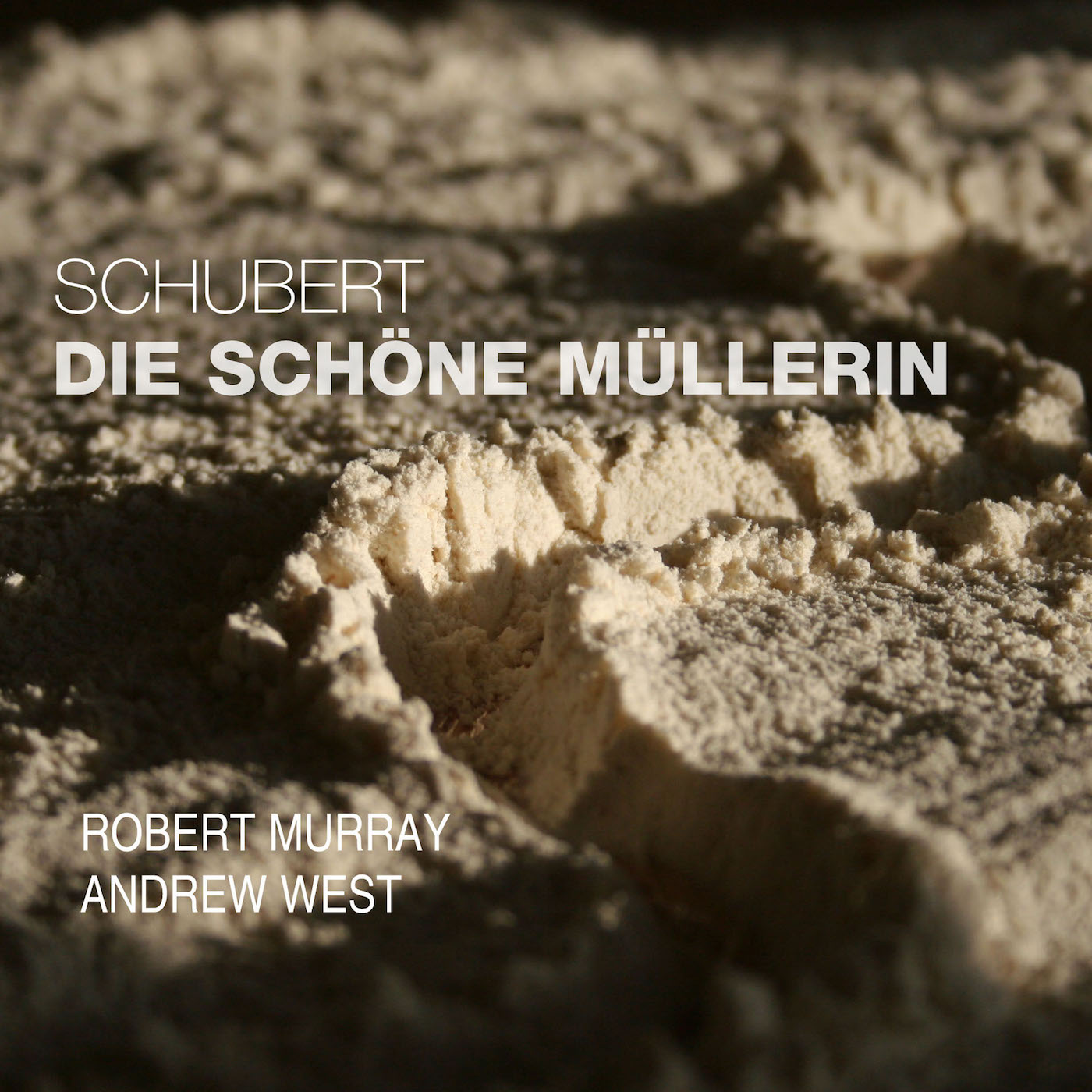
RECORDING OF THE MONTH | July 2016: Franz Schubert — DIE SCHÖNE MÜLLERIN, D.795 (Robert Murray, tenor; Andrew West, piano; Stone Records 5060192780628)

RECORDING OF THE MONTH | July 2016: Franz Schubert - DIE SCHÖNE MÜLLERIN (Robert Murray, tenor; Andrew West, piano; Stone Records 5060192780628)FRANZ SCHUBERT (1797 – 1828): Die schöne Müllerin, D.795 (Opus 25)Robert Murray, tenor; Andrew West, piano [Recorded in Britten Studio, Snape Maltings, Suffolk, UK, 6 – 9 October 2014; Stone Records 5060192780628; 1 CD, 64:14; Available from Amazon (UK), Amazon (USA), jpc (Germany), Presto Classical (UK), and major music retailers]

There is something inexpressibly exhilarating about standing before an audience, whether in the palpitating atmosphere of the recital hall or the unnerving virtual environment of the recording studio, with only a piano and melody guiding one’s precarious steps along the precipice. Like Bellini’s somnambulistic Amina as she toddles high above her bucolic village, the Lieder singer has no safety net, no parachute, no cabled harness steadying his gait. In the most magical instances, however, the Art of Song is conjured like the iridescent bridge that conveys Wotan and his companions to Walhalla. Such instances are why the notion of positioning singers before the horns of phonographs was conceived more than a century ago and why the Classical recording industry remains an embattled but vitally necessary pillar of today’s culture. Perhaps it is true that, as some observers allege, fewer recordings of genuine merit come to market now than in previous generations, but a recording like this performance of Franz Schubert’s seminal 1824 masterwork Die schöne Müllerin always justifies the wait. One of the earliest Lieder cycles in the modern sense, Die schöne Müllerin remains popular with singers of every Fach, but few of them have recorded a Schöne Müllerin as spellbinding as this one. This performance lures the listener into a fascinating microcosm, sometimes claustrophobic in its intimacy, that derives inspiration from music and words and inspires the hearer to abandon predispositions and prejudgments gleaned from other recordings and devote complete attention to these remarkable Lieder as though encountering Schöne Müllerin for the first time.

Considering that the poems by Wilhelm Müller that inspired and provide the texts for Die schöne Müllerin were published in 1820, only four years before the first publication of the Lieder cycle, and that Schubert was occupied during the period in which the bulk of the songs were written, from May to September 1823, by the composition of his large-scale opera Fierrabras, the cycle’s gestation was surprisingly brief. Melodic fecundity and interpretive depth were seemingly as readily available to Schubert as they were to Mozart, and both qualities imbue every bar of Die schöne Müllerin. The nuances of Müller’s verses are given avenues of expression by Schubert’s music that would never be possible in even the most intelligent recitation, the poetry of the music highlighting the musicality of the words. The extent to which Schubert identified personally with the cycle’s sentimental journey from exuberant youthful optimism to bleak despondency precipitated by unreciprocated love continues to be debated by biographers and musicologists. There are far more questions than answers about details of the composer’s amorous pursuits, but the psychological depth with which he amplified Müller’s words suggests at the very least a profound connection with the subject matter. That connection is perpetuated in this performance, in the context of which both singer and pianist are no less committed to communicating the subtleties of Die schöne Müllerin than Schubert was when he fused Müller’s texts with his music.

Whether the music at hand is the work of Sammartini, Schubert, or Schönberg, any performance benefits from the participation of gifted, dedicated musicians, and this performance of Die schöne Müllerin is defined by the keenly intelligent handling of Schubert’s music by tenor Robert Murray. A noteworthy master of a varied repertory who was especially delightful—and atypically glamorously-voiced— as the charismatically romantic Frederic in the 2015 English National Opera production of the Gilbert and Sullivan gem The Pirates of Penzance, Murray is not unknown to aficionados of beautiful tenor singing. Both his attractive, evenly-produced natural instrument and his talents for subtle, insightful interpretation merit preservation on recordings, his portrayal of Marzio in Classical Opera’s Signum Classics recording of Mozart’s Mitridate, re di Ponto [reviewed here] having shone amidst high-wattage performances, and his singing on this disc is as strong a raison d’être for this handsomely-produced Stone Records account of Die schöne Müllerin as is the quality of Schubert’s music.

No man is an island in Lieder repertory, however, and Murray’s partner in this Schöne Müllerin, pianist Andrew West, is an artist of equal accomplishment and perspicacity. A member of the faculty of the prestigious Royal Academy of Music and a panelist on the jury of the 2014 Kathleen Ferrier Competition, in the 2003 edition of which Murray was a prizewinner, West is a collaborative musician of the first order. Equally acclaimed as a soloist and a partner to other musicians and singers, West is no mere accompanist in this performance of Die schöne Müllerin. Building upon years of cooperation, his fingers are as integral a part of the interpretation of Schubert’s music on this disc as Murray’s vocal cords.

As Murray and West approach the cycle in this performance, the first four Lieder form an engrossing portal into both the narrator’s physical surroundings and his emotional state. Murray sings ‘Das Wandern’ with boyish charm, his rhythmic buoyancy, perfectly complemented by West’s playing, conveying the bounce in the youth’s step as he explores the world before him. The depth of understanding between singer and pianist is especially evident in ‘Wohin?’ and ‘Halt!’ Here and in ‘Danksagung an den Bach,’ tonal richness from both musicians adds a dimension of dramatic excitement to the cycle’s progress. Murray does not hesitate to provide full-on, open-throated, operatic tone when the emotional ethos of music and text warrant it, and some of the most unforgettable moments in this Schöne Müllerin come when Murray and West flee the polite salon and allow the songs play out as though their action were being brought to life in the opera house. That this is achieved with any of the cycle’s inherent introspection bring sacrificed is a particular success of this performance.

‘Am Feierabend’ and ‘Der Neugierige’ launch another sequence that escorts the listener ever further into the recesses of burgeoning inner torment and its outward manifestations. Murray sings these and ‘Ungeduld’ with penetrating insightfulness, using his bright vowels and crisp consonants to illuminate the text in a way that renders the words’ significance unmistakable. His is an account of ‘Morgengruß’ that radiates simplicity and faith in new beginnings, but West’s handling of the piano part elucidates the uncertainty that lurks beyond the music’s deceptively orderly façade. The very different moods of ‘Des Müllers Blumen,’ ‘Tränenregen,’ and ‘Mein!’ are traversed by Murray and West with unaffected eloquence, and the pianist’s probing use of Schubert’s harmonies as expressive devices in ‘Pause’ melds with the tenor’s intuitive management of phrasing in the bittersweet melodic lines of ‘Mit dem grünen Lautenbande.’ Where many performances begin to drag, this one soars, gaining momentum with each Lied and escalating tension by finding within each song its function within the broader scope of the cycle.

The visceral energy of West’s playing in ‘Der Jäger’ enhances the idiomatic sparkle of Murray’s diction, the words charged with the same electricity that races through the music. Throughout this Schöne Müllerin, Murray articulates the text with the flair of a native speaker of German and the sagacity of one who has devoted considerable time to studying the literal and figurative meanings of the words. There is never an indication of lugubriousness in ‘Eifersucht und Stolz’ or ‘Die liebe Farbe,’ both of which are sung and played with ideal tempi, dynamics, and balance between voice and piano. The expressive heavy lifting in this performance is entrusted to the words: rather than attempting to force a comprehension of the cycle upon the listener, this Schöne Müllerin invites participation, the kaleidoscopic incandescence of Murray’s vocalism providing ethereal perspectives that enable the listener to form his own unique interpretation of the music’s message. The sheer attractiveness of tone lavished on ‘Die böse Farbe’ and ‘Trockne Blumen’ is tremendous, making the songs satisfying solely as pure music, but there is always a reason for beauty in this performance: things which cannot be spoken without harshness must be sung especially beautifully.

Widely viewed as the narrator’s paean to the relief from his despair found in death in the waters of the brook, ‘Der Müller und der Bach’ is in this performance not without a discernible vein of pragmatism. The bleakness and inevitability of the poet’s perception of fate gain from the unexaggerated forthrightness of Murray’s singing an element of serenity that offers a glimmer of redemptive hope in the face of self-annihilation. This sense of magnanimity that permeates Murray’s and West’s reading of ‘Der Müller und der Bach’ is expanded in ‘Des Baches Wiegenlied’ into an examination not of the unforgiving finality of death but of its transcendence of earthbound cares; to borrow a conceit from Shakespeare, its shaking off of mortal coils. The brook flows on, and so, too, does the cycle of anticipation, fulfillment or disappointment, and renewal.

Some singers focus so doggedly on devising identifiably unique interpretations of a work like Schubert’s Die schöne Müllerin that they seemingly overlook the most basic tenet of any performance of the cycle: singing. Whether one takes the metaphysical dimension of Die schöne Müllerin at face value or ascribes to it relevance of cosmic proportions, the fact remains that these Lieder are first and foremost music. Ernst Haefliger and Erik Werba were sensitive to this distinction forty years ago, and Robert Murray and Andrew West exhibit this to today’s listeners with sensitivity and sophistication. Played with virtuosity, sung with beauty and fearlessness, and interpreted with wit and discernment, this is a Die schöne Müllerin in which Müller’s words and Schubert’s music sound astonishingly new.

04 July 2016

CD REVIEW: Gaetano Donizetti — PARISINA D’ESTE (M. Devia, D. Gonzales, G. Zancanaro, D. Kavrakos, T. Tramonti; Bongiovanni GB 2569/70-2)

CD REVIEW: Gaetano Donizetti - PARISINA D'ESTE (Bongiovanni GB 2569/70-2)GAETANO DONIZETTI (1797 – 1848): Parisina d’EsteMariella Devia (Parisina), Dalmacio Gonzales (Ugo), Giorgio Zancanaro (Azzo), Dimitri Kavrakos (Ernesto), Tiziana Tramonti (Imelda); Orchestra e Coro del Maggio Musicale Fiorentino; Bruno Bartoletti, conductor [Recorded ‘live’ in performance at the Teatro della Pergola, Florence, Italy, on 20 May 1990; Bongiovanni GB 2569/70-2; 2 CDs, 159:56; Available from Bongiovanni, NAXOS Direct, Amazon (USA), jpc (Germany), and major music retailers]

As befuddling as why some singers achieve worldwide recognition whilst equally-qualified colleagues toil in relative obscurity is the question of why the caprices of fate consign exceptional singers to neglect by record labels. With few aspects of opera in the Twenty-First Century as lamented as the perceived decline of genuine bel canto in the exalted tradition of Giulia Grisi, María Malibran, and Giuditta Pasta, the paucity of commercial recordings featuring Chiusavecchia-born soprano Mariella Devia is as baffling as it is frustrating. In generations past, it was Turkish soprano Leyla Gencer, another celebrated scion of the royal house of bel canto, who reigned as Queen of the Pirates, ignored by major labels but adored by aficionados, who eagerly collected private recordings of her performances. Now, Gencer’s crown has passed to Devia, whose commercial discography is inexplicably sparse: aside from studio recordings of Donizetti’s L’elisir d’amore and Linda di Chamounix and professionally-produced ‘live’ recordings on hard-to-find labels, aural preservation of the excitement that Devia has generated in her bel canto outings is woefully inadequate. Even an event as significant as Devia’s triumphant return to New York as Elisabetta opposite Stephen Costello’s absurdly-maligned portrayal of the title rôle in Opera Orchestra of New York’s 2014 concert performance of Roberto Devereux was not recorded for broadcast or commercial release! In the age of Gencer, the major labels had Callas, Sutherland, Scotto, Sills, and Caballé, of course, but for whose benefit has Devia been overlooked? Every new release bearing Devia’s name among the cast is cause for anxious anticipation, and Bongiovanni’s release of this performance of Donizetti’s 1833 Parisina d’Este, recorded in the same theatre, Florence’s Teatro della Pergola, in which the opera was premièred, is a welcome addition to the recorded legacy of one of the most important artists in the history of bel canto.

Alas, despite considerable assets, Bongiovanni’s new release of what sounds like a decently-captured, minimally-remastered in-house recording of a performance from the 1990 Maggio Musicale Fiorentino production of Parisina is not the caliber of tribute that Devia’s singular gifts deserve. Mostly free from audience noise aside from curtailed applause, the usual bronchial intrusions, and a spectacularly ill-timed nasal noise of indeterminate origin that upsets the delicate atmosphere of the heroine’s first entrance, the sound quality does not impede enjoyment of the performance, but the distortion and peaking that result from the boxy, claustrophobic acoustic are unkind to the voices, especially the raison d’être prima donna. Under the well-schooled baton of Bruno Bartoletti, a veteran of the Maggio Musicale orchestra who was in his penultimate season as the Artistic Director of Maggio Musicale at the time of this performance, Donizetti’s music is performed with an apt dose of the verve that the conductor reliably brought to early Verdi repertory during his five-decade tenure with Lyric Opera of Chicago. Bartoletti’s tempi for arias and cabalettas are uniformly appropriate, and he paces ensembles with obvious instinct for Donizetti’s modes of scene construction.

Their work not reproduced in anything approaching high-fidelity sound, the Maggio Musicale choral and orchestral forces are precisely what an informed listener might expect them to be: enthusiastic, committed, and slightly provincial. [It should be noted that standards have increased exponentially in the years since this performance of Parisina was recorded. Today, the Florentine musicians often match and sometimes exceed the levels of excellence expected of their Milanese and Venetian counterparts.] As clamoring courtiers, boisterous soldiers, refined ladies-in-waiting, and offstage boatmen, the choristers sing vigorously. That individual voices are frequently distinguishable among the ensemble is perhaps more a circumstance of stage blocking and positioning of the recording device than of problems with training and balance. The instrumentation of Parisina cannot have failed to delight Donizetti’s illustrious tutor Johann Simon Mayr, and the Maggio Musicale musicians play their parts with the authentic Italian gusto that the score demands.

Portraying Parisina’s lady-in-waiting Imelda, soprano Tiziana Tramonti is heard here near the beginning of a career that has subsequently taken her to many of the world’s most familiar opera houses in leading rôles. Her duties in Parisina are confined to scenes with her mistress in all three of the opera’s acts, but Tramonti sings capably throughout the performance, spiritedly supporting Devia and making her mark as a singer of great promise.

The supple, sonorous voice of Greek bass Dimitri Kavrakos flows through Donizetti’s music for Duke Azzo’s minister and Ugo’s adopted father Ernesto like the sparkling waters of the Aegean. In his Act One scenes first with Azzo and then with Ugo, Kavrakos convincingly plays the parts of courtier and concerned father, sensitive to the insecurities of both his employer and his foster son. Kavrakos’s voice anchors the finale primo handsomely, his lower register retaining its impact even in ensembles. Kavrakos lends great immediacy to Ernesto’s utterances in the Act Two scene with Ugo, powerfully depicting the character’s distress with tones that blend beauty with granitic strength. Furthering the grand impression made in the Act One finale, the bass delivers Ernesto’s lines in the finale secondo with unwavering authority. Like Devia, Kavrakos is too-little-represented on commercial recordings: the quality of his performance in this Parisina makes the meager chronicling of his considerable bel canto credentials all the more regrettable.

In the ranks of important Italian baritones of the Twentieth Century, Giorgio Zancanaro merits inclusion alongside Pasquale Amato, Giuseppe De Luca, Tito Gobbi, Giuseppe Taddei, and Ettore Bastianini. A native of Verona, Zancanaro came to singing relatively late in life, without formal training and following a stint as a police officer, but his polished-brass timbre, well-integrated vocal registers, and easy upper extension were apparent from the start of his career. As a Verdi baritone, he had few wholly-qualified peers during the peak years of his career, and his singing as Azzo in this performance of Parisina reveals that his mastery of Verdi repertory was founded upon a solid bel canto technique. His singing of Azzo’s Act One cavatina ‘Per veder su quel bel viso’ and cabaletta ‘Dall’Eridano si stende’ exudes aristocracy and ducal entitlement, and both the resplendent tone and magnificent top notes typical of Zancanaro’s best work abound. In the finale primo and the Act Two duet with Parisina, the baritone is a worthy partner for Devia, his vivid vocal acting lighting the soprano’s histrionic fuse. The indecision that grips Azzo in the finale secondo is obliterated by his merciless vengeance in Act Three, and Zancanaro rises to every challenge of the part, thundering thrillingly in the Act Three finale. That Zancanaro’s Azzo is less memorable than his Conte di Luna, Rigoletto, and Rodrigo di Posa is attributable to Donizetti, his librettist Felice Romani, and even Lord Byron, from whose 1816 poem of the same name the opera’s plot was derived, but this is a splendidly-sung performance of challenging music.

The punishing rôle of Ugo, the heroine’s exiled lover and, as is ultimately revealed, the unwitting son—by his first wife, thankfully—of her husband, was first portrayed by Gilbert Duprez, celebrated as the first tenor to consistently produce C5 with chest resonance. Recordings of different performances and/or different recordings of this performance from the 1990 Maggio Musicale production of Parisina have long been available from non-commercial sources, some of which cite Italian tenor Dano Raffanti as the portrayer of Ugo. Raffanti was listed for the rôle in the 1990 Annuario EDT dell'Opera Lirica in Italia, and, while it is possible that Raffanti sang the part in some performances, the Ugo heard on these discs is unquestionably Catalan tenor Dalmacio Gonzales (né Dalmau González Albiol). Unfortunately, the bright-voiced Gonzales has the dubious distinction of suffering most from the recording’s ambiance—or, more accurately, the lack thereof. So reliably distant in the soundscape are his contributions to the performance that it could almost be alleged that the recordist endeavored to slight him, and assessing his efforts beyond confirming that he sings when Ugo is asked by Donizetti to sing is difficult. [In most available editions, Jerome Pruett endures a similar indignity in recordings of the legendary 1974 Opera Orchestra of New York Parisina with Monserrat Caballé. Is there some cosmic curse on the rôle, a sort of Duprez’s revenge?] The ears must strain to fully appreciate Gonzales’s performance, but the expenditure of effort is generously repaid. The tenor’s accounts of the impetuous Ugo’s Act One cavatina ‘Io l’amai fin da quell’ora’ and cabaletta ‘Per le cure, per le pene’ are fantastic, his slender, sinewy voice soaring through Donizetti’s daunting vocal lines and cresting on clarion, mostly secure top notes of which Duprez would have been proud. In the duet with Parisina, ‘Ma girne in bando ancora,’ and the finale primo, Gonzales’s Ugo proves to be an engaging lover, the tenor’s timbre contrasting markedly but blending appealingly with Devia’s. Both his aria ‘Io sentii tremar la mano’ and the cavatina ‘Questo amor doveva in terra’ in Act Two are sung stylishly and expressively, and Ugo’s desperate part in the finale secondo is enacted with dramatic intensity. A pioneer in the lineage of tenori di grazia that produced Juan Diego Flórez, Lawrence Brownlee, Javier Camarena, and Andrew Owens, Gonzales is here heard at the zenith of his powers, the continual struggle to hear him notwithstanding.

This recording of Parisina documents Mariella Devia’s artistry nearly two decades into her international career, a career still very much in progress: now traversing her sixty-ninth year, her schedule for the second half of 2016 and 2017 includes performances of the title rôles in Bellini’s Norma and Donizetti’s Lucrezia Borgia, two of the most perilous parts in the bel canto repertory. Her professional début in Treviso in 1973 introduced her to the public in a rôle that was to be a cornerstone of her repertory, the eponymous protagonist of Donizetti’s Lucia di Lammermoor. [Incidentally, in the same year in which she headlined Maggio Musicale’s production of Parisina, Devia sang in a now-legendary RAI Roma concert broadcast performance of Lucia opposite the Edgardo of Alfredo Kraus in which the score was performed without cuts and in the composer’s original, generally higher-than-traditional keys. A superb-quality recording of the broadcast is available on CD (catalogue number CA1671) from Australian retailer Celestial Audio.] At her first entrance in Act One, it is obvious that Devia was in excellent voice for this performance, but there is a surprisingly prominent suggestion of caution in her singing. Fidelity to Donizetti’s score only partially accounts for the relative paucity of the soprano’s trademark sopracuti. Still, her singing of Parisina’s Act One cavatina ‘Forse un destin che intendere’ and cabaletta ‘V’era un dì quando l’alma’ is undeniably exhilarating, the inimitable voice moving through the music with only a slight hint of sluggishness. Charges that Devia is primarily a vocal phenomenon are not wholly unfounded. She is not unfailingly an animated performer, but she is at her peak as a singing actress in the duet with Ugo and Act One finale in this performance, singing and emoting with equal aplomb. Devia approaches the Act Two scene with Imelda as a springboard for her beguiling voicing of the romanza ‘Sogno talor in correre.’ As reminiscent of Verdi’s energetic music for Macbeth and his dastardly Lady as of the duet for the titular heroine and her brother Enrico in Donizetti’s Lucia di Lammermoor, Parisina’s duet with Azzo unites Devia and Zancanaro in a glorious masterclass in the now-elusive art of bel canto. The quartet ‘Per sempre, per sempre, sotterra sepolto’ is arguably the finest music in the score, and Devia’s vocalism highlights its quality. The soprano is at her ravishing best in Parisina’s Act Three rondò, ‘Ciel, sei tu che il tal momento,’ the spot-on intonation and limpid tone above the stave spiraling intoxicatingly through Donizetti’s ascending lines. Disappointingly imperfect, this Parisina is nonetheless a gratifying addition to Devia’s gallery of recorded Donizetti portraits.

The success of many of Parisina’s companions in the Donizetti and broader bel canto repertories depends upon their leading ladies, and few leading ladies in recent years have borne the weight of bel canto performances more successfully than Mariella Devia. The discouragingly [and bewilderingly] lukewarm critical reception for Opera Orchestra of New York's May 2016 concert performance of the opera featuring Angela Meade, Aaron Blake, and Yunpeng Wang suggested that Parisina remains a difficult sell for modern audiences. That Mariella Devia sold it to the Florentine audience in 1990 is manifest in every phrase of her singing on this pair of discs. Her salesmanship deserves a better marketplace than this recording provides, but devotees of the Queens of the Pirates gratefully take what they can get.

03 July 2016

CD REVIEW: Ruggero Leoncavallo — ZAZÀ (E. Jaho, R. Massi, S. Gaertner, P. Bardon, D. Stout, N. Spence, K. Rudge, S. Thorpe, F. Wyn, J. Ferri; Opera Rara ORC 55)

IN REVIEW: Ruggero Leoncavallo - ZAZÀ (Opera Rara ORC 55)RUGGERO LEONCAVALLO (1857 – 1919): ZazàErmonela Jaho (Zazà), Riccardo Massi (Milio Dufresne), Stephen Gaertner (Cascart), Patricia Bardon (Anaide), David Stout (Bussy), Nicky Spence (Courtois), Kathryn Rudge (Natalia), Simon Thorpe (Duclou), Fflur Wyn (Floriana), Julia Ferri (Toto), Christopher Turner (Augusto), Helen Neeves (Signora Dufresne), Edward Goater (Marco), Robert Anthony Gardiner (Un signore), Eleanor Minney (Claretta), Rebecca Lodge (Simona); BBC Singers; BBC Symphony Orchestra; Maurizio Benini, conductor [Recorded at BBC Maida Vale Studios, London, UK, in November 2015; Opera Rara ORC 55; 2 CDs, 136:01; Available from Opera Rara and major music retailers]

So often are opera lovers cautioned that the plots of the works that they love must be taken with a grain of salt that the true aficionado’s diet must be dangerously suffused with sodium. Whether a score’s drama is one of Roman emperors, legendary warriors, or more ordinary personages, opera is the realm of idealism set to music. The denizens of operatic plots rarely behave as their counterparts off the stage might be expected to do: perhaps their actions are larger for having absorbed the vicarious ambitions of their portrayers and observers. For all of its verismo vestments, Ruggero Leoncavallo’s seldom-heard Zazà is clothed in unabashedly Romantic hues that would be embarrassingly garish if viewed outside of the opera house. The tale of a vaudeville chanteuse’s vain seduction and eventual selfless rejection of a married man melds the realms of the Moulin Rouge and the Palais Garnier, but the opera’s plot is marginally too starry-eyed to be swallowed without the seasoning of that proverbial dose of salt. The histrionic shortcomings of the heroine and her circle notwithstanding, Zazà has been done few favors by the handful of indifferently-produced recordings of the score despite admirable performances of the title rôle by Mafalda Favero, Clara Petrella, Lynne Strow-Piccolo, and Lisa Houben. What Zazà needs is star treatment, and that is what the opera receives in spades from Opera Rara in this expertly-prepared studio performance, recorded in advance of a critically-acclaimed concert outing at the Barbican. Here extending the focus of the label’s celebrated endeavors to the very end of the Nineteenth Century, Zazà having premièred at Milan’s Teatro Lirico on 10 November 1900, the principal question raised by this release is whether Opera Rara can deal as authoritatively with verismo as with bel canto. The answer, this recording proves, is a resounding Sì!

Guided by the propulsive, idiomatic conducting of Maurizio Benini, the musicians of the BBC Symphony Orchestra play Leoncavallo’s episodic score with brio that qualifies them as honorary Italians regardless of the flags under which they were born. The opera’s orchestration is clever and colorful if never especially inventive, though the use of the offstage banda to create the contrasting back- and front-of-house perspectives of Zazà’s milieu is witty and managed by Benini with panache and by the banda personnel with raucous brilliance. Motivic writing is not as prominent in Zazà as in many post-Wagner works originating on any side of the Alps, but Benini’s attentiveness to the most minute details of thematic material ensures that subtleties of characterization can be enacted by the singers without exaggeration. The conductor looks to the score for guidance on setting tempi that serve both drama and cast, and his clear-sighted pacing of the performance minimizes the doldrums of Leoncavallo’s workaday passages.

Emerging from the ranks of the BBC Singers, whose vocalism enlivens every scene in which Leoncavallo employed choristers, mezzo-sopranos Rebecca Lodge as Simona and Eleanor Minney as Claretta, soprano Helen Neeves as Signora Dufresne, Milio’s wife, and tenor Edward Goater as the Dufresne family butler Marco epitomize the exalted measure of excellence to which the choir adheres. Throughout the performance, the choristers are individually and collectively credible in every guise in which the composer presents them.

Opera Rara releases have reliably utilized first-rate talent in supporting rôles, and this Zazà is among the label’s greatest successes in this regard. The boyishly handsome tenor Nicky Spence has never sounded better on disc than as the put-upon impresario Courtois in this performance of Zazà—quite a feat considering his impressive discography! Whenever the character appears, Spence’s evergreen voice infuses Leoncavallo’s conversational music with golden-toned life. Baritones Simon Thorpe as the put-upon stage manager Duclou and David Stout as the journalist Bussy further raise the vocal standards of the recording, and their strong work is seconded by the accomplished singing of tenors Christopher Turner as the writer Augusto and Robert Anthony Gardiner as the unnamed Signore.

The characterful vignettes created by the ladies of the supporting cast are no less vibrant than those engendered by their male colleagues. Mezzo-soprano Kathryn Rudge provides great pleasure with her impersonation of Zazà’s maid Natalia, the indefatigable energy of her singing heightening the character’s significance. Irish mezzo-soprano Patricia Bardon, consummate mistress of a wide repertory spanning from unforgettable portrayals of Händel’s travesti heroes to rewarding ventures into Twenty-First-Century music, is captivating as Zazà’s perennially-inebriated mother Anaide. Even in a relatively small rôle, how an artist of Bardon’s stature can shine! As Floriana, Zazà’s rival on stage and in love, soprano Fflur Wyn is the oft-thwarted seconda donna to the life, her bright timbre, crisp diction, and take-no-prisoners vocalism unmistakably conveying the character’s vexation. Heeding the examples of her singing teammates, Julia Ferri portrays the speaking rôle of Totò, Milio’s daughter Antonietta, without artifice, enunciating her lines clearly and animatedly.

In reviewing a 2005 Alice Tully Hall concert performance of Zazà by Teatro Grattacielo, New York Times critic Bernard Holland praised the ‘strong, cultured baritone’ that Stephen Gaertner wielded in his interpretation of Zazà’s once-and-future lover Cascart. A decade later, that assessment applies even more fully to the singer’s Cascart for Opera Rara. Gaertner is a connoisseur’s baritone, one whose performances offer tantalizing glimpses of bygone eras in which singers like John Charles Thomas, Lawrence Tibbett, and Leonard Warren were emblematic of the magnificence of American baritone singing. In this portrayal of Cascart, a rôle created by Mario Sammarco, who originated the rôle of Carlo Gérard in Andrea Chénier for Umberto Giordano four years before the première of Zazà, and first sung at the Metropolitan Opera by Pasquale Amato, Gaertner sings with the unapologetic machismo of Frank Sinatra and Dean Martin, the true swagger of a nightclub star sure of his value and virility. From the beginning of his scene with Zazà in Act One, there is obvious tenderness in his approach to the part, however, and Gaertner woos and pleads without crooning. In Act Two, the sheer sonic impact of his singing of ‘Buona Zazà del mio buon tempo ascolta’ is arresting, but the character’s gentleness towards Zazà is again evident in the humor with which Gaertner’s Cascart goads her with ‘E s’anco ti spossare? saresti... una borghese!’ When the baritone sings ‘Zazà, piccola zingara, schiava d’un folle amore’ in Act Four, the extent to which Cascart’s destiny is intertwined with Zazà’s is palpable, and the sincerity of Gaertner’s delivery is moving. With a singer of Gaertner’s abilities in the rôle, Cascart’s part in the drama is all the more pivotal, and the misfortune of Zazà’s love for Milio is intensified by her neglect of a man so devoted to her.

Production Manager Kim Panter and her Opera Rara colleagues are owed considerable gratitude for adding one of today’s finest tenors to the label’s roster of compelling artists. Here performing Leoncavallo’s music for Zazà’s initially reluctant but ultimately fervent paramour Milio Dufresne with laudably firm, focused tone that meaningfully conveys the tension of complicated love, Italian tenor Riccardo Massi makes his Opera Rara début in a rôle to which his talents are ideally suited. With acclaimed portrayals of rôles as challenging as Alvaro and Radamès in Verdi’s La forza del destino and Aida and Cavaradossi and Calàf in Puccini’s Tosca and Turandot to his credit, Massi is an elegant singer with a voice reminiscent in its blend of strength and sweetness of that of his countryman Giovanni Malipiero. When Milio makes his first entrance in Act One, the performance as a whole gains momentum, and Massi voices ‘È un riso gentile quall’alba d’aprile’ with the Italianate fervor that the music desperately needs and has received on disc only from the slightly over-parted Giuseppe Campora. In the subsequent scene with Zazà, Milio’s burgeoning love simmers in Massi’s resonant vocalism until it can be restrained no longer: bursting forth like flood waters pulverizing a dam, his words of affection pour from the tenor’s throat, resonant but refined. In Act Two, Massi invests both ‘Mia Zazà, mio bene! Ragiona dunque; che follie son queste?’ and ‘Zazà, Zazà, non ti attristare’ with subtle inflections drawn from the text, giving Milio greater depth than Leoncavallo achieved in words or music. Milio’s aria in Act Three, ‘Oh mio piccolo tavolo ingombrato siccome ingombro è di sgomenti il cuore,’ its sentiments not unlike those of the heroine’s ‘Adieu, notre petite table’ in Act Two of Massenet’s Manon, is scaled by Massi as a genuinely inward meditation, the character’s desperate uncertainty magnified by the insurmountable solidity of the tenor’s singing. The emotional obstacle course of Act Four never disrupts the meticulously-maintained balance of Massi’s performance. The expressive immediacy of his articulations of ‘Zazà, tu mi rimproveri d’aver ti troppo amata?’ and ‘Ed ora io mi domando come, vicino a te, potei scordar la dolce mia buona creatura!’ reveals the essence of his artistry: there is beauty in even the ugliest moments of life. In tinging his performance with haunting morbidezza without resorting to Gigli-esque sobs and cheap effects, Massi makes Milio less a conceited prig than a man swept along by an illicit affection, his timbre burnished and his intonation absolutely secure throughout the range. How could a man who sings so well not be forgiven?

Breathing life into the too-easily-caricatured title rôle, Albanian soprano Ermonela Jaho allies glistening, well-controlled vocalism with ardent but polished emoting that often proves revelatory. Building upon a career firmly rooted in Opera Rara’s familiar bel canto territory, Jaho waded into the tempestuous waters of verismo with a heartrending portrayal of Puccini’s Suor Angelica at Covent Garden, and she is scheduled to bring her shattering Cio-Cio-San to Kennedy Center in Washington National Opera’s 2016 – 2017 Season. It is hardly coincidental that, four years after Leoncavallo’s opera was first performed, the first Zazà, Rosina Storchio, was also Puccini’s first Cio-Cio-San or that Geraldine Farrar was the first to sing both rôles at the Metropolitan Opera. Though a temperamental cabaret singer to the marrow of her bones, Jaho’s Zazà is most fully an open-hearted, deeply-feeling woman. Facing a bevy of distractions in Act One, Jaho’s Zazà fires ‘Ogni seme di bene in te si strugge, e diventa l’amore una parola!’ at Cascart with unmistakable meaning, and the soprano’s singing in the exasperated but dutiful daughter’s scene with her worrisome mother is a model of barely-concealed ennui. Then, singing ‘Io son diversa da voi – Non ardisco dirvelo, e pur d’un sogno mi beava!’ to Milio, she is transformed from the haughty creature of the stage into a disquietingly vulnerable woman hopelessly in love in spite of herself. Limning the progress of that love’s development in Act Two, Jaho voices ‘Amor mio, che farà non più vicina a te, la tua Zazà, la tua piccina’ expressively, her luminous upper register projected excitingly without forcing. Joining with her mother and Cascart, this Zazà dispatches ‘Ah, ah, ah! Che quadretto!’ charmingly, her irony as bewitching as her flirtation. Her exclamation of ‘Bisogna ch’ei scelga – O me o l’altra... Via!’ has the conviction of Tosca, the diva’s soul bared in a single phrase. Unexpectedly learning in Act Three that her lover is not only married but also father to a precious daughter, Zazà undergoes another metamorphosis, heartbreakingly depicted by Jaho in the scene with Milio’s daughter Totò. Here, singing ‘È finita!... Ammogliato... e un angelo ha per figlia!’ with mesmerizing simplicity that brings to mind Maria Callas’s singing in scenes like those with Norma’s and Cio-Cio-San’s children, the exuberant, fiery lover becomes the tragic heroine determined to act for the greater good. Confronting Milio in Act Four, the pain that courses through Jaho’s stark readings of ‘M’ami troppo? Mai quanto basta!... Ti par tedioso l’amor mio?’ and ‘Ebbene, si, so tutto! Che hai moglie... che mi fuggi!’ is tempered by an omnipresent acceptance of the inevitability of safeguarding the bond between father and child. Jaho sings ‘Che ho fatto? Egli parte! Egli va? Non torna indietro...’ with unbreakable determination, will triumphing over desire. Leoncavallo lunges at the jugular with Zazà’s final utterance of ‘Milio! torna! Milio... È all’angolo... È sparito! È non ritorna più... mai più! Tutto è finito,’ but Jaho prefers music to mania. Like Massi, she finds the light in the darkness of her character’s circumstances. How Zazà’s story ends is one of opera’s mysteries, but how her life is changed by a sole encounter with a young girl is made startlingly real—that verismo, at last!—by this uncommonly intuitive soprano.

Even in a performance as wonderful as this one, the reasons for Zazà’s neglect are apparent. The composer most often associated with Leoncavallo, Pietro Mascagni, remarked that, with the extraordinary success of his early opera Cavalleria rusticana, he was, in terms of renown, crowned before he was king. A similar assessment might justifiably be applied to Leoncavallo, whose Pagliacci ushered him into immortality in 1892, whilst his compositional skills and individual style were still developing. The difference is that several of Mascagni’s post-Cavalleria rusticana scores—L’amico Fritz, Guglielmo Ratcliff, and Il piccolo Marat, for instance—are confident, tightly-constructed, masterful works of a quality that Leoncavallo’s Zazà cannot claim as her own. Compared with Pagliacci and even Leoncavallo’s infrequently-performed but meritorious La bohème, premièred a year after the first performance of Puccini’s Bohème, Zazà amounts to an enjoyable journey without a clear destination: unlike the finest verismo scores, that is, it is attractive music that never really goes anywhere. Zazà is a heroine of a different mettle than Nedda, Mimì, and Musetta, however, and Ermonela Jaho succeeds in the context of this recording better than Leoncavallo managed to do at making her a three-dimensional woman of genuine emotions. Finally heard in the top-quality sound that the score deserves, the heart missing from previous recordings beats powerfully in this one. In short, hold the salt: all of the ingredients needed to savor Opera Rara’s Zazà are present in this performance in precisely the right proportions.